Been There Ornament – Sabah


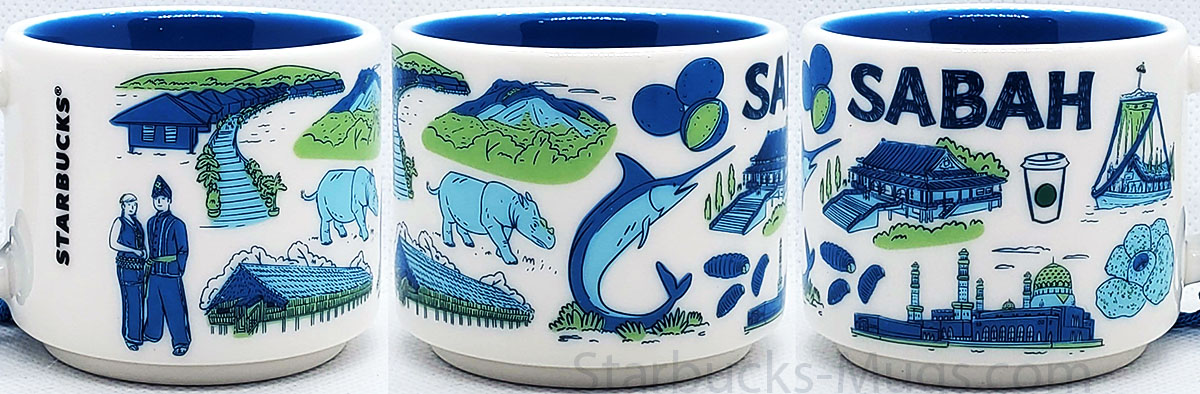
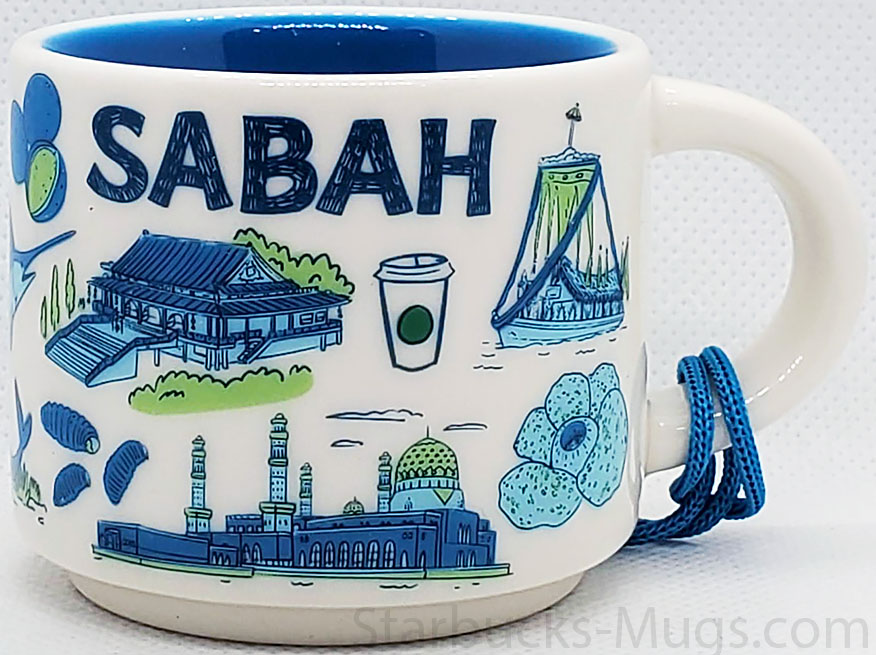
Yet another mini mug from Malaysia! The Been There Ornament Sabah is designed using the blue color palette. This is possibly to reflect the state’s serene coastal beauty and the symbolic meanings of peace, unity, and strength found in the shades of blue on Sabah’s flag. The string of the ornament is also blue.
Sabah, known as the “Land Below the Wind,” sits on the northern tip of Borneo and carries a history as diverse as its landscapes. Long before colonial times, the region was home to several indigenous groups, including the Kadazan-Dusun, Murut, and Bajau peoples, each with distinct languages and traditions. In the 15th century, Sabah was part of the Bruneian Empire, later falling under British control in the late 1800s when it became known as British North Borneo. After World War II and Japanese occupation, it became a Crown Colony before joining the Federation of Malaysia in 1963. Today, Sabah’s culture reflects this rich blend of native heritage, colonial influence, and modern Malaysian identity.
– One of Sabah’s most recognizable natural symbols is Mount Kinabalu, Southeast Asia’s tallest peak. Towering over the lush Kinabalu Park, this UNESCO World Heritage Site is not only a hiker’s dream but also a sacred mountain for the Kadazan-Dusun people, who believe it is the resting place of ancestral spirits.
– The Bornean rhinoceros, one of the rarest mammals on Earth, is a symbol of Sabah’s unique wildlife. Once widespread across Borneo, it now survives only in carefully protected reserves. Its small, solitary nature and critically endangered status make it a symbol of urgent conservation efforts. Seeing or learning about this rhino highlights Sabah’s commitment to protecting its extraordinary natural heritage.
– Sabah’s cultural diversity shines through its traditional attire, as seen in the pair wearing local costumes. Their clothing represents the ethnic pride and unity of the state’s many indigenous groups, often showcased during the Harvest Festival known as Kaamatan.
– The wooden stilt houses and longhouses illustrate Sabah’s traditional village life. Built to adapt to floods and forest terrain, they embody communal living and a close relationship with nature.
– We can see the Kota Kinabalu City Mosque, on the front of the mug, one of Sabah’s most beautiful landmarks. Surrounded by a reflective lagoon, it’s often called the “Floating Mosque” and symbolizes peace, faith, and architectural grace.
– The sailboat recalls Sabah’s seafaring roots and the importance of coastal trade throughout its history. Fishing communities and maritime commerce have long shaped the local economy and way of life.
– The Marlin Statue, standing proudly in the heart of Kota Kinabalu, is one of the city’s most famous landmarks. Facing the South China Sea, the sleek blue marlin captures Sabah’s spirit of strength and motion, symbolizing its connection to the ocean and its vibrant coastal life. The statue has become a popular photo spot and an emblem of the city’s identity.