Been There Ornament – Johor


Another package from Malaysia arrived! Inside, there is a brand new Been There Ornament Johor.
Johor state’s history as the southernmost state of Peninsular Malaysia dates back centuries to the Johor Sultanate, established in 1528 after the fall of Malacca. The modern state took shape under Sultan Abu Bakar in the late 19th century, who modernized administration and infrastructure while maintaining the sultanate’s sovereignty. Strategically positioned at the crossroads of major shipping routes and sharing a border with Singapore, Johor has evolved into Malaysia’s industrial powerhouse and agricultural heartland while preserving its rich royal heritage and cultural traditions.
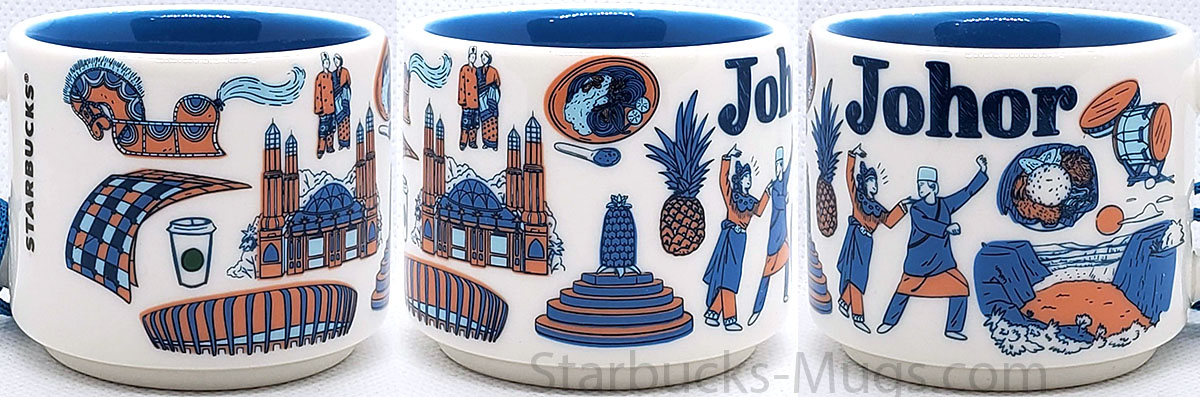
– The striking mosque with its distinctive blue domes represents the Sultan Abu Bakar State Mosque in Johor Bahru, one of the state’s most magnificent landmarks. Completed in 1900, this stunning mosque blends Victorian, Moorish, and Malay architectural styles with its blue-and-white color scheme. Perched on a hill overlooking the Straits of Johor, it symbolizes the state’s Islamic heritage and the enduring legacy of the Johor Sultanate.
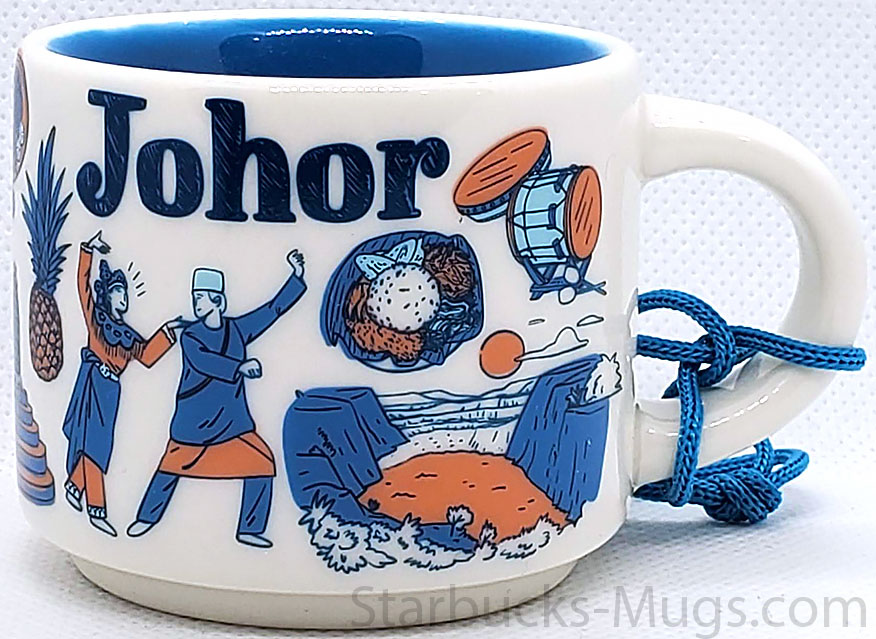
– The dancing figures illustrated on the mug celebrate Johor’s rich multicultural mosaic and vibrant performing arts traditions. The state is home to diverse ethnic communities, including Malays, Chinese, Indians, Javanese, and indigenous Orang Asli, each contributing unique dances, music, and festivals. Traditional performances like zapin, kuda kepang, and various ethnic dances remain integral to celebrations across the state.
– The pineapple symbol represents Johor’s historical dominance as Malaysia’s pineapple kingdom. For generations, vast plantations covered the state’s landscape, making Johor the nation’s largest pineapple producer and a major exporter. The iconic Johor pineapple remains a symbol of the state’s agricultural heritage, celebrated in local delicacies, particularly the famous pineapple tarts enjoyed during festive seasons.
– The architectural structures with distinctive rooflines showcase the Sultan Ibrahim Stadium, Johor’s pride and one of Southeast Asia’s most modern football venues. Completed in 2020, this state-of-the-art stadium with a capacity of over 40,000 seats serves as home to Johor Darul Ta’zim FC, Malaysia’s most successful football club. The stadium represents Johor’s commitment to sports excellence and modern infrastructure while fostering the state’s passionate football culture and community spirit.
– The checkered or woven pattern elements represent traditional Malay crafts that remain vital to Johor’s cultural identity. Batik production, songket weaving, mengkuang basket-making, and other traditional crafts continue to thrive in various districts. These handicrafts are not only economic activities but also carry forward generations of artistic knowledge and cultural expression.
– The food items depicted on the mug represent Johor’s distinctive culinary heritage, which differs notably from other Malaysian states. Signature dishes include Laksa Johor with its unique spaghetti-like noodles, mee rebus with sweet potato gravy, and otak-otak grilled in coconut leaves. The state’s cuisine reflects influences from Javanese, Bugis, Chinese, and Indian communities who have called Johor home for generations.
– The traditional instrument or drum shown on the mug symbolizes Johor’s musical heritage, particularly its gamelan and kompang traditions. Traditional percussion ensembles accompany royal ceremonies, weddings, and cultural festivals throughout the state. These musical traditions have been carefully preserved by the Johor royal court and cultural organizations, maintaining their central role in the state’s cultural identity.