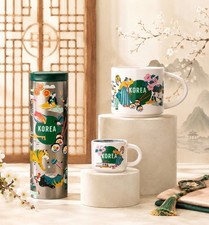
Discovery Series – Korea


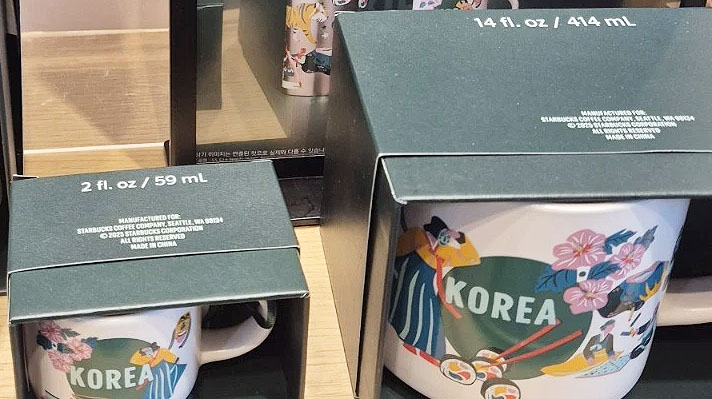
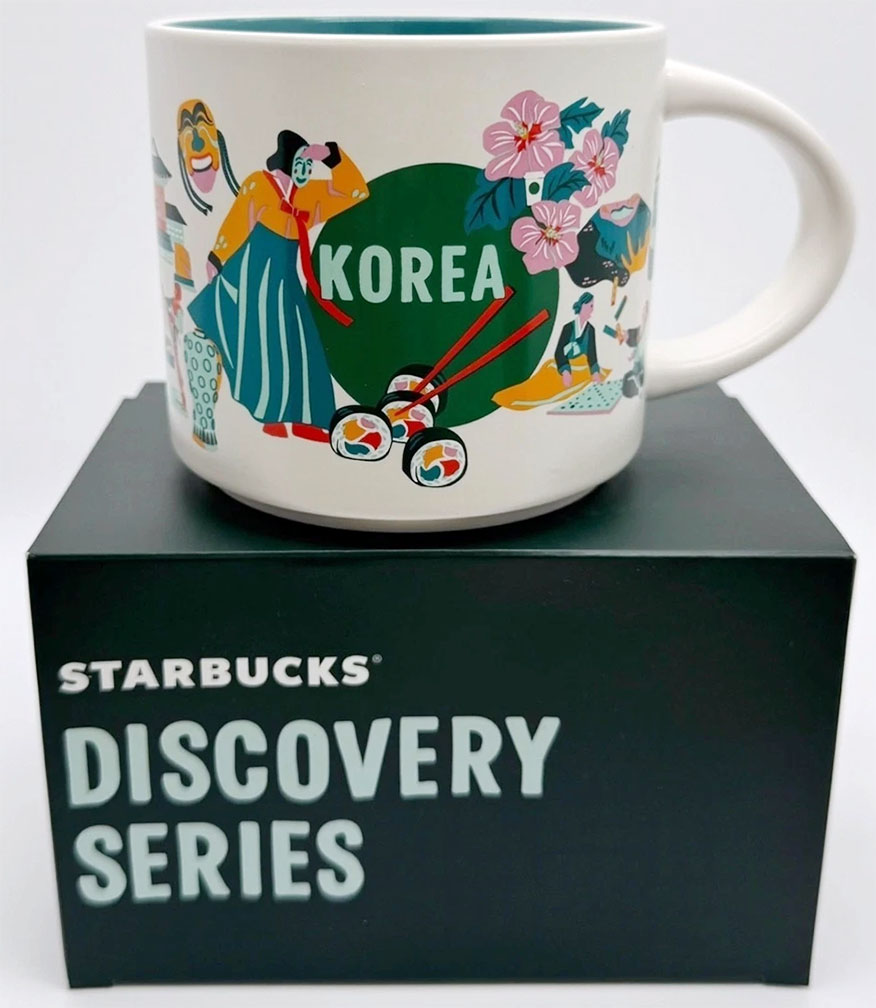
We now have our first look at real-life photos of the Starbucks Discovery Series – Korea mug. At first glance, the box design appears nearly identical to those from the U.S. and Canada. However, there are a few subtle differences: the absence of French text indicating the country of origin, and the prominently displayed volume – 2 fl. oz / 59 mL for the ornament and 16 fl. oz / 414 mL for the mug (see the photo of the covers at the end of the article).
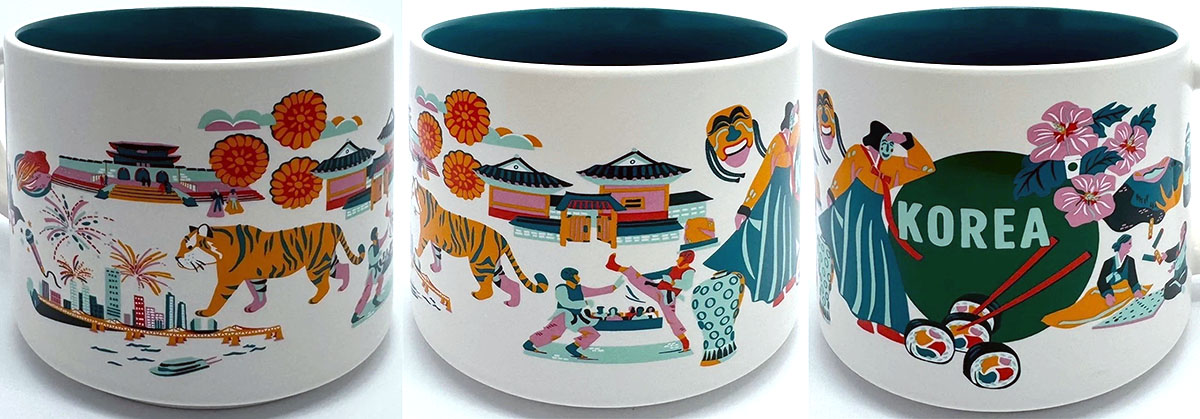
In addition to the Mugunghwa (Hibiscus syriacus), Gwanghwamun (gate), talchum (mask theater), Korean Tiger (Panthera Tigris), and Seoul International Fireworks Festival featured in the ornament review, here are the additional symbols and points of interest included in the design of the larger mug:
– Yunnori is a traditional Korean board game played especially during the Lunar New Year. It uses four wooden sticks called yut to determine movement, replacing dice. The game combines luck and strategy, with teams racing to move all their tokens around the board first. Yunnori isn’t just a pastime – it’s a cultural tradition that brings families together.
– Kimbap is a popular Korean dish made of rice, vegetables, and sometimes meat or fish, rolled in seaweed and sliced into bite-sized pieces. Though it looks similar to sushi, kimbap uses sesame oil and often includes cooked ingredients. It’s a go-to meal for picnics, school lunches, and travel snacks. Simple yet versatile, kimbap reflects Korea’s love for balanced and portable meals.
– The Korean magpie, known as kkachi, is Korea’s national bird and a symbol of good luck and good news. It has a striking black and white body with iridescent feathers and a long tail. In Korean folklore, a Korean magpie’s chirp often means a visitor or a joyful event is on the way. Its presence in art and daily life shows how deeply it’s woven into Korean culture.
– Taekwondo is a Korean martial art known for its powerful kicks and fast footwork. Developed in the mid-20th century, it combines ancient Korean fighting styles with modern sport. It’s now practiced worldwide and is an official Olympic event. More than just self-defence, taekwondo emphasizes respect, discipline, and mental strength.
– Kimchi is Korea’s iconic fermented vegetable dish, most often made with napa cabbage and spicy red pepper paste. It’s a staple at nearly every Korean meal and varies widely by region and season. Rich in probiotics, kimchi is valued not just for its flavor but also for its health benefits. Making kimchi – called kimjang – is even recognized by UNESCO as an important cultural practice.
– Bukchon Hanok Village is a historic neighborhood in Seoul filled with traditional Korean houses called hanok. Nestled between two palaces, it offers a glimpse of what urban life looked like during the Joseon Dynasty. Many of the homes are still occupied, while others serve as tea houses, museums, and cultural centers. Bukchon Hanok Village is a rare space where the past and present coexist in everyday life.