Been There – Temuco


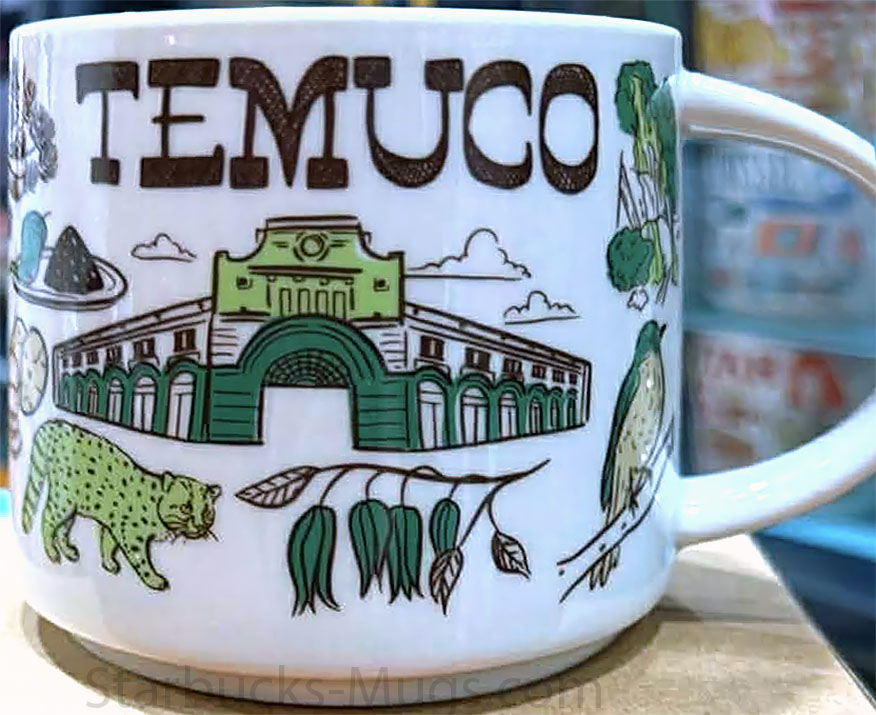
Due to its scarcity, it was not easy to obtain photos of the recently released Been There Temuco mug. Many thanks to a friend of this blog for kindly providing them.
Temuco is a city in southern Chile known as a gateway to the Araucania region, an area rich in Mapuche heritage and dramatic natural landscapes. Founded in 1881 during the expansion of the Chilean frontier, the city developed as a commercial and cultural center surrounded by forests, rivers, and volcanoes. Today, Temuco blends urban life with strong rural and Indigenous influences. The mug design captures this connection between city landmarks and the powerful nature that surrounds it.
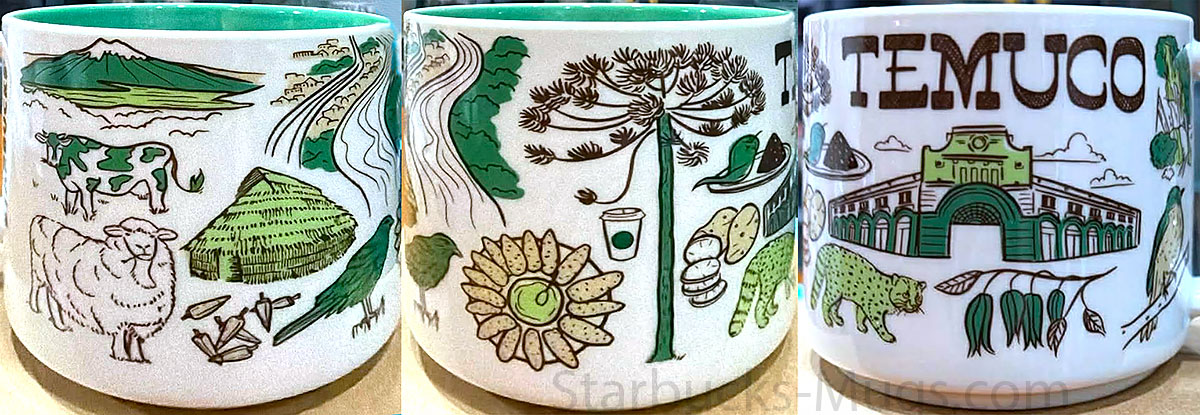
Here are some of Temuco’s symbols and landmarks, as seen in the mug’s design, each reflecting a different aspect of the region.
– Mercado Municipal stands as one of Temuco’s most recognizable buildings. Originally inaugurated in 1929, the market became a central hub for local produce, meats, seafood, and traditional crafts. After suffering a major fire in 2016, it underwent reconstruction and reopened in 2021, continuing its historic role in the city. Its presence on the front of the mug highlights Temuco’s commercial heart and everyday community life.
– Local flora and fauna represent the biodiversity of the Araucania region. Native forests, wetlands, and grasslands support a wide range of plant and animal species. The natural richness of the area defines both its economy and outdoor culture. Including these elements emphasizes Temuco’s close relationship with the surrounding environment.
– Monkey-puzzle tree, known locally as the Araucaria, is one of the most iconic trees of southern Chile. With its spiky, symmetrical branches, it has prehistoric origins and is sacred in Mapuche culture. These trees thrive in volcanic soils and mountainous terrain. Their distinctive silhouette adds a powerful regional symbol to the design.
– Margay reflects the region’s more elusive wildlife. This small, spotted wild cat inhabits forested areas and is known for its agility and tree-climbing abilities. Though rarely seen, it represents the untamed side of southern Chile. Its inclusion highlights the diversity of native animal life.
– Sheep and cattle point to the strong agricultural traditions around Temuco. The surrounding countryside supports livestock farming, which plays an important role in the local economy. Open fields dotted with grazing animals are a common sight outside the city.
– Llaima volcano rises dramatically within Conguillio National Park near Temuco. One of the most active volcanoes in Chile, it features snow-capped slopes and hardened lava fields. The volcano shapes the region’s geography and scenic identity.
– The Cautín River flows through Temuco and has influenced the city’s development since its founding. The river supports agriculture, recreation, and local ecosystems. Bridges and riverside views are part of daily life for residents.