Been There – Coquimbo


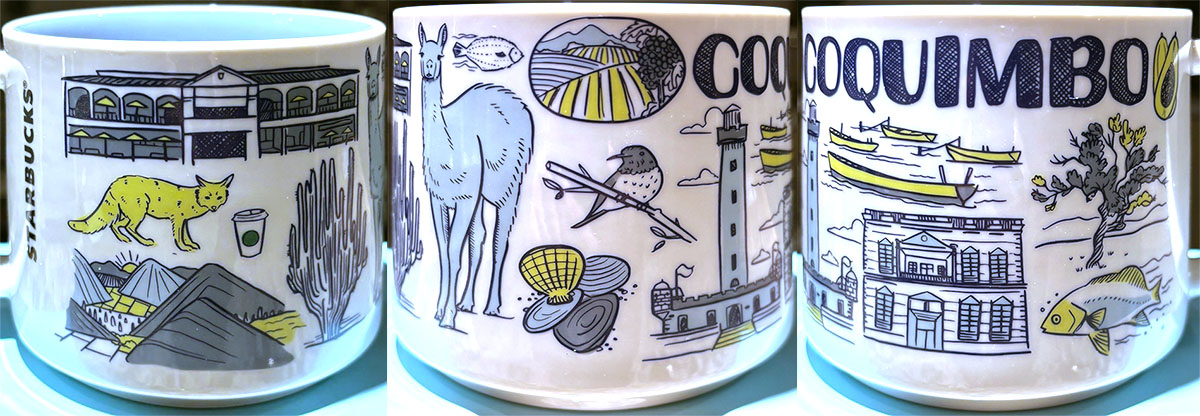
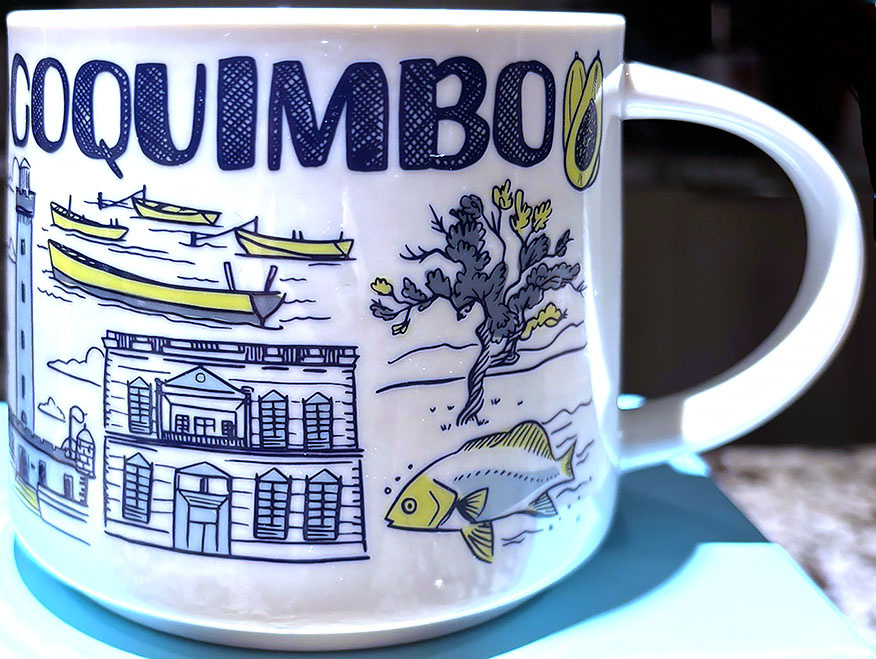
Been There Coquimbo is mug for a vibrant Chilean port city known for its colorful hills, rich maritime heritage, and sweeping views of the Pacific Ocean. I would like to thank the follower of our blog for the photos of this beautiful mug.
The Coquimbo Region in north-central Chile takes its name from the Coquimbo Bay and the city of Coquimbo, with “Coquimbo” likely derived from indigenous Diaguita words meaning “place of calm waters.” Spanish conquistadors arrived in the 1540s, establishing La Serena in 1544 as Chile’s second-oldest city and a strategic point along the route to Peru. The region’s economy historically centered on mining, particularly copper, silver, and later iron, while coastal areas developed fishing and port industries. The 19th and 20th centuries saw agricultural expansion in the fertile valleys, making the region a major producer of table grapes and pisco grapes. Today, the Coquimbo Region balances mining heritage with tourism, astronomy (hosting world-class observatories), and agriculture, while its beaches and colonial architecture attract visitors year-round.
– Historic Centre of La Serena preserves colonial and neoclassical architecture with its distinctive stone churches, plaza, and buildings reflecting Spanish colonial planning. Founded in 1544, La Serena underwent major reconstruction in the 1950s under the “Plan Serena,” that created the harmonious architectural ensemble visible today. The historic center showcases Chile’s second-oldest city and its evolution from colonial outpost to regional capital.
– Faro Monumental de La Serena stands as La Serena’s iconic lighthouse overlooking the Pacific Ocean and Avenida del Mar. Built in neocolonial style with its distinctive white tower, the lighthouse has become the city’s most recognizable landmark. The monument serves as a popular meeting point along the coastal promenade for both locals and visitors.
– Cruz del Tercer Milenio, while not visible in the design, deserves mention as it rises 305 feet above Coquimbo as the tallest monument in South America, completed in 2000 to mark the new millennium. This enormous cross contains an elevator taking visitors to observation decks offering panoramic views of the bay, cities, and coastline. The monument becomes particularly spectacular at night when illuminated, visible throughout the Coquimbo-La Serena conurbation and serving as a beacon for the region.
– Llamas and alpacas represent the Andean wildlife and cultural connections to indigenous highland traditions in the Coquimbo Region’s interior valleys. These camelids appear in rural areas and tourist attractions, linking the coastal region to Andean heritage. Their presence connects the diverse geography spanning from Pacific beaches to Andean foothills.
– Cactus thrives in the Coquimbo Region’s semi-arid climate, with columnar cacti dotting hillsides and valleys in the distinctive landscape. These drought-adapted plants characterize the region’s desert and Mediterranean ecosystems. The abundant cacti define the arid northern Chilean environment and unique flora adapted to minimal rainfall.
– Seabirds populate the Coquimbo coastline, with species like pelicans, cormorants, and gulls thriving along the nutrient-rich Pacific waters. The Humboldt Current supports abundant marine life that sustains large seabird populations. These coastal birds animate the shoreline and fishing harbors throughout the region.
– Fishing boats line the harbors of Coquimbo and coastal towns, with artisanal fishing remaining vital to the local economy and culture. Traditional wooden boats and modern vessels harvest fish, shellfish, and seafood from productive Pacific waters. The fishing fleet continues maritime traditions, sustaining coastal communities for centuries.
– Shellfish and seafood dominate Coquimbo’s culinary identity, with fresh catches including machas, sea urchins, and various fish prepared in local restaurants. The cold Humboldt Current creates ideal conditions for diverse marine species. Seafood cuisine showcases the region’s coastal bounty and meals enjoyed at harbor-side restaurants.
– Colonial architecture characterizes La Serena and regional towns with stone buildings, arcaded plazas, and churches reflecting Spanish colonial and later neoclassical influences. The distinctive architecture creates cohesive historic districts, preserving centuries of building traditions. These structures tell the story of Spanish settlement and regional development over nearly 500 years.