Discovery Series Ornament – México


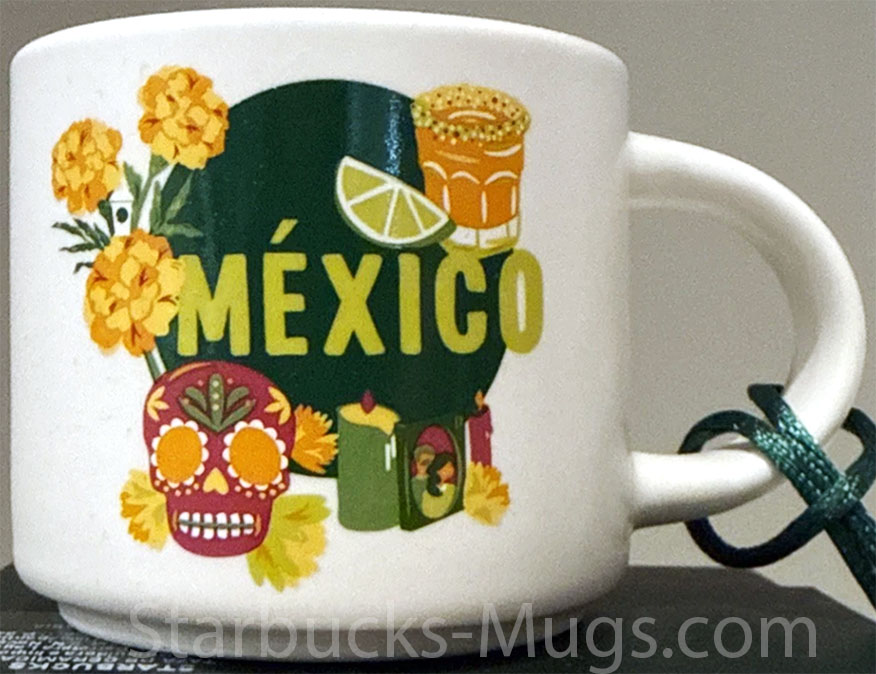
The Starbucks Discovery Series Ornament Mexico focuses on a few traditions and foods that are instantly associated with the country. Mexico’s history stretches from ancient civilizations such as the Maya and Mexica to more than three centuries of Spanish colonial rule and independence in the early 19th century. Today, its identity is shaped by an enormous variety of regional cultures, foods, festivals, and traditions, several of which appear in this compact ornament design.
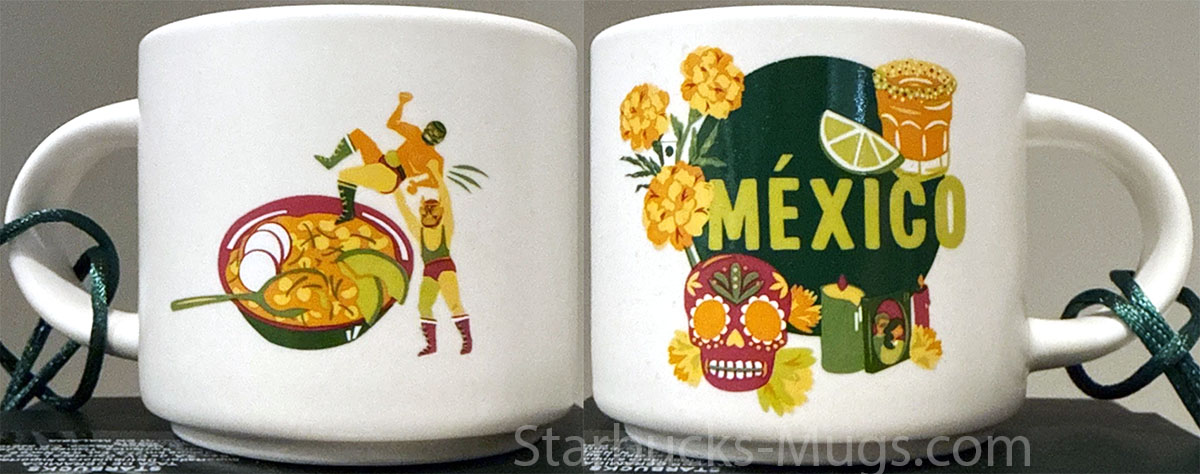
– The bright orange cempasúchil, or Mexican marigold, is closely connected with Día de Muertos. The flowers are used to decorate graves and ofrendas, where their vivid color and strong scent traditionally help guide the spirits of the dead back to their families. They are one of the most recognizable elements of Mexico’s Day of the Dead celebrations.
– The decorated sugar skull, or calavera de azúcar, is another familiar part of Día de Muertos. These colorful skulls are placed on altars and often decorated with bright icing, flowers, and names. Rather than treating death only as something sombre, calaveras reflect the playful and celebratory side of the holiday.
– The candles and small altar elements continue the Día de Muertos theme. Ofrendas are traditionally decorated with photographs, food, drinks, flowers, candles, and personal objects for deceased family members. The celebration takes place around November 1 and 2 and combines Indigenous traditions with later Catholic influences.
– Tequila, shown with a lime wedge, is one of Mexico’s most famous drinks. It is produced primarily from blue agave and is strongly associated with the state of Jalisco, particularly the town of Tequila. The drink can be enjoyed on its own or in cocktails and has become one of Mexico’s best-known culinary exports.
– The large bowl in the back appears to be pozole, a traditional soup or stew made with hominy and usually pork or chicken. Depending on the region, it can be served in red, green, or white versions and is commonly topped with ingredients such as lettuce or cabbage, radish, onion, lime, and chile. Pozole is especially popular during celebrations and family gatherings.
– The masked figure refers to lucha libre, Mexico’s colorful and theatrical style of professional wrestling. The sport is known for acrobatic moves, dramatic rivalries, and especially the elaborate masks worn by many wrestlers, or luchadores. These masks often become an important part of a wrestler’s identity and have made lucha libre recognizable far beyond Mexico.