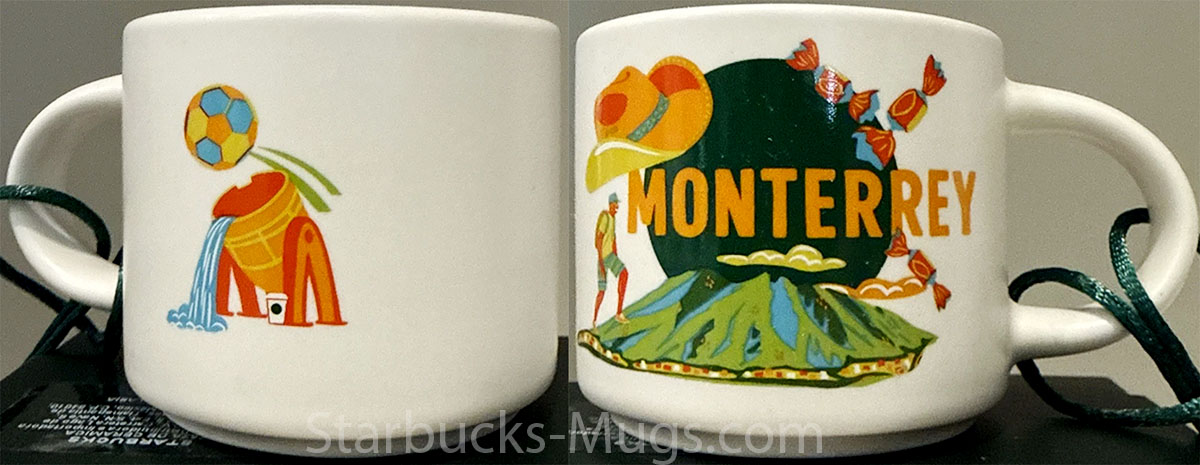
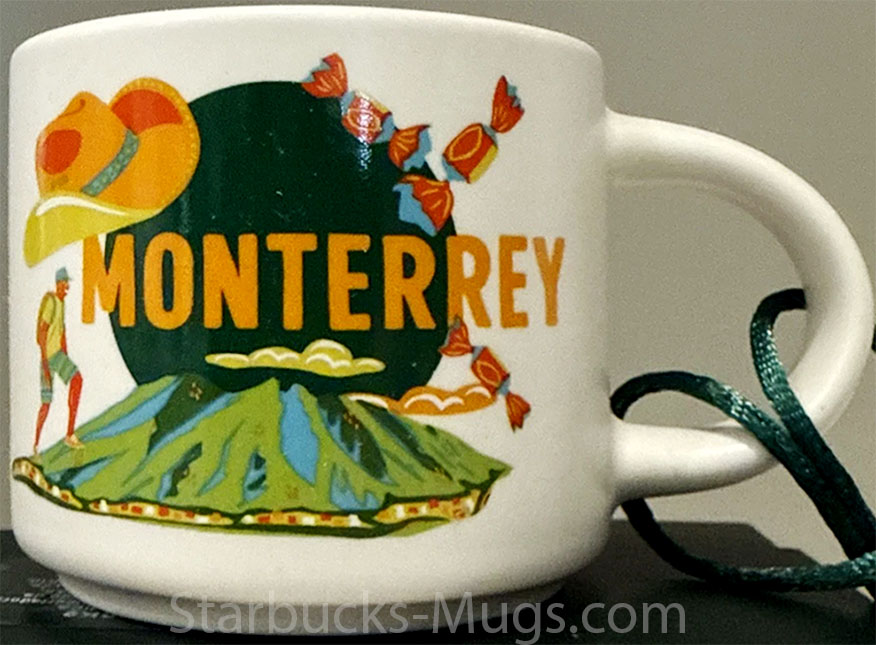
Discovery Series Ornament – Monterrey


The Starbucks Discovery Series Ornament Monterrey highlights a compact selection of symbols closely associated with the capital of Nuevo León. Monterrey was founded in 1596 and grew into one of Mexico’s major industrial and business centers, while its setting at the foot of the Sierra Madre Oriental gives the city one of the country’s most dramatic urban backdrops.
Here are some of the landmarks, foods, and traditions featured in the design:
– The sombrero recalls the ranching and northern Mexican traditions strongly associated with Nuevo León. Wide-brimmed hats have long been practical clothing in the region’s hot climate and also became part of the familiar visual identity of northern Mexico.
– The wrapped sweets are glorias, one of Nuevo León’s best-known traditional candies. Originally associated with Linares, they are made primarily from milk and pecans and have a soft, caramel-like texture. They are among the regional sweets most closely linked with the state and are commonly sold as souvenirs.
– Cerro de la Silla is Monterrey’s most recognizable natural landmark, named for its distinctive saddle-shaped profile. The mountain rises dramatically beside the metropolitan area and forms an impressive backdrop to the city skyline. It is also a major destination for hiking, climbing, mountain biking, and panoramic photography, with popular routes leading toward the old cable-car platform, Pico Norte, and the antennas.
– Soccer is a major part of local culture in Monterrey. The metropolitan area is home to C.F. Monterrey and Tigres UANL, whose rivalry is known as the Clásico Regiomontano. Matches between the two clubs are among the most anticipated sporting events in northern Mexico.
– The Fuente El Crisol is one of the recognizable landmarks along Paseo Santa Lucía near Parque Fundidora. Its tall sculptural form sends water cascading down the structure and has become a familiar photo spot, especially with Cerro de la Silla visible in the background. The fountain is well known enough that it was even selected, together with Cerro de la Silla, for imagery connected with Monterrey’s role as a 2026 World Cup host city.