Discovery Series – Kyoto


The Starbucks Discovery Series Kyoto mug explores a city that served as Japan’s imperial capital for more than a thousand years, from 794 until the emperor moved to Tokyo in 1869. Over the centuries, Kyoto became one of the country’s most important centers of religion, art, traditional crafts, and court culture. Much of that heritage survived the rapid modernization experienced elsewhere in Japan, leaving the city with an extraordinary concentration of temples, historic neighborhoods, gardens, and traditional wooden houses.
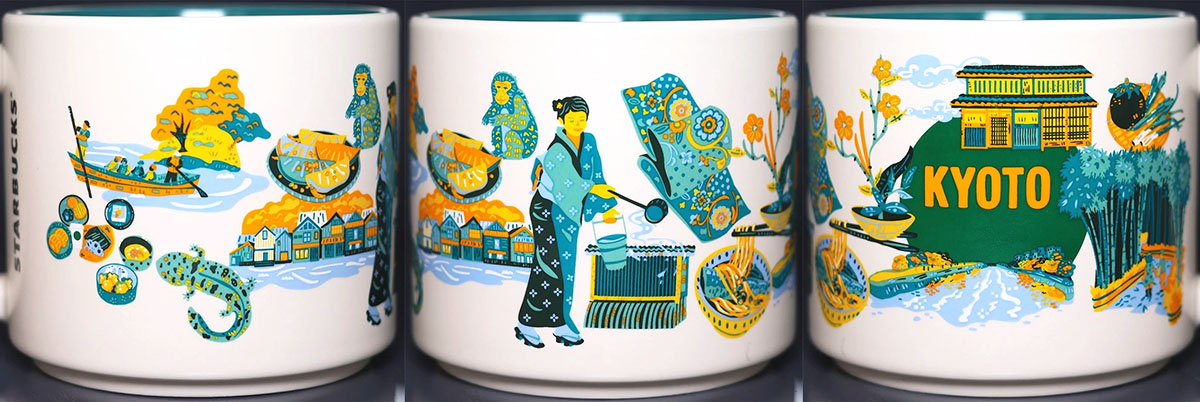
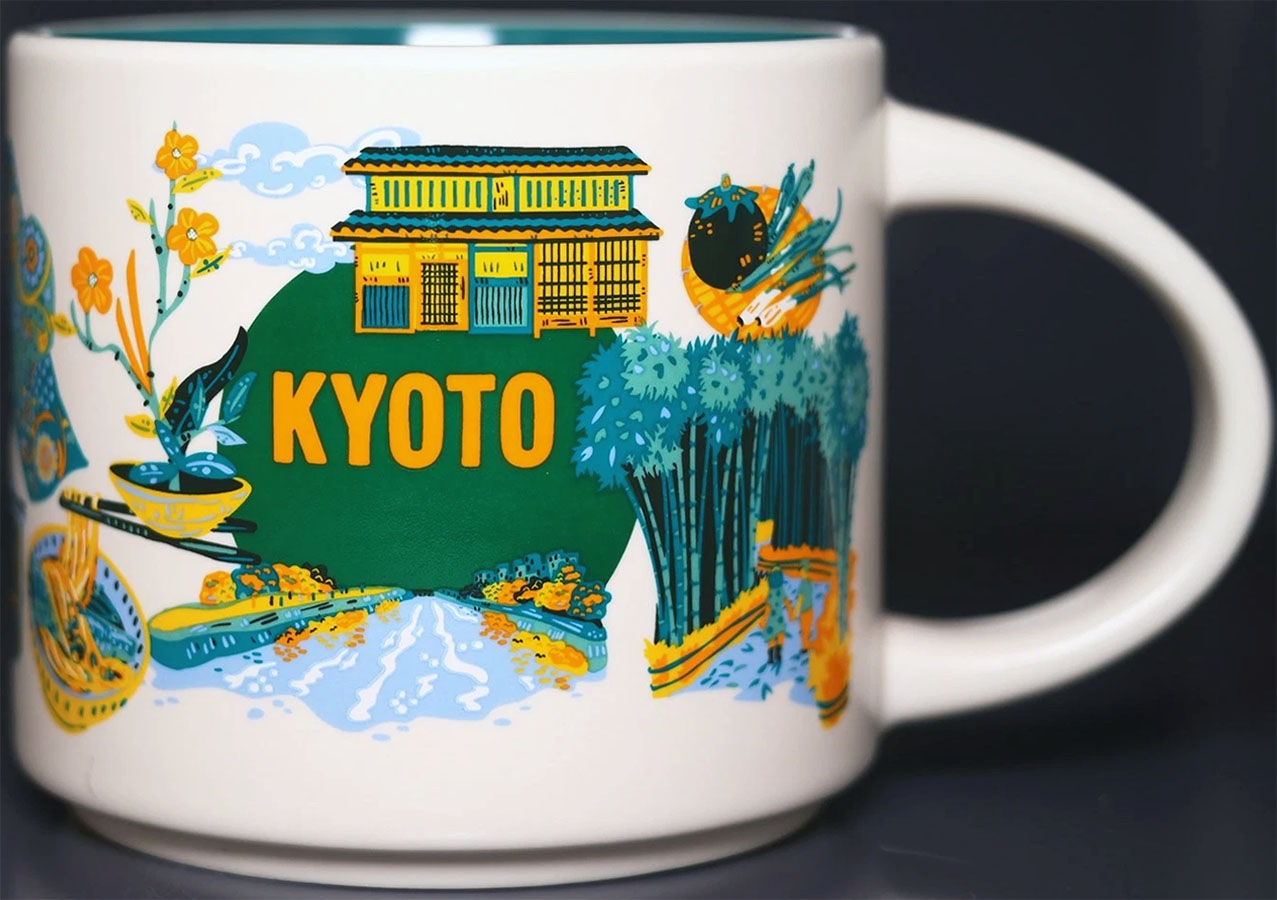
– The traditional building above the city name is the Starbucks Coffee Kyoto Ninenzaka Yasaka Chaya, one of the most distinctive Starbucks stores in Japan. Opened in 2017, it occupies a traditional Japanese house more than 100 years old on Ninenzaka, the historic street leading toward Kiyomizu-dera. The exterior was carefully preserved, while the interior incorporates tatami rooms, noren curtains, washi artwork, and fabric woven using techniques associated with Nishijin textiles.
– The bamboo grove is one of the most recognizable landscapes associated with Kyoto, particularly around Arashiyama. Tall bamboo stalks form dense green corridors that have become one of the city’s most photographed natural sights. Bamboo has also played an important role in Japanese crafts, gardens, and architecture for centuries.
– The Kamo River runs through central Kyoto and has long been part of everyday life in the city. Its banks are popular for walking, cycling, and relaxing, while traditional restaurants along sections of the river set up raised outdoor platforms during the warmer months. The broad river and its stepping stones create some of the most familiar views of modern Kyoto.
– The bowl of small dishes is obanzai, Kyoto’s traditional home-style cuisine. Obanzai typically uses seasonal vegetables, tofu, and other locally available ingredients, prepared in simple ways that minimize waste and make use of leftovers. It remains closely associated with everyday Kyoto cooking rather than elaborate restaurant cuisine.
– The woman and the textile imagery highlight Kyoto’s textile traditions, which have been an important part of the city’s craftsmanship for centuries. Kyoto is especially famous for Nishijin-ori, an elaborate style of weaving whose roots can be traced back more than a thousand years and which developed strongly after the Onin War in the 15th century. These richly patterned fabrics are traditionally used for kimono and especially obi sashes, while Kyoto is also known for dyeing techniques such as Kyo-yuzen. The elegant clothing and colorful patterns on the mug fit particularly well with this long history of silk weaving, dyeing, and kimono production.
– Uchimizu, the custom of sprinkling water on streets and entrances, is another distinctly traditional detail included in the design. The practice helps cool the ground during hot weather, suppresses dust, and gives streets a refreshed appearance. It can still be seen outside shops, restaurants, and traditional houses, and Starbucks specifically names uchimizu among the Kyoto motifs selected for the series.
– The row of machiya represents Kyoto’s traditional wooden townhouses. These narrow buildings historically combined a merchant’s shop or workshop at the front with living quarters behind it, often extending surprisingly far back from the street. Surviving machiya remain particularly characteristic of older Kyoto neighborhoods and are now used as homes, restaurants, shops, and guesthouses.
– The assortment of small dishes on the back continues Kyoto’s strong food culture, with seasonal presentation playing an especially important role. Kyoto cuisine traditionally emphasizes delicate flavors, local vegetables, tofu, pickles, and carefully arranged portions, often reflecting the season in both ingredients and appearance.
– The long spotted animal appears to be a Japanese giant salamander, one of Japan’s most unusual native animals. These large amphibians inhabit cool, clean rivers in western Japan and can grow to more than 4 feet (1.2 meters) long. Kyoto also has a particularly visible connection to the species through the Kyoto Aquarium, where giant salamanders are among its best-known residents.
– The Iwatayama Monkey Park in Arashiyama is home to a troop of wild Japanese macaques living on the forested slopes above the city. Visitors reach the park by hiking uphill and can observe the monkeys roaming freely while enjoying panoramic views across Kyoto. The animals are Japanese macaques, often called snow monkeys, although Kyoto’s much milder winters make the setting very different from the snowy scenes commonly associated with the species.
– The riverboat recalls boating traditions around Kyoto’s rivers, especially in Arashiyama. Pleasure boats and traditional vessels offer views of the surrounding mountains and riverside scenery, while seasonal activities on the water have long been part of the area’s appeal.
– Finally, the mountains and autumn foliage reflect Kyoto’s dramatic seasonal scenery. Forested hills surround much of the city, turning vivid shades of red, orange, and yellow in autumn. This strong connection between historic architecture and changing natural scenery is one of the reasons Kyoto looks so different from season to season.