Discovery Series – Kobe


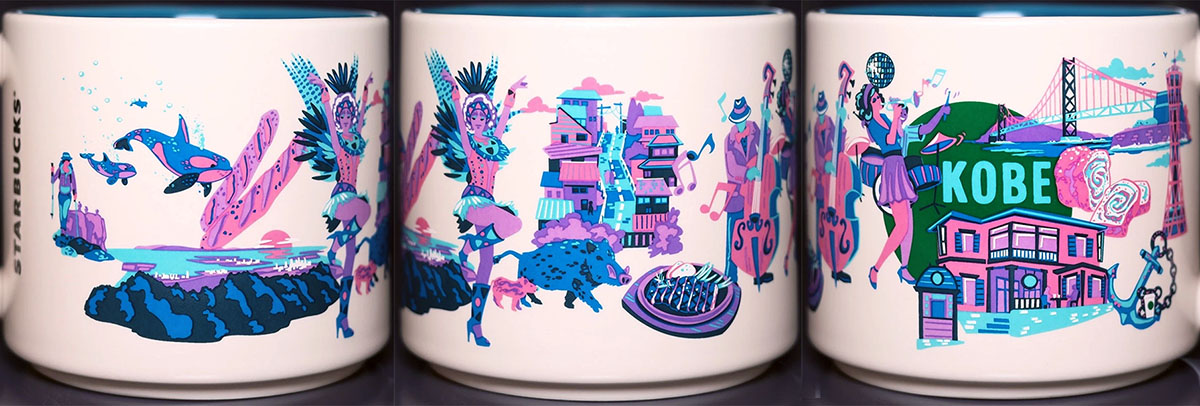
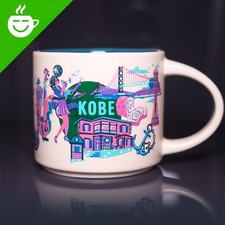
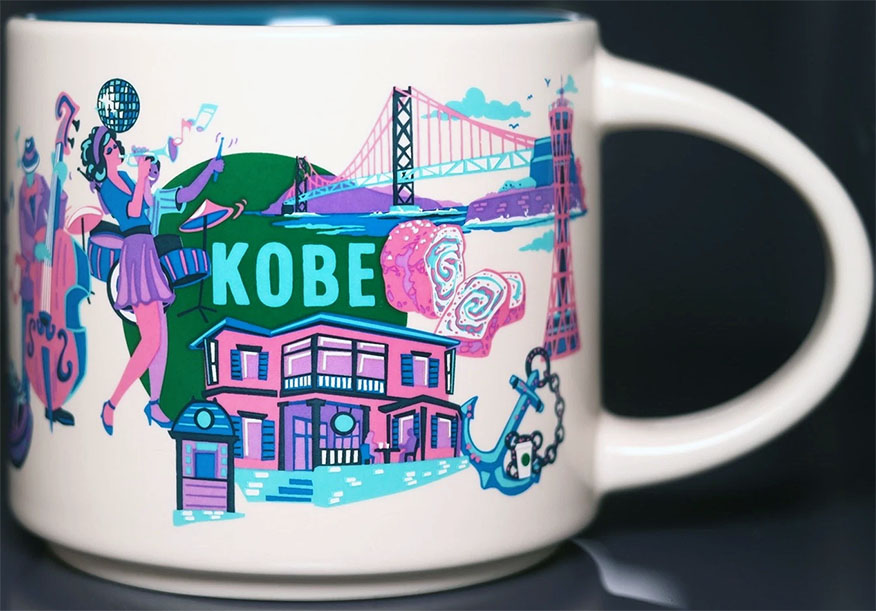
The Starbucks Discovery Series Kobe mug focuses on the port city’s distinctive mix of maritime scenery, Western influence, music, food, and hillside neighborhoods. Kobe developed rapidly after its port opened to foreign trade in 1868, and the arrival of merchants and residents from overseas left a lasting mark on the city’s architecture and culture. That history is especially visible in areas such as Kitano, while the harbor, Mount Rokko, and the city’s strong food and music traditions continue to shape Kobe’s identity today. Starbucks itself highlights the Kobe Kitano Ijinkan store, jazz, and the anchor among the main motifs used for this design.
– The Akashi Kaikyo Bridge is one of the most impressive landmarks associated with Kobe. Opened in 1998, the suspension bridge stretches across the Akashi Strait between Kobe and Awaji Island and measures almost 2.5 miles in total length. Often called the Pearl Bridge, it is also illuminated at night, adding another striking feature to the Kobe waterfront.
– The jazz singer and the jazz musician playing upright bass refer to Kobe’s long connection with jazz music. The city is widely associated with the early development of jazz in Japan, and live performances remain an important part of its cultural scene. Jazz clubs, festivals, and small venues continue this tradition, making music a natural addition to the mug.
– The pink slices beside the city name appear to represent Kobe beef, perhaps the food most internationally associated with the city. Kobe beef comes from specially certified Tajima cattle raised in Hyogo Prefecture and is known for its fine marbling and tenderness. It has become one of the defining culinary symbols of Kobe.
– The building below the title is the Starbucks Kobe Kitano Ijinkan store, one of the most distinctive Starbucks locations in Japan. It occupies a historic Western-style house in the Kitano district, an area known for residences built by foreign merchants and diplomats after Kobe opened to international trade. Starbucks specifically identifies this store as one of the main motifs selected for the Kobe Discovery Series design.
– The large anchor is a simple but fitting reference to Kobe’s maritime history. The city’s growth has always been closely tied to its port, which became one of Japan’s principal gateways for international trade after opening in the 19th century. Even today, the harbor remains a major part of Kobe’s identity and skyline.
– The hillside neighborhood appears to represent Kitano, one of Kobe’s most recognizable historic districts. Foreign residents began building Western-style homes here during the late 19th century, and several of these residences, known as ijinkan, survive today. The steep streets and mixture of Japanese and European architecture give the area a character quite different from many other parts of the city.
– The wild boar is closely associated with the wooded slopes around Mount Rokko and the residential areas bordering the mountains. Wild boars are commonly encountered in the Kobe region and have become a familiar, if sometimes troublesome, part of life near the city’s greener neighborhoods.
– The round dish is Akashiyaki, a specialty from nearby Akashi that is also strongly associated with Hyogo Prefecture. These soft, round dumplings are made with egg-rich batter and pieces of octopus, then dipped into a light dashi broth before eating. They resemble takoyaki at first glance but have a much softer texture and a different way of being served.
– The colorful dancer appears to represent the Kobe Festival, a major city celebration known for lively parades and performances. Dance groups, musicians, and elaborate costumes fill the streets during the festival, reflecting Kobe’s energetic and international atmosphere.