Discovery Series – Hiroshima


The Discovery Series Hiroshima mug tells the story of a city with a long history and a powerful modern identity. Hiroshima was founded as a castle town in 1589, when Mori Terumoto began construction of Hiroshima Castle. The city later developed into an important regional center, but its history changed forever on August 6, 1945, when an atomic bomb destroyed much of Hiroshima. Reconstruction began almost immediately, and the city was formally reshaped as a peace memorial city under a special law enacted in 1949.
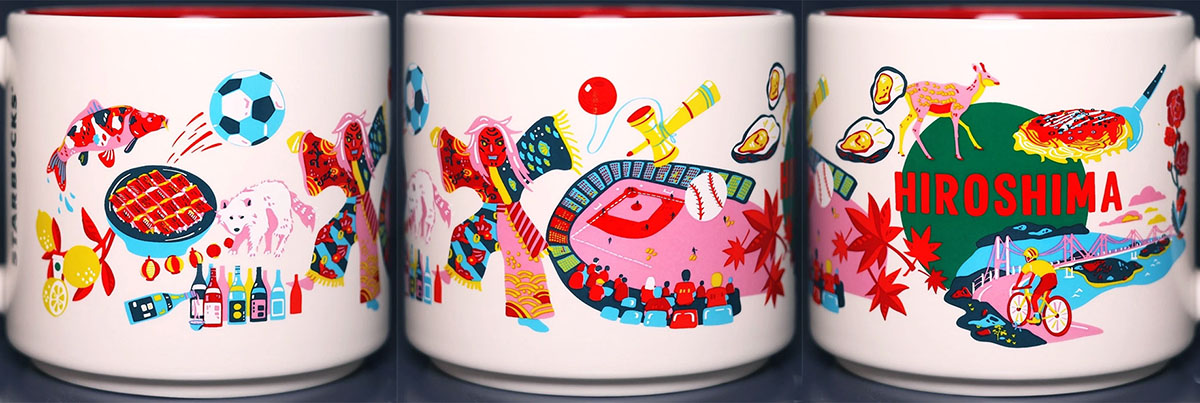
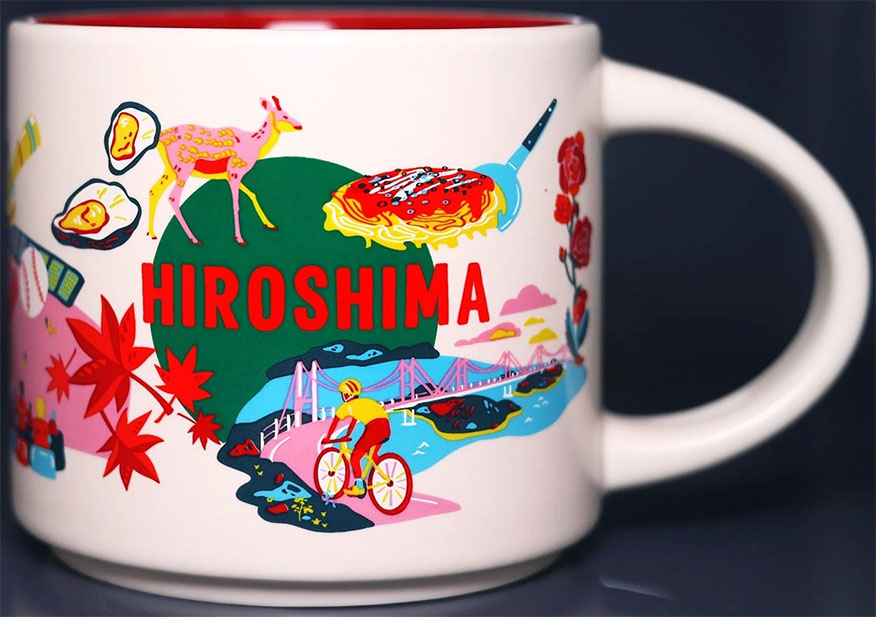
– The large Hiroshima oysters above the title are one of the prefecture’s best-known culinary specialties. The protected waters of Hiroshima Bay are especially suitable for oyster farming, and the region is one of Japan’s most important producers. They can be enjoyed in many different ways, from grilled and fried to incorporated into Hiroshima-style okonomiyaki.
– The Hiroshima Peace Memorial Park is represented by the familiar green landscape below the title, with the memorial area and surrounding rivers forming one of the city’s most important settings. Created as part of Hiroshima’s postwar reconstruction, the park serves as a place of remembrance for the victims of the atomic bombing and as a symbol of the city’s commitment to peace.
– The red bicycle may refer to Hiroshima’s strong cycling culture, while the bridge in the background is a reminder that the city is shaped by the rivers and islands of the Ota River delta. Hiroshima’s many bridges connect the different parts of the city and form an important part of its urban landscape.
– The maple leaves, or momiji, represent another familiar symbol of Hiroshima Prefecture. They are especially associated with Miyajima and its spectacular autumn colors, while maple-leaf-shaped momiji manju has become one of the region’s most famous souvenirs.
– The Miyajima deer shown beside the title represents the sacred island of Itsukushima, commonly known as Miyajima. Wild deer roam freely around the island and have become one of its most recognizable sights, alongside Itsukushima Shrine and its famous floating torii gate.
– The colorful kagura masks refer to Hiroshima’s rich tradition of theatrical dance and music. Kagura performances combine elaborate costumes, masks, and dramatic storytelling, often depicting gods, heroes, demons, and scenes from Japanese mythology.
– The Hiroshima Peace Memorial Stadium, shown in the center of the design, represents the city’s connection with baseball. Its distinctive shape makes it easy to associate with MAZDA Zoom-Zoom Stadium Hiroshima, the home of the Hiroshima Toyo Carp since 2009.
– The large baseball is another reference to the Hiroshima Toyo Carp, whose red uniforms are echoed by the players around the stadium. Baseball has become an important part of Hiroshima’s modern identity, and the Carp remain one of the city’s most passionately supported sports teams.
– The soccer ball likely represents Sanfrecce Hiroshima, the city’s professional football club. Alongside baseball, football has become another major part of Hiroshima’s sporting culture.
– The bowl of conger eel rice, known as anago meshi, represents one of the Hiroshima region’s best-known specialties. The dish consists of grilled conger eel served over seasoned rice and is particularly associated with Miyajima. It is commonly enjoyed by visitors to the island, where it has become a traditional local meal.
– The koi fish shown on the mug adds another connection to the waterways that shape Hiroshima. Koi are a familiar sight in Japanese ponds and gardens and have long been appreciated for their colorful appearance. In Japanese culture, they are also traditionally associated with perseverance and strength.