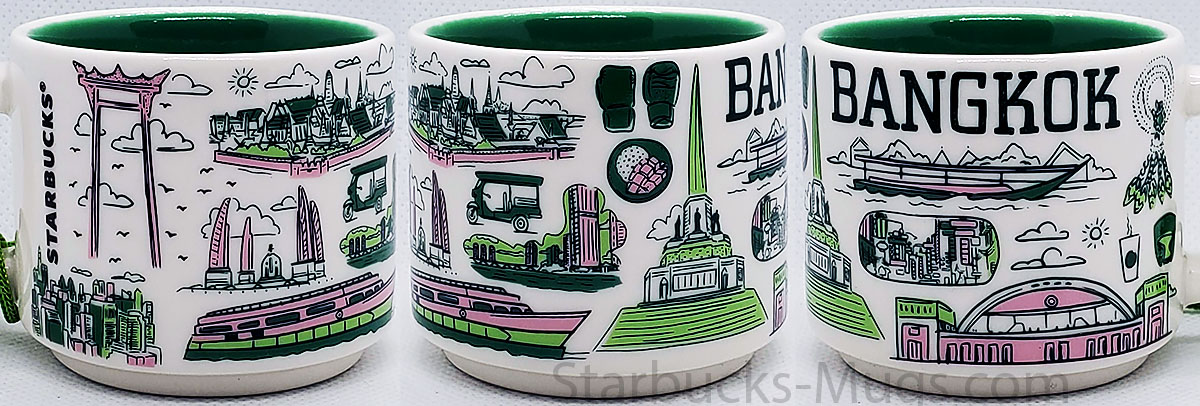

Been There Ornament – Bangkok


Another gift from a friend has joined my collection. The Been There Ornament Bangkok comes in a separate box, which seems to be in line with other releases from Thailand.
Bangkok’s story begins in the late 18th century, when King Rama I established it as the capital of Siam in 1782 after the fall of Ayutthaya. What started as a riverside settlement along the Chao Phraya River quickly grew into the political, cultural, and spiritual heart of the country. Over time, canals, royal compounds, and temples shaped the city’s layout, earning Bangkok a reputation as a place where tradition and daily life are deeply intertwined. Today, its history is still visible in palaces, monuments, and neighbourhoods that reflect centuries of royal and civic life.
Here are some of the landmarks as seen in the design of the Been There Ornament Bangkok:
– The Grand Palace is one of Bangkok’s most significant historical landmarks and has served as the official residence of Thai kings since 1782. Its complex of royal halls, temples, and courtyards reflects traditional Thai architecture combined with European influences. The palace remains a powerful symbol of the Thai monarchy and national identity.
– The Giant Swing is a towering ceremonial structure that dates back to the early Rattanakosin period. It was once used in a Brahmin ritual celebrating the rice harvest, where participants swung high above the ground to reach a ceremonial bag. Today, it stands as a reminder of Bangkok’s ancient religious traditions and rituals.
– The Democracy Monument marks a key moment in Thailand’s political history following the 1932 transition to a constitutional monarchy. Its central obelisk and surrounding reliefs symbolize liberty and governance. The monument continues to serve as an important civic gathering place in the heart of the city.
– Wat Arun, also known as the Temple of Dawn, rises prominently along the banks of the Chao Phraya River. Its central prang is intricately decorated with porcelain fragments that shimmer in the light. The temple is one of Bangkok’s most recognizable spiritual landmarks and offers panoramic views of the river.
– The Victory Monument commemorates Thailand’s military history and has become a major transportation hub. Surrounded by traffic circles, bus routes, and shopping areas, it reflects the city’s fast-paced urban life. The monument blends historical remembrance with modern daily activity.
– The Chao Phraya Express Boat plays a vital role in Bangkok’s transportation network. It connects key districts while offering views of temples, markets, and riverside communities. The boats highlight how the river continues to shape the city’s movement and culture.
– Hua Lamphong Railway Station has long been Bangkok’s primary rail gateway, linking the capital to destinations across Thailand. Its grand arched design reflects early 20th-century European architectural influence. The station represents the city’s role as a transportation and economic hub.
– Thai cuisine is an essential part of Bangkok’s cultural identity and everyday life. Dishes such as pad thai, tom yum, and green curry reflect a balance of sweet, sour, salty, and spicy flavours. Street food plays a major role, with vendors serving meals at all hours throughout the city. Regional ingredients and cooking techniques come together in vibrant combinations. Bangkok’s food scene offers a direct and flavorful connection to Thai tradition and modern life.