Been There – Phuket


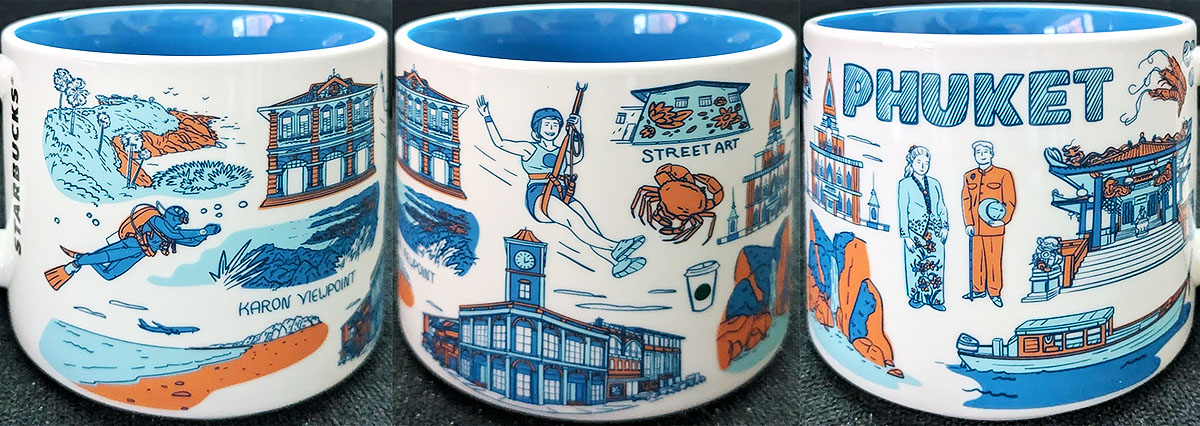
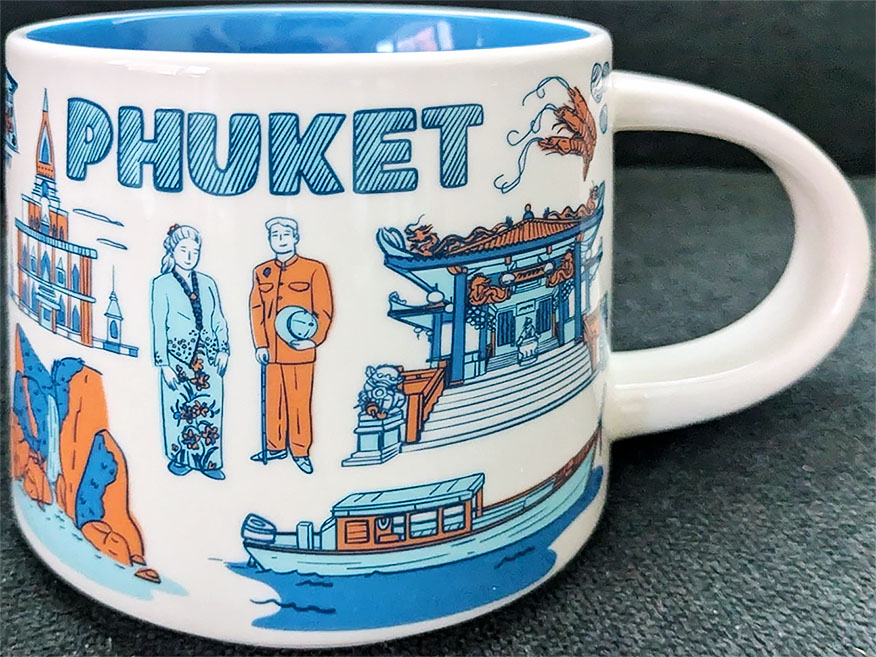
Been There Phuket is a mug for Thailand’s largest island, famous for its tropical beaches, clear waters, vibrant nightlife, and rich cultural heritage.
Phuket’s story unfolds over centuries, from its strategic position on ancient maritime trade routes connecting India and China to its prosperity through tin mining beginning in the 16th century. Chinese, Malay, and European traders left lasting influences on the island’s diverse culture, while the legendary defense against Burmese invaders in 1785 by heroines Thao Thep Kasattri and Thao Sri Sunthon remains a source of pride commemorated by a prominent monument. From a sleepy tin-mining and fishing island, Phuket transformed dramatically in the 1980s into Thailand’s premier beach destination, attracting millions of visitors annually while preserving its rich Sino-Portuguese heritage visible in Old Phuket Town’s colorful shophouses and temples.
– Scuba diving and snorkeling draw water enthusiasts to Phuket’s crystal-clear Andaman Sea waters teeming with tropical fish, coral reefs, and diverse marine life. The island serves as a gateway to world-class dive sites including the Similan Islands, Phi Phi Islands, and numerous nearby reefs accessible by day trips. Underwater exploration represents Phuket’s position as one of Southeast Asia’s premier diving destinations with opportunities for all skill levels.
– Sino-Portuguese architecture lines the streets of Old Phuket Town with colorful shophouses featuring ornate facades, shuttered windows, and pastel hues built by wealthy Chinese merchants in the 19th and early 20th centuries. These distinctive buildings blend Chinese shophouse traditions with Portuguese colonial influences, creating a unique aesthetic found in few other places. The preserved architecture tells the story of Phuket’s multicultural trading heritage and the prosperity brought by tin mining.
– Street art and murals transform Old Phuket Town’s historic walls into an open-air gallery, with vibrant paintings depicting local life, culture, and history throughout the Soi Romanee area. Artists have revitalized heritage neighborhoods by adding colorful contemporary art that complements the vintage architecture. Street art represents Phuket’s creative renaissance and efforts to preserve historic districts while attracting new generations of visitors.
– Crabs and seafood dominate Phuket’s culinary scene, with fresh catches prepared in aromatic Thai curries, grilled dishes, and seafood feasts at beachside restaurants. The island’s surrounding waters provide an abundance of crabs, prawns, fish, and shellfish that define local cuisine. Fresh seafood represents Phuket’s fishing heritage and the ocean bounty that sustains both traditional livelihoods and the tourism industry.
– Big Buddha sits atop Nakkerd Hill as one of Phuket’s most revered landmarks, with the massive 147-foot tall white marble statue visible from much of the island. Completed in 2012, this sacred site offers panoramic views of Phuket’s coastline, mountains, and Chalong Bay below. The Big Buddha represents the island’s Buddhist faith and provides a peaceful spiritual retreat above the bustling beaches.
– Long-tail boats with their distinctive elongated propeller shafts and colorfully painted wooden hulls serve as Phuket’s iconic water taxis for island hopping and beach transfers. These traditional Thai vessels ferry visitors to hidden coves, nearby islands, and secluded beaches throughout the Andaman Sea. Long-tail boats symbolize Thai maritime culture and the authentic coastal experience that remains central to Phuket’s appeal.
– Karon Viewpoint offers one of Phuket’s most spectacular panoramas, overlooking three pristine bays – Kata Noi, Kata, and Karon – with their curved white sand beaches and turquoise waters. This elevated lookout between Kata and Nai Harn beaches draws photographers and sightseers seeking the quintessential Phuket coastal view. The viewpoint represents the island’s stunning natural beauty that has made it one of Asia’s most photographed destinations.