Discovery Series – Calgary


Let’s continue our journey across Canada with the review of this beautiful Discovery Series Calgary mug.
Calgary began as a small North West Mounted Police post in 1875 and grew alongside the expansion of railways, ranching, and settlement across Western Canada. Its position between the Prairies and the Rocky Mountains helped it develop into a strategic center for trade, agriculture, and later energy industries. Over time, Calgary evolved into a major Canadian city that balances frontier traditions with a modern, forward-looking economy.
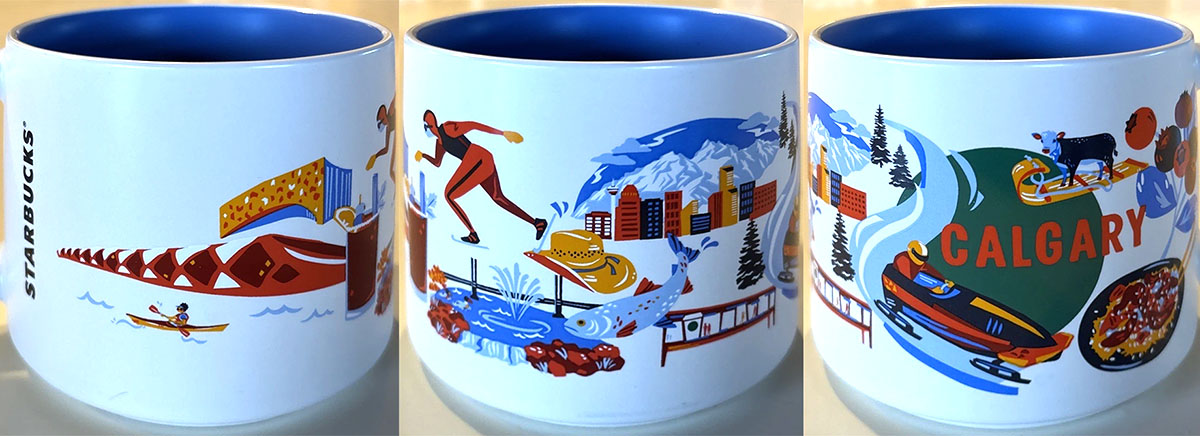
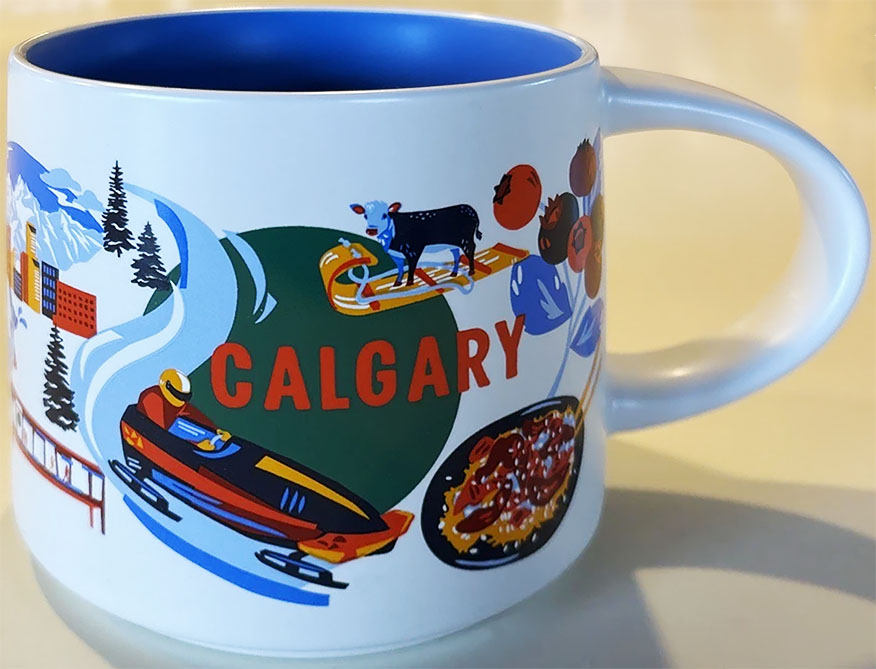
– Canada Olympic Park reflects Calgary’s international spotlight during the 1988 Winter Olympics, the first Winter Games hosted by Canada. Built for Olympic competition, the park features facilities for bobsleigh, speed skating, and ski jumping. It remains an active training and recreation site, preserving Calgary’s Olympic legacy and passion for winter sports.
– The Calgary Stampede is one of the city’s most famous traditions, earning Calgary the nickname Cowtown. First held in 1912, the Stampede celebrates ranching heritage through rodeos, parades, agricultural showcases, and live entertainment. This annual event highlights Calgary’s enduring connection to Western culture and community pride.
– The downtown skyline with the Rocky Mountains rising in the distance captures Calgary’s striking setting. Modern skyscrapers reflect the city’s economic growth, while the nearby mountains serve as a constant reminder of nature’s presence. This contrast defines Calgary as a city where urban life and wilderness exist side by side.
– The Plus 15 network is a unique feature of downtown Calgary, consisting of enclosed pedestrian walkways suspended about 15 feet above street level. Developed in the 1970s, it allows people to move comfortably between buildings year-round, especially during winter. This system reflects Calgary’s practical approach to climate and urban design.
– The Peace Bridge, visible on the back of the ornament, spans the Bow River and connects downtown with residential neighbourhoods. Designed by architect Santiago Calatrava and opened in 2012, the bridge is reserved for pedestrians and cyclists. Its striking red structure has become a modern symbol of connectivity and public space.
– Prince’s Island Park offers a green retreat just steps from the city’s core. Located on the Bow River, the park hosts festivals, walking paths, and quiet natural areas. It highlights Calgary’s commitment to preserving open spaces within its urban landscape.
– Kayaking and fishing reflect Calgary’s strong outdoor lifestyle, supported by nearby rivers and mountain-fed waterways. The Bow and Elbow Rivers provide opportunities for paddling and fly fishing directly within the city. These activities emphasize how closely Calgarians live with nature year-round.
– Ginger beef represents Calgary’s signature dish, created in the city in the 1970s. This sweet and crispy Chinese-Canadian specialty became widely popular and is now associated with Calgary’s diverse food scene. It reflects the city’s multicultural influences and its ability to create traditions of its own.
– The Caesar cocktail is one of Calgary’s most famous culinary contributions and a uniquely Canadian creation. It was invented in 1969 at the Calgary Inn by bartender Walter Chell, who developed the drink to celebrate the opening of the hotel’s Italian restaurant. Made with vodka, Clamato juice, Worcestershire sauce, hot sauce, and a celery salt rim, the Caesar quickly became a national favourite and remains closely associated with Calgary to this day.