Discovery Series – Colorado


Funny enough, I reviewed all the city mugs from Colorado before adding the Discovery Series Colorado state mug.
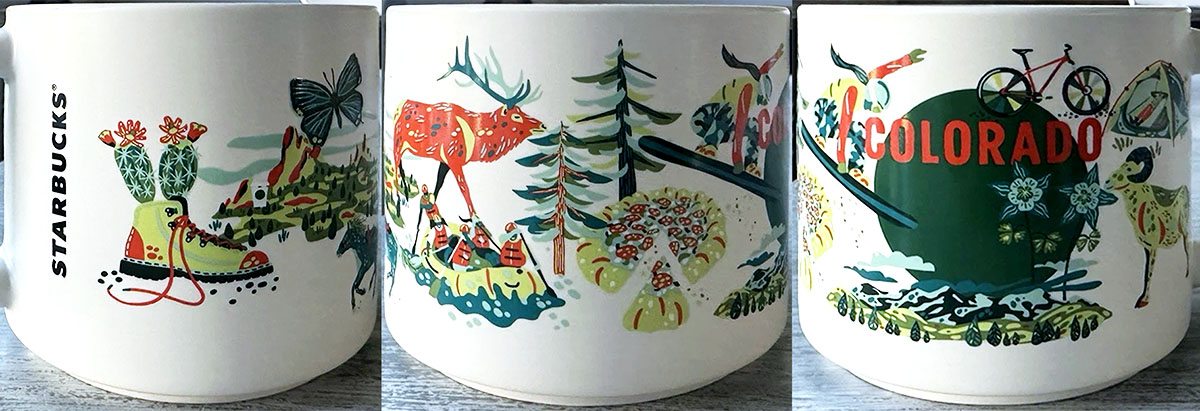
Colorado, admitted to the Union in 1876 as the Centennial State, is known for its high elevations, dramatic mountain ranges, and expansive outdoor spaces. From alpine peaks to rolling plains, the state offers remarkable geographic diversity. Its identity is closely tied to wildlife, state symbols, and year-round adventure. The mug design gathers these elements into a vivid snapshot of Colorado’s natural character.
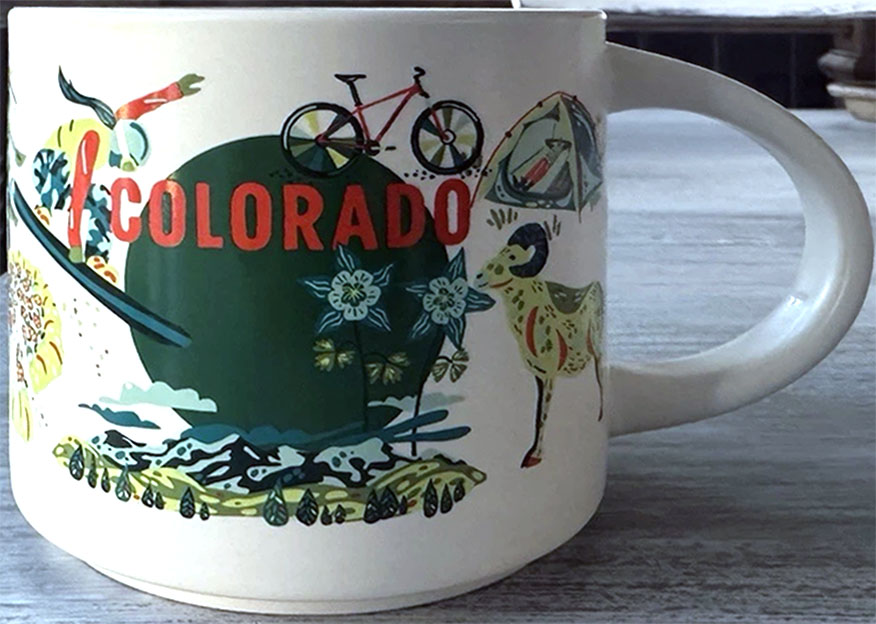
Shown throughout the design are a collection of official state symbols and iconic landscapes that reflect Colorado’s environment and lifestyle.
– Rocky Mountain Bighorn Sheep (State Animal) is one of the most recognizable mammals in Colorado. Known for its massive curved horns and agility on steep cliffs, it inhabits mountainous terrain across the state. These sheep are often spotted in rocky alpine areas and canyon walls.
– Lark Bunting (State Bird) is a small black bird with distinctive white wing patches. During breeding season, males display bold black plumage, while females and nonbreeding males appear brown and streaked. The species thrives in the grasslands and open plains of eastern Colorado.
– Western Tiger Salamander (State Amphibian) is a large, striking amphibian marked by yellow or cream-colored spots and stripes against a dark body. It inhabits grasslands, forests, and areas near ponds or slow-moving water. Much of its life is spent underground in burrows.
– Rocky Mountain Columbine (State Flower) features delicate white petals accented with lavender-blue tones and yellow centers. It blooms in alpine and subalpine regions during the summer months. The flower is especially associated with higher elevations and mountain meadows.
– Claret Cup Cactus (State Cactus) grows in dry, rocky soils across parts of Colorado. It produces vibrant red, cup-shaped flowers that contrast sharply against desert and canyon landscapes. The cactus is well adapted to arid conditions and high-elevation deserts.
– Colorado Hairstreak Butterfly (State Insect) is identified by its vivid purple wings bordered in black and orange. It inhabits oak woodlands and shrublands, particularly in the southern parts of the state. The butterfly is most visible during mid to late summer.
– Colorado Blue Spruce (State Tree) is a tall evergreen recognized by its blue-green needles and conical shape. It grows naturally along mountain streams and valleys. The tree is widely planted as an ornamental species throughout the United States.
– Rocky Mountains dominate the western half of the state. Snow-capped peaks, alpine lakes, and forested slopes define the landscape. Many of the state’s highest elevations are found within this range, including numerous fourteeners that rise above 14,000 feet.
– Deer are common throughout Colorado in forests, foothills, and open plains. Mule deer are especially widespread and are frequently seen near roadways and mountain towns. Their presence reflects the state’s abundant wildlife habitats.
– Outdoor activities in Colorado are central to everyday life and tourism. Hiking trails range from gentle foothill paths to challenging high-altitude climbs. Whitewater rafting takes place on rivers such as the Arkansas and Colorado, drawing adventure seekers each season. Camping opportunities span national parks, forests, and backcountry sites beneath clear mountain skies. Mountain biking is also widely popular, with extensive trail systems winding through forests and desert terrain alike.
– Colorado-style pizza, often associated with thick, braided crusts and hearty toppings, adds a culinary element to the design. This regional style typically features a slightly sweet crust and is sometimes served with honey for dipping. It reflects a distinctive local take on a familiar favourite.