Discovery Series – Montréal


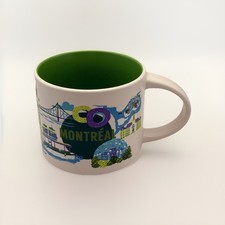
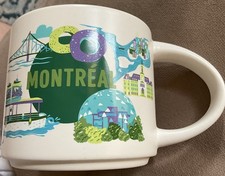
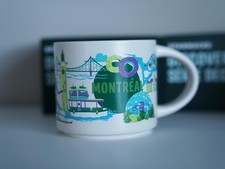
Discovery Series Montréal is a mug for a city that blends European charm and North American energy, where historic streets, vibrant festivals, and a world-class food scene come together. I reviewed the ornament for Montréal more than one year ago!
Montreal’s story begins in 1642 when French settlers established Ville-Marie on an island in the St. Lawrence River, naming it after Mount Royal, the triple-peaked hill at its heart. The city flourished as New France’s commercial center before British conquest in 1760 created the unique bicultural character that defines Montreal today. Waves of immigration – Irish, Italian, Jewish, and more recently from around the globe – layered cultures onto the French foundation, while the Quiet Revolution of the 1960s transformed Quebec society and politics. From hosting Expo 67 and the 1976 Olympics to surviving economic uncertainty and embracing its cosmopolitan identity, Montreal has evolved into North America’s most European city, where French joie de vivre meets multicultural creativity in a metropolis celebrated for arts, food, festivals, and architectural beauty.
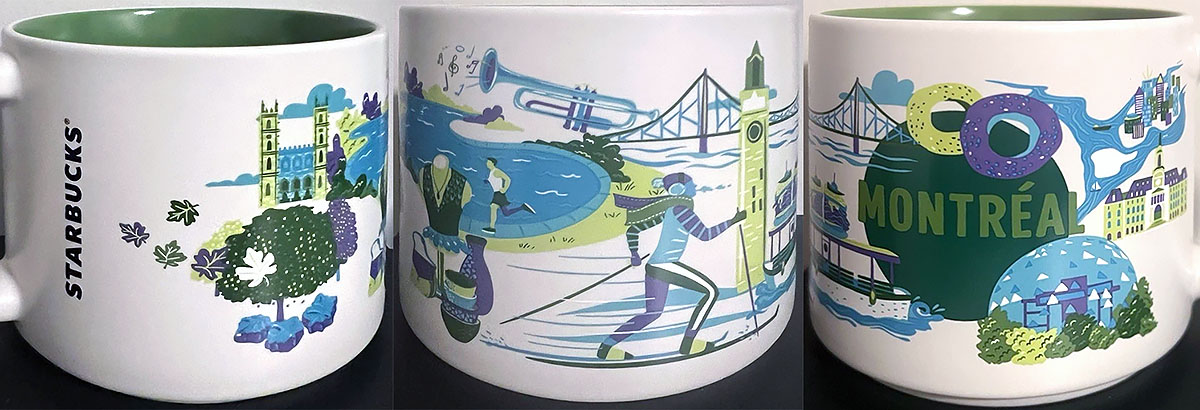
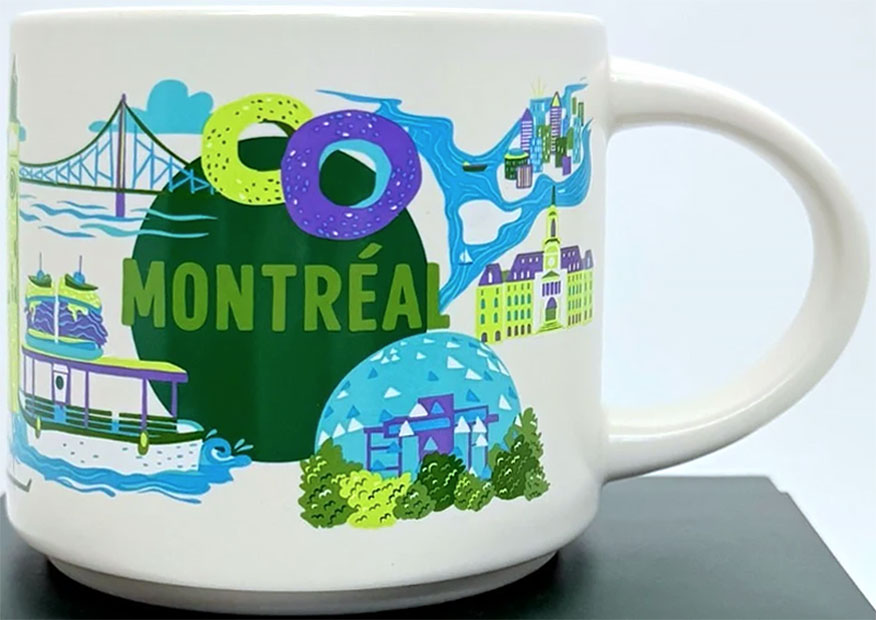
– I really like the tiny map of Montreal that can be seen in the top right corner of the front of the mug, as it adds a thoughtful and detailed layer to the overall design. It depicts several recognizable downtown buildings, giving the impression of Montreal’s dense and lively urban core in a compact, artistic form. I can also see what seems to be Île Perrot, subtly included to extend the map beyond the city center and acknowledge the surrounding region. This small but meaningful detail helps ground the design in real geography, making the mug feel more personal to those familiar with Montreal.
– Montreal City Hall stands as an architectural masterpiece in Old Montreal, its Second Empire style featuring a distinctive mansard roof and ornate details dating to 1878. The building gained international attention in 1967 when Charles de Gaulle declared “Vive le Québec libre!” from its balcony during Canada’s centennial celebrations. This civic landmark continues to host the municipal government while welcoming visitors to admire its grand interiors and historic significance.
– Montreal Biosphere rises on Île Sainte-Hélène as the iconic geodesic dome designed by Buckminster Fuller for Expo 67, now serving as an environmental museum. This striking steel lattice sphere, originally the U.S. pavilion, survived a 1976 fire and was transformed into a center for environmental awareness. The futuristic structure remains one of Montreal’s most photographed landmarks and a testament to 1960s optimism.
– Jacques Cartier Bridge spans the St. Lawrence River connecting Montreal to the South Shore, its distinctive steel truss structure illuminated nightly with colorful LED displays. Opened in 1930 and recently retrofitted with the innovative LIVING CONNECTIONS light installation, the bridge responds to data and seasons with changing colors. This vital transportation link becomes a nightly light show visible across the city.
– Montreal Clock Tower rises 148 feet above the Old Port, built in 1922 as a memorial to merchant sailors who died in World War I. Visitors can climb 192 steps to the observation deck for panoramic views of the harbor and city. The landmark honors Montreal’s deep maritime history and its former status as Canada’s busiest port.
– River shuttles transport passengers along the St. Lawrence River between the Old Port and various destinations, including Îles de Boucherville and Longueuil. These seasonal boat services offer unique perspectives on Montreal’s waterfront, islands, and skyline while providing practical transportation and leisure cruises. The water-based transportation connects Montrealers to the rivers that shaped their city’s development.
– Running around Beaver Lake in Mount Royal Park draws joggers year-round to this scenic loop around an artificial pond sitting high on the mountain. The lake, created in 1938, offers peaceful nature escapes within the urban core for runners, walkers, and outdoor enthusiasts. Frederick Law Olmsted’s original park design envisioned spaces where nature and recreation would provide respite from city life.
– Notre-Dame Basilica dazzles visitors with its Gothic Revival interior featuring intricate wood carvings, gold leaf, and stunning blue vaulted ceilings in Old Montreal. Built between 1824-1829, this architectural masterpiece ranks among North America’s most spectacular churches. The basilica continues holding services while attracting tourists worldwide to experience its breathtaking beauty.
– Maple trees in fall transform Montreal into a blazing spectacle of red, orange, and gold each autumn, with streets and Mount Royal Park becoming tunnels of color. The sugar maple, Quebec’s emblematic tree, provides the brilliant foliage display and maple syrup that define the province. Autumn becomes the most photogenic season as entire neighborhoods glow with warm hues.
– Jazz Festival takes over downtown Montreal each June-July as the world’s largest jazz festival, presenting hundreds of free and ticketed concerts since 1980. International stars and local artists perform across multiple stages while millions pack streets closed to traffic for nearly two weeks. The event transforms the city into an outdoor concert hall and demonstrates Montreal’s mastery of large-scale cultural celebrations.
Local dishes to try when in Montreal:
– Montreal bagels are smaller, denser, and sweeter than New York bagels, hand-rolled and baked in wood-fired ovens at legendary shops like St-Viateur and Fairmount since the 1950s. These distinctively chewy bagels, boiled in honey water, showcase the Jewish community’s lasting influence on local cuisine. Heated debates between devotees of the two iconic bakeries remain a beloved Montreal pastime.
– Montreal smoked meat is the city’s signature delicacy – beef brisket cured with spices, smoked, and steamed until tender, served piled high on rye bread at iconic delis like Schwartz’s since 1928. This Montreal-style preparation differs from pastrami in its unique spice blend and cooking method. Long lineups outside famous delis prove that locals and tourists alike crave this Eastern European-inspired specialty.