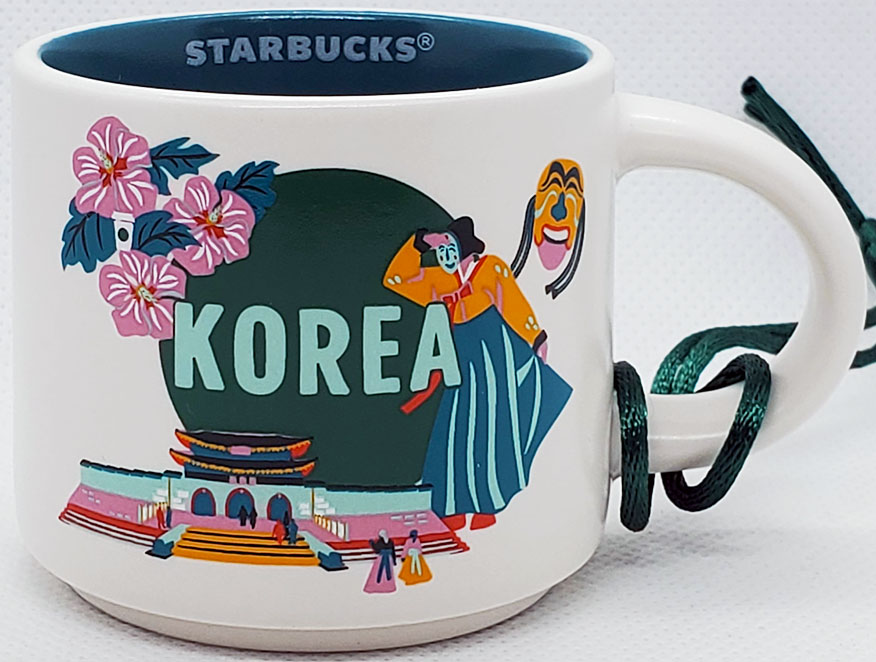
Discovery Series Ornament – Korea


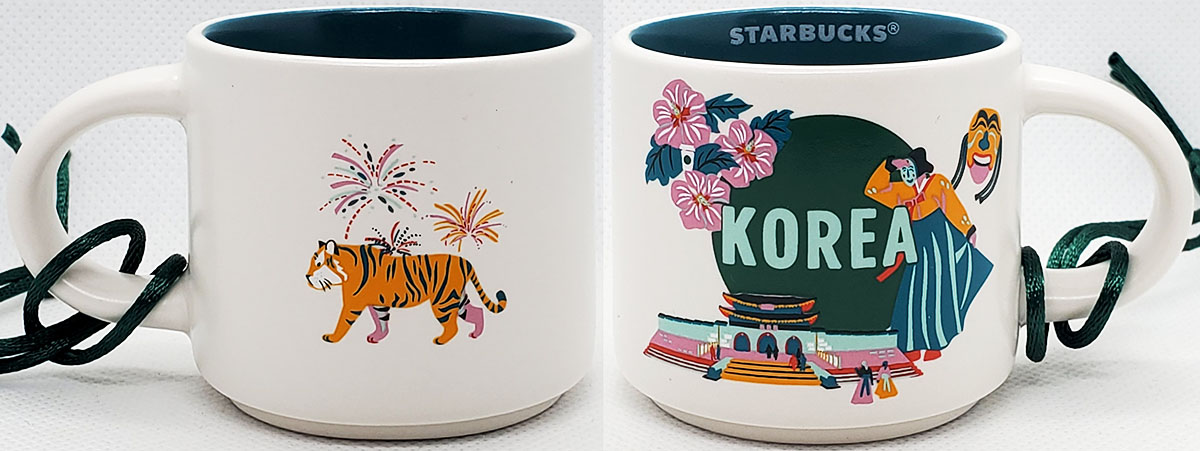
As promised yesterday, I’m eager to review the design of the Discovery Series Ornament – Korea with you. Much like the other mini mugs in this new collection, it features a notably more minimalist design approach. I do, however, wish the circular element had been rendered in a color other than green – something in line with the variation Starbucks applied to its Disney ornaments.
Here are the symbols from the design of the Discovery Series Ornament Korea that I was able to spot. Please note, I am using the official Starbucks pics from their promo page and will update the post with actual pictures of the ornament later.
– The Mugunghwa (Hibiscus syriacus), or Rose of Sharon, is South Korea’s national flower and a symbol of resilience and perseverance. Its name comes from the Korean word mugung, meaning “eternity” or “immortality.” These flowers bloom from July to October and can withstand harsh conditions, reflecting the Korean spirit. You’ll find them in schools, government emblems, and patriotic songs across the country.
– Gwanghwamun is the main gate of Gyeongbokgung Palace in Seoul, originally built in 1395 during the Joseon Dynasty. It has been destroyed and rebuilt multiple times, most recently restored to its original location and structure in 2010. Today, the gate stands as a powerful symbol of Korea’s royal heritage and resilience. It also serves as a central gathering point for public events and national celebrations.
– Traditional Korean mask theatre, known as talchum, blends dance, satire, and storytelling. Each mask represents a distinct character – nobles, monks, servants, and spirits – used to mock the powerful and explore social issues. Performances often feature humor and improvisation, rooted in community festivals. Though ancient in origin, this theatrical art still influences modern Korean drama and performance.
– The hanbok is Korea’s traditional attire, known for its bold colors, simple lines, and elegant movement. Worn during celebrations and ceremonies, it reflects centuries of Korean aesthetics and social values. Today, modernized versions are popular at weddings, festivals, and even on the street. The hanbok remains a strong symbol of Korean identity and pride.
– The Korean Tiger (Panthera Tigris), once native to the Korean Peninsula, holds a legendary place in Korean folklore and culture. Often depicted as both a guardian and trickster, the tiger symbolizes strength, courage, and divine power. Though extinct in the wild in Korea, its image is everywhere – from art and sports mascots to historical tales. It continues to represent national spirit and mythical heritage.
– The Seoul International Fireworks Festival is one of the city’s most anticipated annual events. Held along the Han River, it brings together fireworks teams from around the world for a night of explosive color and music. Thousands gather to witness the spectacle, creating a rare moment of shared joy in the bustling capital. The event blends global artistry with Korean festivity, lighting up Seoul’s autumn sky.