Been There – Porto Alegre


Once again, I have no excuse for delaying my review of this mug, which debuted four years ago.
Been There – Porto Alegre is a mug for a city founded in 1772 by Portuguese settlers from the Azores, becoming an important port and administrative center in southern Brazil. Its strategic position along the Guaíba Lake made it a hub for commerce and immigration throughout the 19th century. The city played a key role in the Ragamuffin War (1835–1845), which shaped local identity and politics. Waves of German, Italian, and other European immigrants enriched its culture, architecture, and cuisine. By the 20th century, Porto Alegre was both an industrial powerhouse and a cultural reference point in Rio Grande do Sul. Today, it blends historic charm with a vibrant modern urban life.
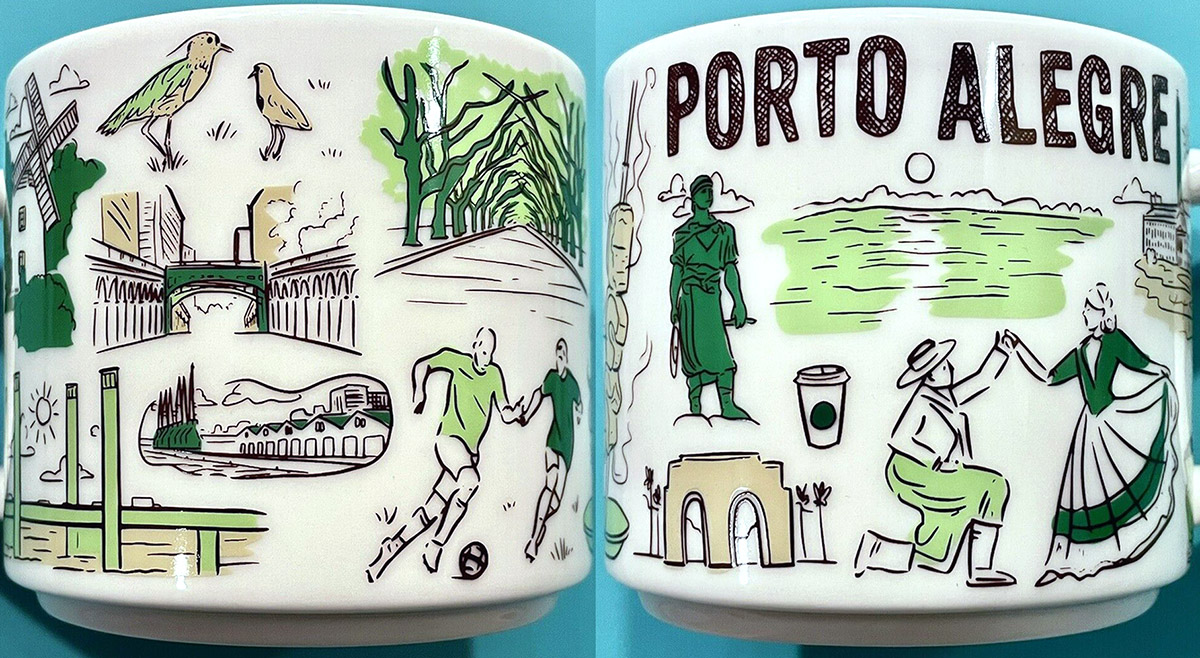
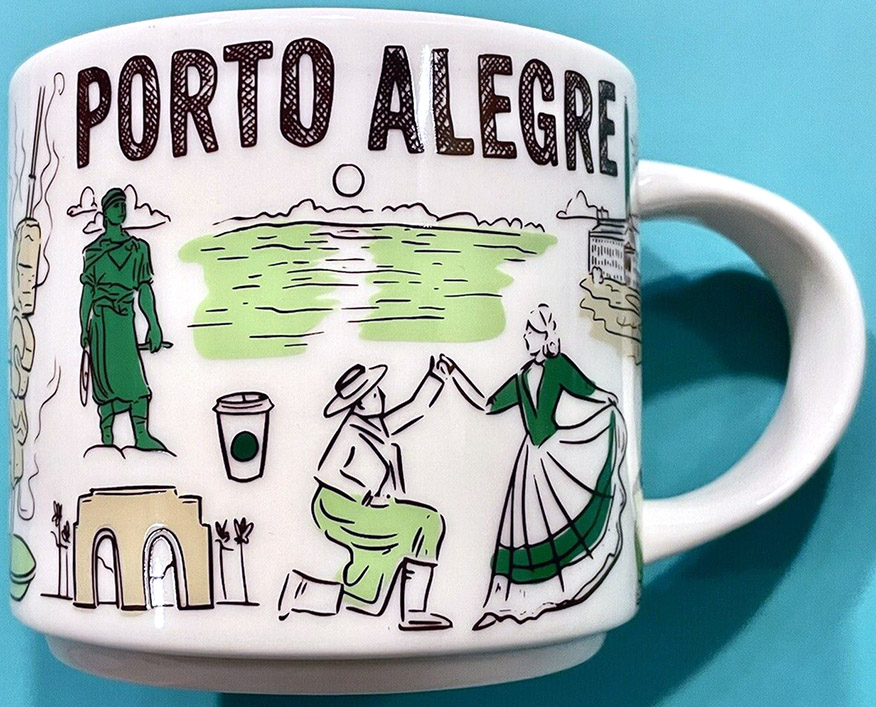
– Guaíba Lake is not technically a lake but a large estuary, where several rivers meet before flowing toward the Atlantic Ocean. It is famous for its breathtaking sunsets, a daily spectacle cherished by locals and visitors. The waterfront is a gathering place for leisure, sports, and open-air events. In recent years, redevelopment projects have turned parts of their edge into promenades and cultural spaces.
– The Statue of Laçador is one of Porto Alegre’s most iconic landmarks, representing the traditional gaucho figure. It depicts a man holding a lasso, dressed in typical gaucho attire, paying tribute to the region’s rural and cowboy heritage. Created by sculptor Antônio Caringi in 1954, the bronze statue stands over 4 meters tall. It serves as a welcoming symbol at the city’s northern entrance.
– Farroupilha Park, also known as Redenção, is Porto Alegre’s largest and most popular green space. Opened in 1935, it is home to gardens, playgrounds, and shaded paths ideal for walking or cycling. On weekends, the park hosts a bustling street market where artisans and food vendors gather. It is both a recreational hub and a cultural meeting point for residents.
– The Gasometer Plant was once a coal-fired power station built in 1928. After it was decommissioned, the building was converted into a cultural center and art gallery. Its tall chimney is visible from much of the city, making it a recognizable landmark. Today, it hosts exhibitions, performances, and events, often against the backdrop of the Guaíba sunset.
– Farroupilha Week is a celebration of gaucho culture held every September. It commemorates the Ragamuffin War and the traditions of Rio Grande do Sul. During the festivities, people dress in traditional clothing, ride horses, and gather in camps known as “piquetes.” The week is filled with folk music, dance, and the sharing of chimarrão, the traditional yerba mate drink.
– Soccer is extremely popular in Porto Alegre. The city is home to two of Brazil’s most famous and successful football clubs: Sport Club Internacional and Grêmio Foot-Ball Porto Alegrense. These teams have passionate fan bases and a long-standing rivalry known as the “Grenal,” which is considered one of the greatest football derbies in the world