
Been There – Bolivia


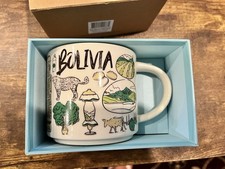
Been There – Bolivia was released quite a while ago, and I am finally able to add this to my collection. I would like to remind you that this is not the first mug from this country. Interestingly enough, a city mug for Santa Cruz de la Sierra was released two years prior for the largest city in Bolivia.
Bolivia has a rich and complex history that stretches back thousands of years, beginning with ancient civilizations such as the Tiwanaku, who built a powerful culture near Lake Titicaca long before the rise of the Inca Empire. In the 15th century, the region became part of the vast Incan domain until the Spanish conquest in the 16th century brought colonial rule. Under Spanish control, Bolivia became a key center for silver mining, especially in Potosí, which once supplied much of Europe’s wealth. After centuries of exploitation and indigenous resistance, Bolivia gained independence in 1825, named after the liberator Simón Bolívar. Since then, the country has experienced political upheavals, revolutions, and major social reforms, with indigenous identity playing a central role in shaping modern Bolivia.
Here are some symbols and places to visit as seen in the design of the Been There Bolivia mug:
– The jaguar (Panthera onca), the largest feline in the Americas, is a powerful and elusive predator native to Bolivia’s tropical forests and lowland regions, especially in places like Madidi National Park and the Gran Chaco. Known for its spotted coat and strong build, the jaguar plays a vital role in maintaining ecological balance as a top predator. In Bolivian indigenous cultures, the jaguar is revered as a sacred animal, symbolizing strength, agility, and protection. Though threatened by habitat loss and poaching, efforts are underway to conserve this magnificent species and its natural environment.
– The International Theatre Festival “Santa Cruz de la Sierra” is one of Bolivia’s most important cultural events, held biennially in the vibrant city of Santa Cruz. It brings together national and international theatre companies for a dynamic showcase of drama, comedy, and experimental performance. The festival not only highlights Bolivia’s growing creative scene but also fosters cross-cultural dialogue and artistic exchange. With open-air performances, workshops, and packed venues, the festival transforms the city into a lively stage that celebrates the power of storytelling and live art.
– Tiwanaku (Tiahuanaco) is one of Bolivia’s most important archaeological sites, located near Lake Titicaca. It was the center of a powerful pre-Incan civilization that thrived from around 500 to 1000 AD. Monumental stone structures like the Gate of the Sun and Akapana Pyramid show advanced engineering and deep spiritual meaning. As a UNESCO World Heritage Site, Tiwanaku reflects Bolivia’s deep indigenous heritage and its role in shaping Andean culture.
– The Oruro Carnival is Bolivia’s most famous festival and a UNESCO-recognized Masterpiece of Oral and Intangible Heritage. Held every February, it combines Catholic and indigenous traditions in a dazzling display of music, dance, and colourful costumes. The highlight is the Diablada dance, where masked devils, angels, and saints parade through the city. It’s a powerful celebration of cultural identity and resilience, drawing visitors from around the world.
– Nestled in a dramatic canyon and surrounded by snow-capped peaks, La Paz is Bolivia’s administrative capital and the highest major city in the world. Its unique geography is matched by its vibrant culture, where modern life coexists with ancient traditions. The city is famous for its cable car system, colourful markets, and views of Illimani mountain. La Paz captures the complexity and energy of Bolivia, serving as a window into its dynamic present and layered past.
– Salar de Uyuni is the world’s largest salt flat, spanning over 4000 square miles in southwest Bolivia. Formed from ancient evaporated lakes, its vast white expanse creates a surreal, mirror-like effect when covered with water. It’s a favourite destination for photographers and adventurers, offering otherworldly landscapes that seem to defy reality. The area also contains rich lithium reserves, making it geopolitically significant.
– The Diablada mask (on the back of the mug) is a vibrant and fearsome symbol used in Bolivia’s traditional Oruro Carnival. Representing devils in a theatrical battle between good and evil, the mask blends indigenous beliefs with Spanish Catholic imagery. Its intricate design features bulging eyes, horns, and vivid colours, making it one of the most iconic cultural artifacts in Bolivia. Placing it on the back of a mug honours the deep spiritual roots and festive spirit of Bolivian folklore.
– Llamas and alpacas are more than just animals in Bolivia—they are essential to Andean life and identity. Used for transport, wool, and companionship, these domesticated camelids have served indigenous communities for centuries. Their gentle presence in highland pastures makes them beloved national symbols. Today, their likeness is found in local crafts, textiles, and tourism imagery across the country.