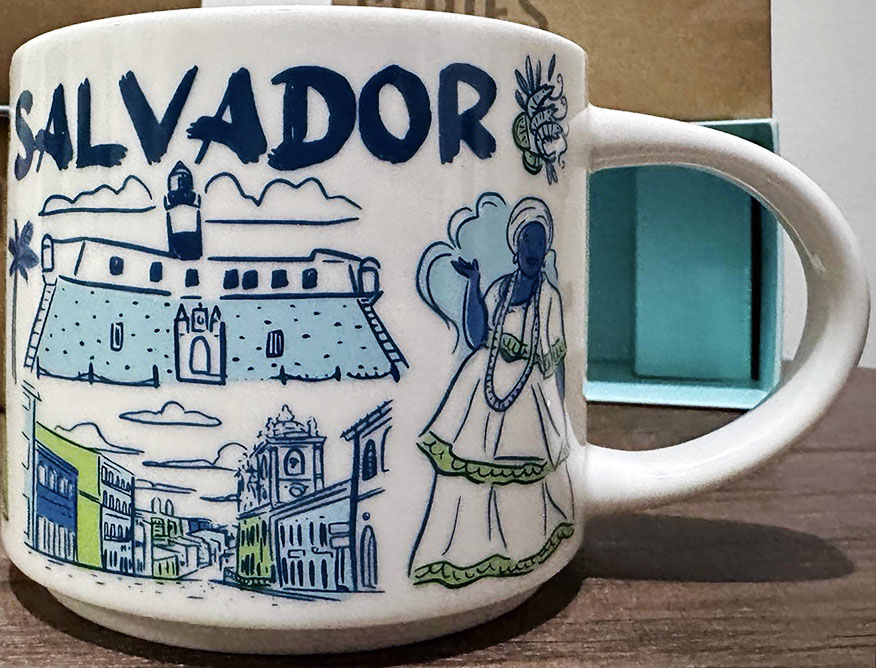
Been There – Salvador


Been There Salvador is a mug for the capital of the state of Bahia in northeastern Brazil. It is one of the oldest cities in the Americas and the birthplace of Afro-Brazilian culture. Founded in 1549 as the first capital of colonial Brazil, it became a major port in the Atlantic world. Its historic center, Pelourinho, is known for colourful buildings, lively squares, and deep cultural traditions shaped by African, Indigenous, and Portuguese influences that continue to define Salvador today.
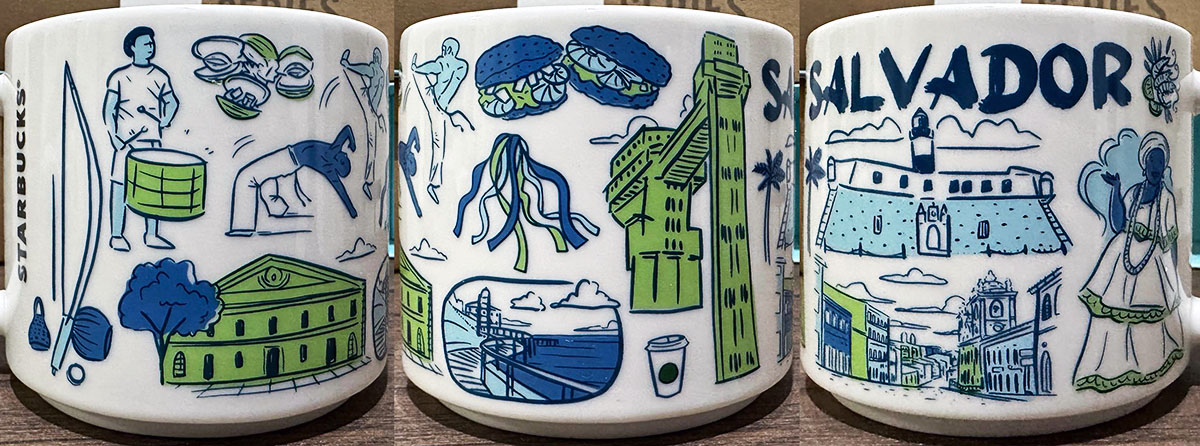
– One of the figures on the mug represents a traditional drummer, highlighting Salvador’s strong musical heritage. As the home of samba-reggae and many Afro-Brazilian percussion groups, rhythm is part of everyday life in the city. Drumming ensembles often lead Carnival parades and community celebrations, filling the streets with powerful beats.
– Capoeira is also illustrated on the mug through the figures performing graceful kicks and movements. This Afro-Brazilian martial art combines dance, acrobatics, and music, and is believed to have originated in Bahia among enslaved Africans. In Salvador’s squares and along its beaches, roda circles where capoeira is practiced are still a common sight.
– The mug includes a sketch of acarajé, a beloved Bahian street food. These fried black-eyed-pea cakes are often split and filled with shrimp and spicy sauces. More than just a snack, acarajé has cultural and spiritual importance in Candomblé traditions, and the women who prepare it, known as baianas, are iconic figures in Salvador.
– Another key element is the Elevador Lacerda, the tall elevator shown on the mug. This structure connects the upper and lower parts of the city and is one of Salvador’s most recognized landmarks. Built in the 19th century, it remains an important piece of the city’s urban landscape and a great viewing point for the harbour.
– The coastline scene on the mug represents Salvador’s long seafront, including piers and lookout points. Salvador is surrounded by some of Brazil’s most beautiful beaches, and its location on the Bay of All Saints made it a strategic port for centuries.
– A prominent building on the design appears to be the Mercado Modelo, a historic market near the waterfront. It is known for crafts, food, and souvenirs, and it stands at the base of the Elevador Lacerda. Visitors often explore the market and then ride the elevator to Pelourinho.
– The Fort of São Marcelo is illustrated as well. This circular fort sits offshore in the bay and has protected the city since the colonial period. Because of its shape and location, it is sometimes called the “Bellybutton of the Sea.”
– The design also includes scenes from Pelourinho, Salvador’s historic district. With its ornate churches, cobblestone streets, and pastel-painted colonial buildings, this area is central to Salvador’s identity and is recognized as a UNESCO World Heritage Site.
– Lastly, the woman in a traditional white dress represents a baiana, an important cultural figure in Bahia. Her clothing reflects Afro-Brazilian traditions tied to Candomblé and Bahian heritage. Baianas are especially associated with food, religious ceremonies, and festive events in Salvador.