
Been There – Goiânia


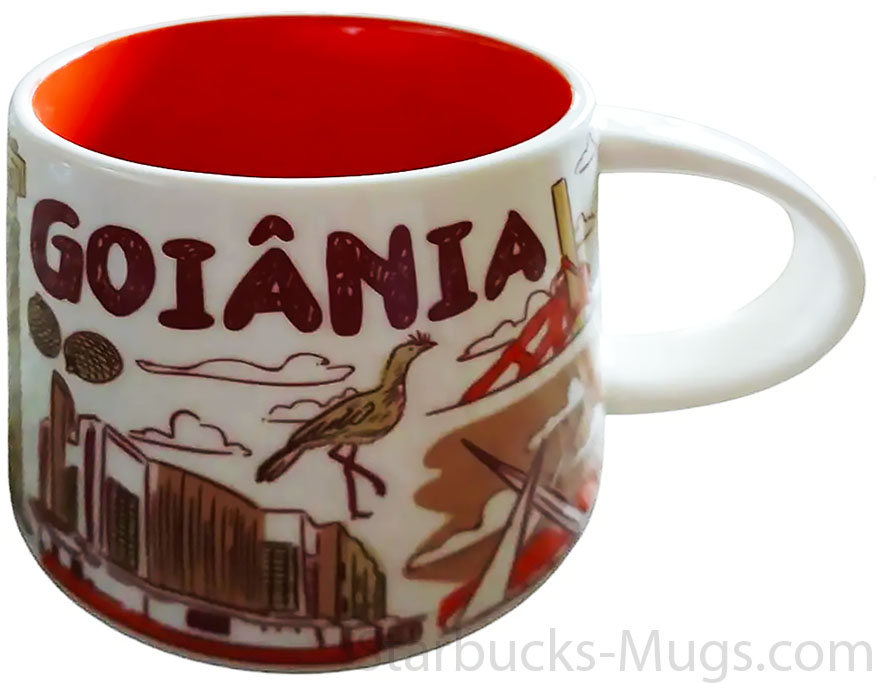
Been There Goiânia mug is a fascinating piece that, it seems, was never officially released. According to the information available, Starbucks cancelled plans to open a store in Goiânia, Brazil, three years ago. Despite this, a mug had already been designed for the store’s launch, and some of these prototypes appear to have made their way into private collections. This is the only image of the mug that I was able to find.
Goiânia was founded in 1933 as a planned city to serve as the new capital of Goiás state, replacing the colonial town of Goiás. Designed by urban planner Attilio Corrêa Lima in Art Deco style with wide avenues, green spaces, and geometric patterns, the city represented Brazil’s modernization ambitions. Construction proceeded rapidly, with the official inauguration occurring in 1942, making Goiânia one of Brazil’s youngest major cities. The planned capital succeeded in attracting population and development to central Brazil, growing from a handful of buildings to a metropolis of over 1.5 million people. Today, Goiânia maintains its Art Deco architectural heritage while serving as a regional economic hub and gateway to the Cerrado biome.
Here are some of the symbols and landmarks of the city that I can see in the design:
– Monument to the Three Races honours the Indigenous, African, and European peoples whose mixture created Brazilian identity, standing as one of Goiania’s most significant public sculptures. The monument celebrates Brazil’s multicultural heritage and the diverse populations that built the nation. This landmark occupies a prominent position reflecting Goiania’s role in representing modern, inclusive Brazilian identity.
– Viaduct Latif Sebba spans a major intersection in Goiânia with its distinctive elevated roadway connecting key parts of the city. This concrete structure has become an architectural landmark and a vital transportation link in the urban landscape. The viaduct represents Goiania’s growth and the infrastructure needed to support an expanding modern city.
– The train station stands as a reminder of Goiania’s connection to Brazil’s railway network that helped populate the interior. The historic station building preserves Art Deco architectural elements characteristic of the city’s planned origins. Though rail service has diminished, the station anchors memories of Goiania’s development and westward expansion.
– Red-legged seriema is a distinctive bird native to the Cerrado region surrounding Goiânia, recognized by its long legs, crest, and terrestrial hunting habits. This unusual bird inhabits grasslands and open areas throughout Goiás state, often seen running rather than flying. The seriema connects Goiânia to the unique Cerrado ecosystem and wildlife of central Brazil.
These two landmarks were probably also included in the design, as they are definitely worth visiting:
– Santa Barbara Waterfall offers natural beauty and swimming opportunities in the rivers and streams near Goiânia. The waterfall attracts residents seeking escape from urban heat in the refreshing pools and natural settings. These water features showcase the scenic landscapes of Goiás state beyond the planned city.
– Parque Nacional da Chapada dos Veadeiros protects pristine Cerrado wilderness about 150 miles north of Goiânia, featuring dramatic plateaus, waterfalls, and unique biodiversity. This UNESCO World Heritage Site draws hikers and nature enthusiasts to explore rock formations, crystal-clear rivers, and endemic species. The national park represents the natural treasures of Goiás state and the eco-tourism opportunities surrounding the capital.