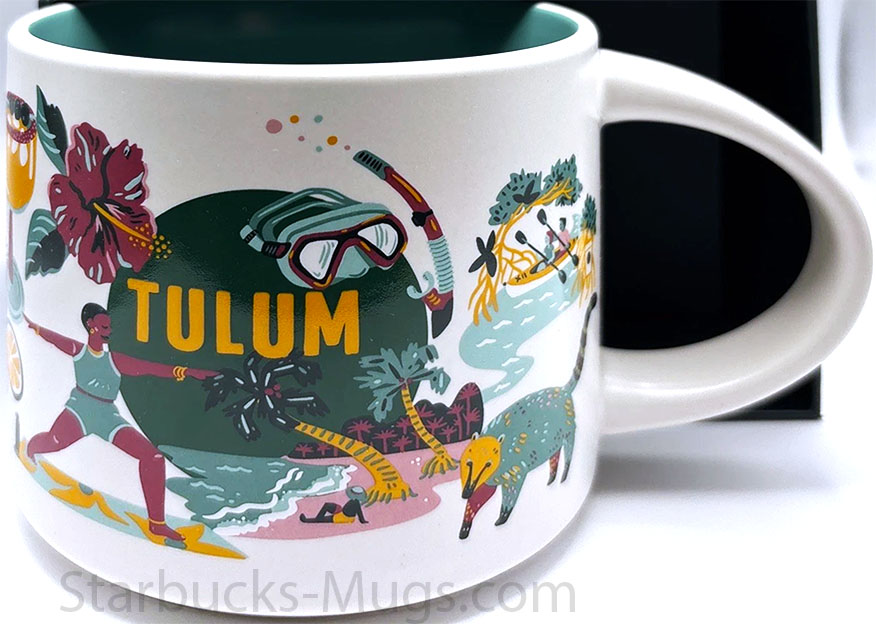
Discovery Series – Tulum


The Starbucks Discovery Series Tulum mug focuses on one of the most distinctive destinations on Mexico’s Caribbean coast, where Maya history, tropical nature, beaches, and a modern wellness culture exist side by side. Once centered around the ancient walled city overlooking the sea, Tulum has grown into a major destination while remaining closely associated with cenotes, protected natural areas, cycling, yoga, and the turquoise waters of the Riviera Maya.
Here are some of the landscapes, activities, and symbols featured in the design:
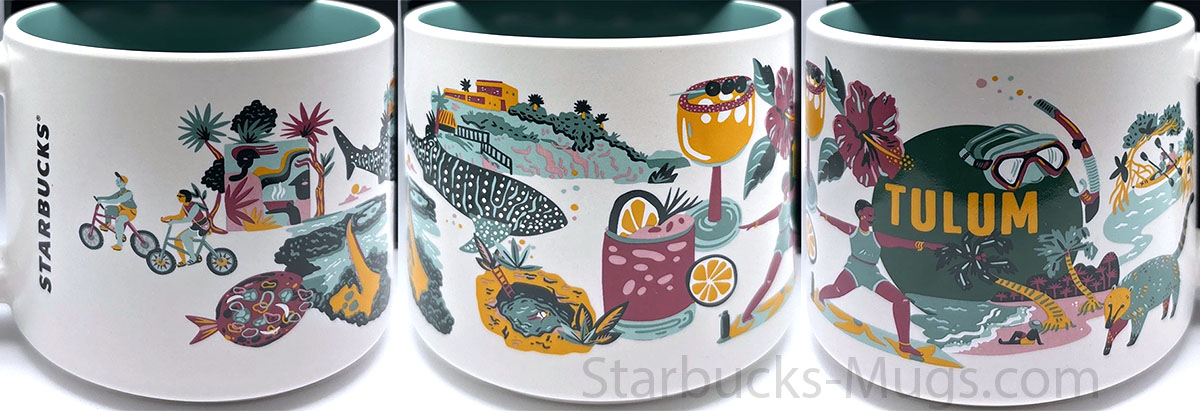
– The cenotes are one of the defining natural features of the Yucatán Peninsula. These freshwater sinkholes form when limestone collapses and exposes underground rivers and pools, creating caves and open-air swimming areas with remarkably clear water. Tulum is surrounded by numerous cenotes that are popular for swimming, snorkeling, and diving.
– The protected landscapes of the Sian Ka’an Biosphere Reserve extend south of Tulum and include tropical forests, wetlands, mangroves, lagoons, beaches, and coral reefs. The enormous reserve supports an exceptional variety of wildlife and offers a much quieter contrast to the busy resort areas farther north.
– The El Castillo pyramid is the most recognizable structure within the Tulum archaeological site. Built on a cliff overlooking the Caribbean Sea, it served an important ceremonial role and also acted as a visual landmark for seafarers approaching the coast. Its dramatic position above the turquoise water is one of the images most strongly associated with ancient Tulum.
– The Temple of the Frescoes is another important structure within the walled Maya city. Although smaller than El Castillo, it is notable for its surviving murals and decorative details, which provide valuable insight into Maya religious beliefs and artistic traditions. The temple also shows how Tulum functioned not only as a coastal trading center, but as an important ceremonial site.
– Playa Paraíso is one of the beaches most closely associated with Tulum. Soft white sand, turquoise Caribbean water, and palm trees create the classic coastal scenery that has made this part of Quintana Roo famous. Its location close to the archaeological zone also makes it one of the area’s most recognizable beaches.
– The large whale shark adds one of the Caribbean’s most impressive marine animals to the artwork. Despite their enormous size, whale sharks are gentle filter feeders that survive mainly on plankton and small marine organisms. Their spotted bodies make them instantly recognizable beneath the water.
– Snorkelling is a natural part of exploring the waters around Tulum. Coral reefs, tropical fish, cenotes, and clear Caribbean water provide very different underwater environments, ranging from open-sea reefs to freshwater caves and underground river systems.
– Cycling has become a particularly familiar way of getting around Tulum. Bicycles are commonly used for trips between the town, beaches, archaeological area, and nearby attractions, fitting well with the destination’s relaxed and environmentally conscious image.
– Yoga reflects the wellness culture that has become strongly associated with modern Tulum. Beachfront retreats and jungle settings host yoga classes, meditation, and other wellness activities, adding a contemporary element to a destination otherwise known for ancient ruins and natural scenery.
– The tropical cocktail captures the relaxed side of Tulum’s beach culture. Fresh citrus, tropical fruit, and colorful drinks are common around beachfront restaurants and bars, where they naturally accompany the warm climate and Caribbean setting.
– The bright hibiscus flowers add another tropical detail to the design. These large, colorful blossoms thrive in warm climates and are common throughout southeastern Mexico, fitting naturally among the palms, beaches, and lush vegetation surrounding Tulum.