Discovery Series – Guanacaste


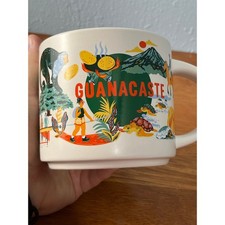
The Starbucks Discovery Series Guanacaste mug highlights one of Costa Rica’s most distinctive regions, known for its dry tropical forests, volcanic landscapes, Pacific beaches, wildlife, ranching traditions, and strong Chorotega cultural influence. Guanacaste is the driest part of the country, yet its landscape is remarkably varied, stretching from coastal plains and surf towns to mountain forests and active volcanic areas. The province is also closely associated with cattle ranching, traditional music, pottery, and some of Costa Rica’s best-known national parks.
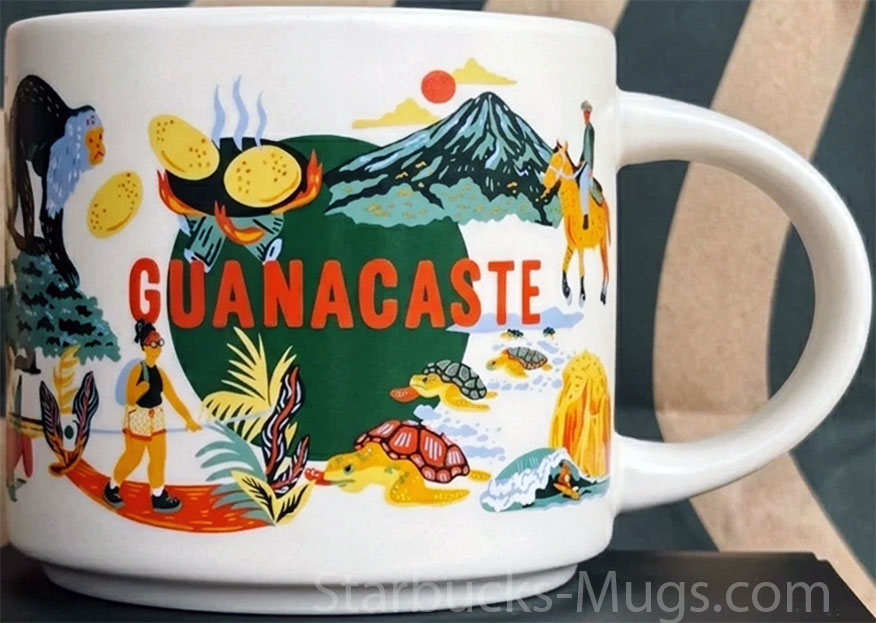
Here are some of the landscapes, traditions, wildlife, and activities featured in the design:
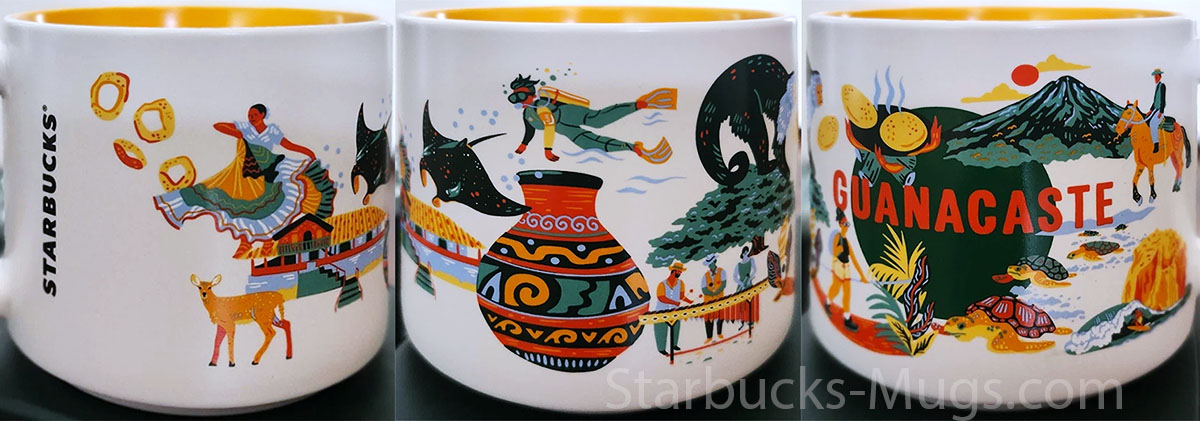
– The large mountain appears to be Rincón de la Vieja Volcano, one of the main volcanic landmarks of Guanacaste. The surrounding national park contains nine volcanic cones as well as fumaroles, boiling mud pots, hot springs, waterfalls, and extensive hiking trails. The volcanic massif is part of the Cordillera de Guanacaste and gives the region some of its most dramatic inland scenery.
– Horseback riding fits naturally with Guanacaste’s long cattle-ranching tradition. The province is closely associated with the sabanero, the Costa Rican cowboy who worked the broad ranches and dry plains of the region. Horse culture remains an important part of Guanacaste’s identity and is still celebrated in festivals, rural tourism, and traditional events.
– The group of sea turtles refers to turtle nesting along Guanacaste’s Pacific coast. Beaches such as Ostional and Playa Grande are internationally known nesting areas, with Playa Grande forming part of Las Baulas National Marine Park, an important site for leatherback turtles. Ostional is especially famous for the massive synchronized nesting events known as arribadas.
– The beaches and surfing are among the strongest associations with modern Guanacaste. Tamarindo, Playa Grande, Nosara, and many other coastal communities attract visitors with warm Pacific water and consistent waves. Tamarindo in particular is widely known as one of the region’s major surfing destinations.
– The large painted vase is an example of Chorotega pottery, one of Guanacaste’s best-known traditional crafts. Communities such as Guaitil and San Vicente de Nicoya continue to produce pottery using local clay and techniques inherited from Chorotega Indigenous traditions. Jars, plates, bowls, decorative pieces, and musical instruments are still made by hand and decorated with distinctive geometric and animal motifs.
– The large manta ray reflects the rich marine life off Guanacaste’s Pacific coast. The waters around the province are popular for diving and snorkelling, particularly near island groups such as the Catalinas, where visitors can encounter rays, reef fish, and other marine species.
– The capuchin monkey is one of the animals commonly seen in Guanacaste’s forests. White-faced capuchins live in groups and are frequently encountered in national parks and protected areas, including dry forest environments close to the coast. Their intelligence and highly social behavior make them among the easiest Costa Rican monkeys for visitors to recognize.
– The spotted deer appears to be a white-tailed deer, an animal well adapted to Guanacaste’s dry forests and open landscapes. The species is widespread in Costa Rica and can be encountered in protected areas such as Santa Rosa National Park, where tropical dry forest provides important habitat.
– The dancer in the colorful dress recalls traditional Guanacaste folk dance. Bright, wide skirts are used in performances accompanied by regional music, and dancers often emphasize sweeping movements that show off the colorful fabric. These traditions remain especially visible during civic celebrations and cultural festivals across the province.
– The long wooden instrument is the marimba, an important part of traditional music in Guanacaste and Costa Rica more broadly. Marimba music frequently accompanies folk dances, festivals, and community celebrations, making it a natural companion to the dancer shown elsewhere in the design.
– Finally, the ring-shaped foods appear to reference traditional Guanacaste corn-based snacks. Corn has been central to the region’s cuisine for centuries, appearing in tortillas, rosquillas, tamales, and numerous other dishes. Traditional food remains particularly strong in towns such as Liberia, Santa Cruz, Cañas, and Tilarán.