Discovery Series – Taichung


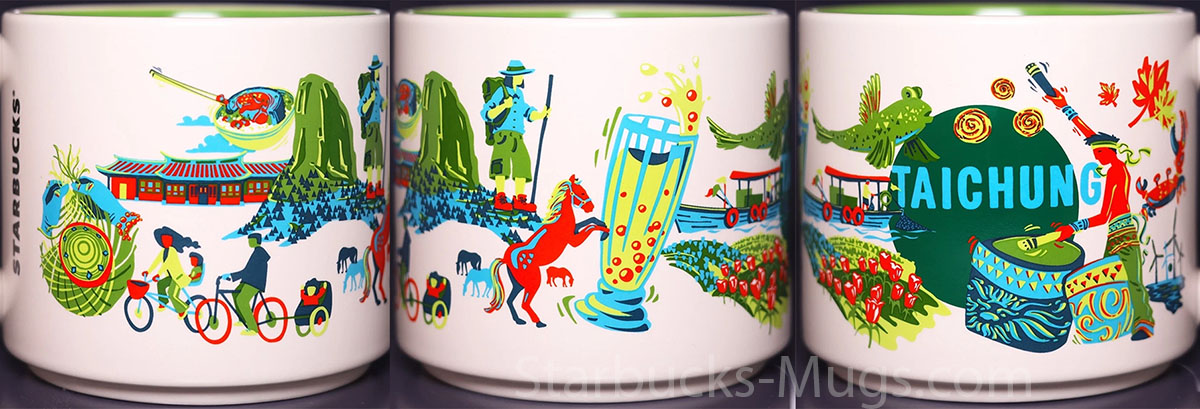
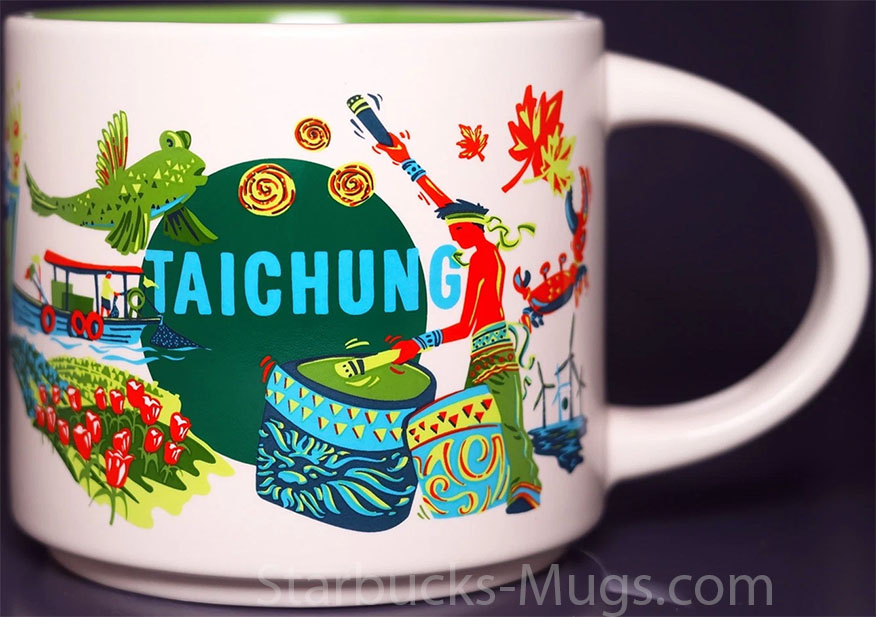
The Starbucks Discovery Series Taichung mug highlights a city that mixes modern urban life with mountain scenery, cycling routes, agriculture, traditional religion, and a strong food culture. Taichung grew from a regional center into one of Taiwan’s largest cities, while the wider municipality stretches from the coast to the mountains. That unusually broad geography helps explain why the design moves so easily between temples, flowers, horses, hiking, bicycles, and one of Taiwan’s most famous drinks.
Here are some of the landmarks, foods, activities, and traditions featured in the design:
– Bubble tea is perhaps the most obvious food reference, and Taichung has one of the strongest claims to its invention. The drink is generally traced to the 1980s, when the city combined milk tea with chewy tapioca pearls. What began as a local specialty eventually spread across Taiwan and then around the world, making it one of the island’s most recognizable culinary exports.
– The large fields of flowers are connected with Houli’s flower gardens, particularly places such as Chung-she Flower Garden. Houli is well known for seasonal displays of tulips, lilies, sunflowers, and other flowers, with the landscape changing throughout the year. The district also hosted part of the 2018 Taichung World Flora Exposition, strengthening its connection with horticulture and flower tourism.
– The horse and rider point to Houli Equestrian, one of Taichung’s distinctive recreational attractions. The site traces its history to a horse ranch established during the Japanese colonial period and later became a government-operated breeding facility. Today, visitors can see historic stable buildings and take part in riding experiences, while the area remains closely connected with Houli’s cultural landscape.
– Cycling is another major part of exploring Taichung. The city has an extensive network of routes, including the Hou-Feng Bike Path and Dongfeng Bicycle Green Way, which pass old railway infrastructure, bridges, rivers, and rural scenery. Taichung even holds a dedicated Bicycle Carnival, reflecting how strongly cycling has become tied to recreation in the city.
– The hiker and mountain scenery fit well with the Dakeng Hiking Trails, one of Taichung’s best-known outdoor areas. The trail network covers a wide range of difficulty levels and is especially recognizable for its wooden log walkways, steep ridges, forest scenery, and panoramic views over the city. It gives Taichung a much more mountainous character than visitors might expect from such a large urban center.
– The Taichung Confucius Temple is one of the city’s important cultural landmarks. Completed in the 1970s, the complex was designed in a traditional Chinese architectural style inspired by classical Confucian temples, with ceremonial gates, courtyards, and richly decorated halls. It remains a center for ceremonies honoring Confucius, especially around Teachers’ Day, and provides a strong contrast to the more modern side of Taichung.
– The energetic performer with the large drum fits Taichung’s tradition of folk drumming. Local groups such as the Chio-Tian Folk Drums & Art Troupe combine powerful percussion, performance, and traditional religious culture, and regularly appear at major festivals and cultural events around the city. Their style adds a very lively element to the mug and pairs naturally with the nearby temple imagery.
– The mudskipper is one of the more unusual animals featured in the design. These small fish are able to spend considerable time out of the water, using their strong pectoral fins to move across exposed mud while keeping their skin and gills moist. They are especially well adapted to tidal flats and mangrove-like environments, where they feed and move between shallow pools as the tide changes. Around Taichung, they are closely associated with the Gaomei Wetlands, where visitors can often spot them on the mudflats at low tide.