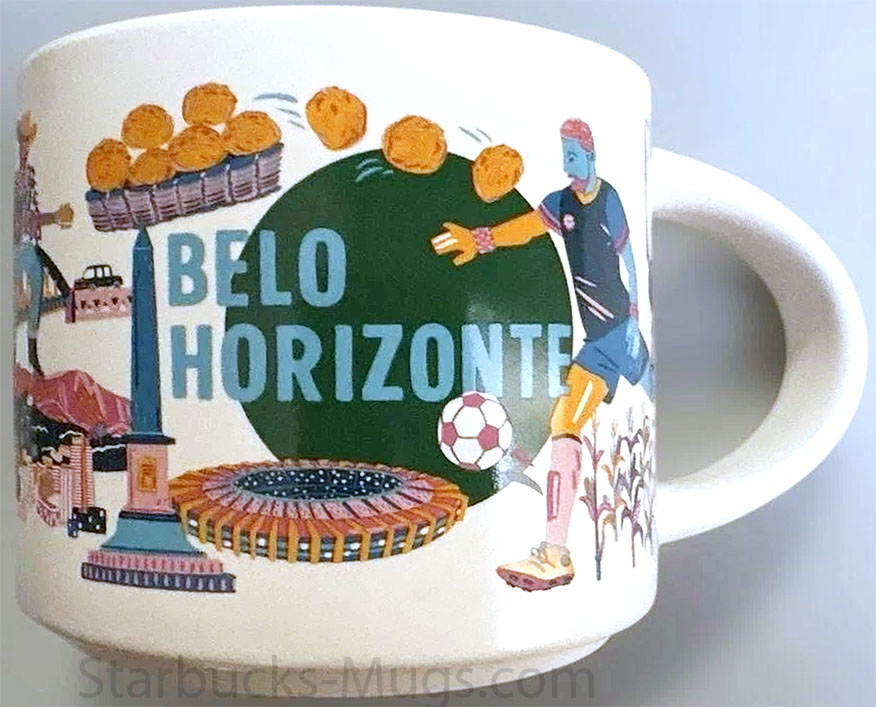
Discovery Series – Belo Horizonte


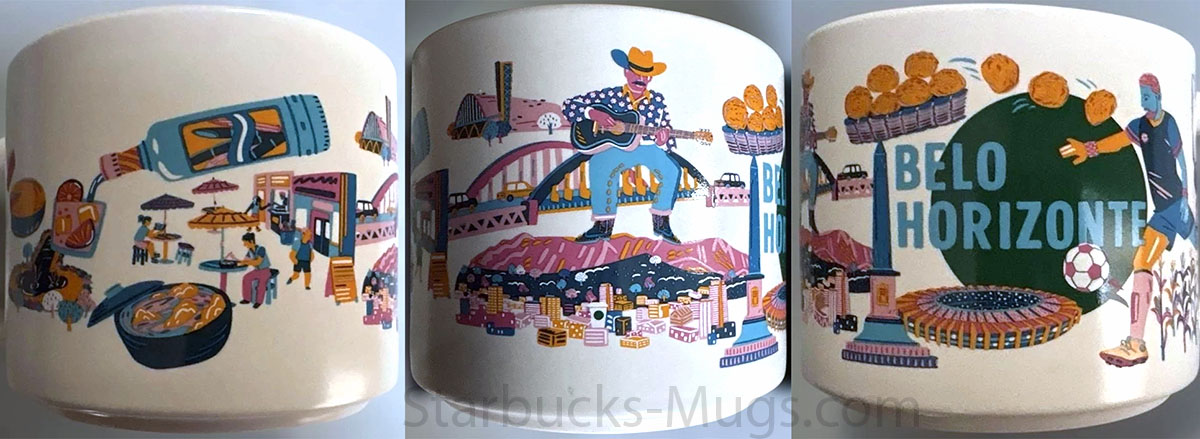
The Starbucks Discovery Series Belo Horizonte celebrates the capital of Minas Gerais, a city founded in 1897 as Brazil’s first planned state capital. Known for its distinctive architecture, vibrant cultural scene, and strong culinary traditions, Belo Horizonte has grown into one of Brazil’s largest metropolitan areas. The mug highlights many of the elements that define the city, from its famous food and music to its passion for sports and the surrounding mountain landscape.
– Pão de Queijo, represented by the basket of cheese breads above the city name, is perhaps the most famous culinary symbol of Minas Gerais. These small baked rolls are made from cassava flour and cheese, creating a unique texture that is crispy on the outside and soft on the inside. Originally developed on rural farms, pão de queijo has become popular throughout Brazil and is often enjoyed with a cup of coffee.
– Feijão tropeiro, shown in the bowl on the left side of the mug, is another classic dish closely associated with Minas Gerais. Traditionally prepared with beans, cassava flour, sausage, eggs, and other ingredients, it traces its origins to the tropeiros, the muleteers who transported goods across Brazil’s interior. Today it remains one of the region’s most beloved comfort foods.
– Music and culture are represented by the guitarist seated above the city skyline. Belo Horizonte has long been one of Brazil’s important musical centers, producing influential artists across multiple genres. From traditional Brazilian music to rock and contemporary styles, the city has nurtured a thriving creative community and hosts numerous festivals and cultural events throughout the year.
– The mountain landscape beneath the musician reflects the geography surrounding Belo Horizonte. The city sits among rolling hills and mountain ranges that helped inspire its name, which translates as “Beautiful Horizon.” Scenic viewpoints throughout the area offer panoramic views of the city framed by the rugged terrain of Minas Gerais.
– The Juscelino Kubitschek de Oliveira Bridge, commonly known as the Pampulha Lagoon Bridge, appears behind the musician as part of the city’s urban scenery. The broader Pampulha district is one of Belo Horizonte’s most famous areas and is recognized for its architectural and cultural significance. The region helped establish the city’s reputation as a center of modern Brazilian design.
– Mineirão Stadium, depicted at the bottom right, is one of Brazil’s most famous football venues. Opened in 1965, it has hosted major domestic matches, international tournaments, and games during the 2014 FIFA World Cup. Football is deeply woven into the identity of Belo Horizonte, which is home to some of the country’s most passionate supporters and historic clubs.
– The football (soccer) player on the right side of the mug further emphasizes the importance of the sport to local culture. Belo Horizonte is the home of legendary clubs such as Clube Atlético Mineiro and Cruzeiro, whose rivalry is among the most celebrated in Brazilian football. Match days bring an electric atmosphere to the city and remain an important part of local life.
– The monument beside the city name resembles the obelisk of Praça Sete de Setembro, one of Belo Horizonte’s most recognizable landmarks. Located at the heart of the city, the square serves as a central gathering place and an important historical reference point. It symbolizes the planned urban layout that has characterized Belo Horizonte since its foundation.