Been There – Curitiba


Been There – Curitiba is a mug for the capital of Paraná state in southern Brazil. It was founded in 1693, though it truly flourished in the 19th century with European immigration, particularly from Poland, Germany, Italy, and Ukraine. The city transformed dramatically under Mayor Jaime Lerner in the 1970s, who pioneered innovative urban planning solutions that made Curitiba internationally renowned as a model of sustainable development. From its pedestrianized downtown and pioneering Bus Rapid Transit system to its extensive green spaces and cultural programs, Curitiba represents Brazilian urbanism at its most creative and livable.
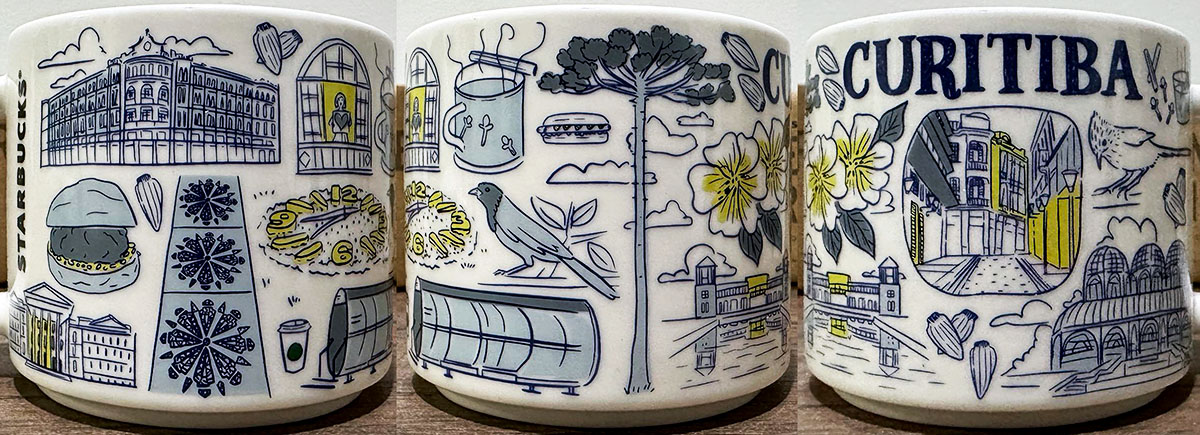
– The distinctive tubular bus stations (Estação Tubo) depicted on the mug represent Curitiba’s revolutionary Bus Rapid Transit system, which changed urban transportation worldwide. Introduced in 1974, these transparent tube stations allow for rapid boarding, making bus travel as efficient as a subway at a fraction of the cost. This innovative system has been replicated in cities globally and remains a source of civic pride.
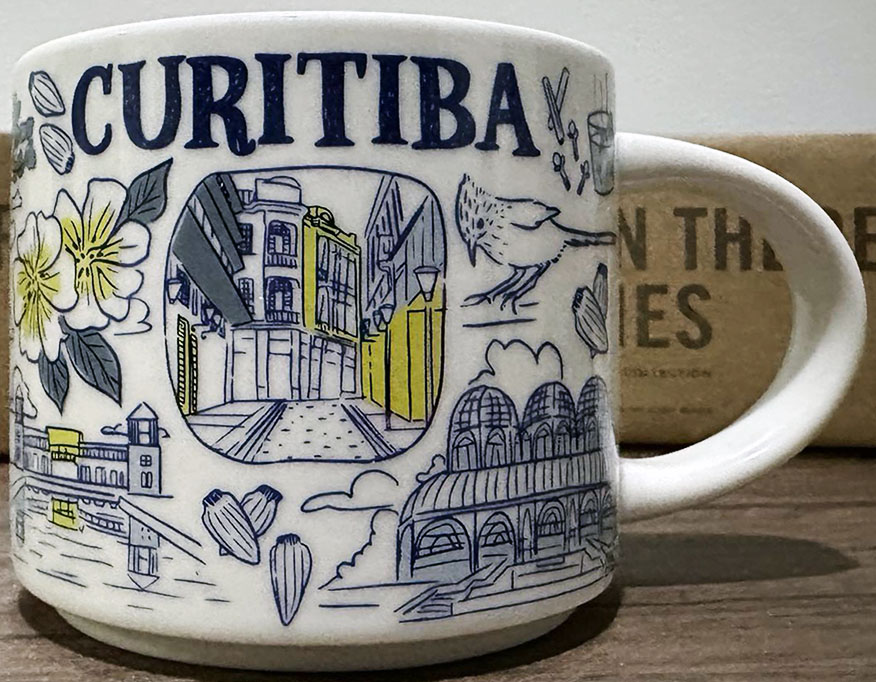
– The Botanical Garden, illustrated prominently on the mug, is Curitiba’s most iconic landmark and photographed location. Opened in 1991, its distinctive Art Nouveau-inspired greenhouse with its glass and metal frame sits amid formal French gardens. The landmark represents Curitiba’s commitment to green spaces and environmental consciousness, which defines the city’s character.
– The Avenida Palace on 15 November Street shown on the mug represents Curitiba’s elegant early 20th-century architecture. This historic building stands on the city’s main pedestrian street, which was one of Brazil’s first car-free zones. The avenue showcases Curitiba’s architectural heritage and its pioneering approach to urban pedestrianization.
– The Federal University of Paraná building depicted on the mug represents Brazil’s first university, founded in 1912. This historic institution established Curitiba as an important educational center and continues to shape the city’s intellectual and cultural life. The university’s classical architecture remains a prominent feature of downtown Curitiba.
– The decorative sidewalk patterns shown on the mug celebrate Curitiba’s distinctive Portuguese-style mosaic pavements inspired by nature. These artistic designs featuring leaves, flowers, and organic motifs line streets throughout the historic center. The ornamental sidewalks add beauty to pedestrian spaces and reflect the city’s attention to aesthetic urban details.
– The Araucaria pine trees shown throughout the design represent Paraná’s state tree and symbol of regional heritage. These distinctive umbrella-shaped conifers produce pine nuts (pinhão) that are a beloved local delicacy. Conservation efforts have preserved many araucarias within Curitiba’s numerous parks despite historical deforestation.
– The yellow ipê flowers scattered across the design represent ipê-amarelo, which blanket Curitiba in golden blooms each winter. These spectacular flowering trees line streets and parks throughout the city between June and September. The ipê symbolizes Curitiba’s identity as one of Brazil’s greenest cities.
– The barreado dish depicted on the mug celebrates one of Paraná’s most traditional culinary specialties. This slow-cooked beef stew prepared in sealed clay pots is traditionally served during Carnival. While originating on the coast, barreado has become part of Curitiba’s culinary identity.
– The quentão beverage illustrated on the mug is a traditional hot drink enjoyed during winter festivals, especially the Festa Junina celebrations. Made with cachaça, ginger, cinnamon, and cloves, this warming spiced drink brings people together during Curitiba’s cool winter months. Quentão represents the festive spirit and community traditions that thrive in the city’s temperate southern climate.
– The bird depicted on the mug represents the gralha-azul (azure jay), Paraná’s state bird and ecological symbol. This striking bluebird disperses araucaria pine seeds, helping regenerate native forests. The gralha-azul appears on Paraná’s state flag and represents the connection between regional wildlife and iconic araucaria forests.