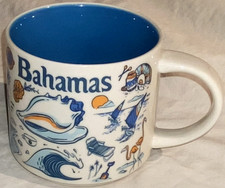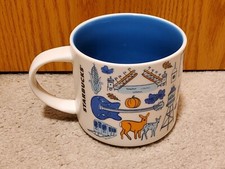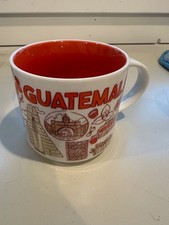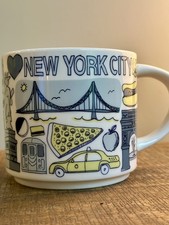
Been There – Belo Horizonte


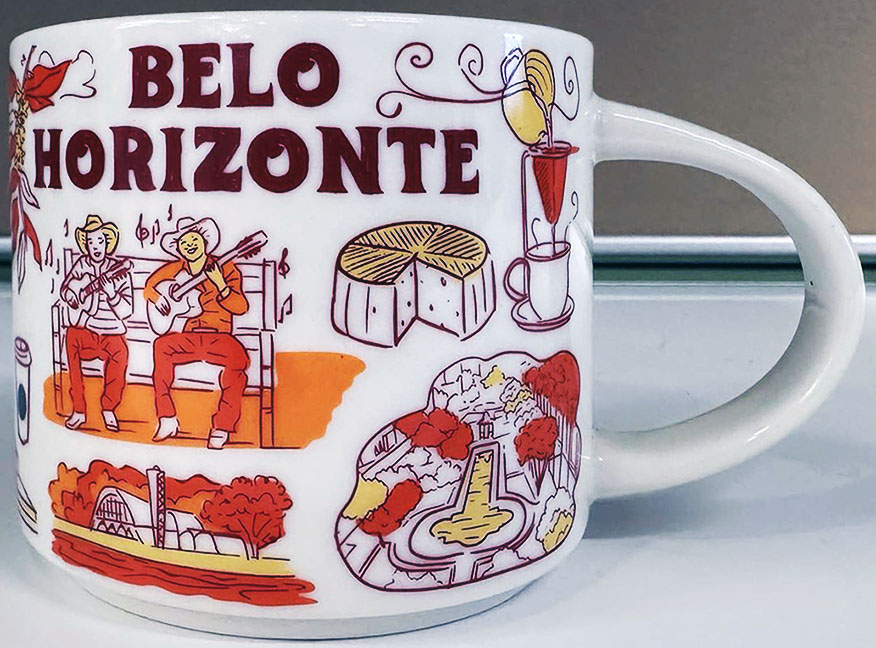
Starbucks Been There – Belo Horizonte is a mug for the capital of Minas Gerais state in southeastern Brazil, which stands as one of the country’s first planned cities, founded in 1897 to replace Ouro Preto as the state capital. The city’s name translates to “Beautiful Horizon” in Portuguese, a fitting tribute to its stunning location surrounded by mountains and hills that create a natural amphitheatre. Designed by engineer Aarão Reis, the city was conceived during Brazil’s Republican era as a modern administrative center that could accommodate the growing needs of Minas Gerais. The urban planning incorporated wide avenues, geometric street layouts, and designated areas for different functions, making it a pioneering example of urban design in Latin America. Today, Belo Horizonte has grown into Brazil’s sixth-largest city and serves as a major economic and cultural hub in the region.
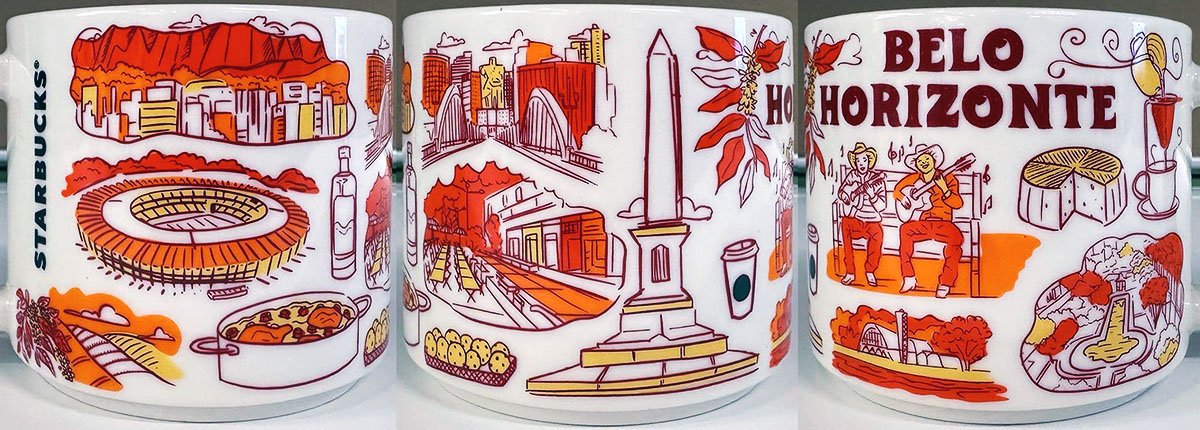
– The iconic skyline of Belo Horizonte creates one of Brazil’s most recognizable urban landscapes, with modern skyscrapers and buildings rising against the dramatic backdrop of the Serra do Curral mountain range. This natural setting gives the city its characteristic bowl-like geography, where urban development spreads across valleys surrounded by rolling hills and peaks.
– Serra do Rola-Moça State Park represents one of the most important protected natural areas surrounding Belo Horizonte, covering over 3,900 hectares of Atlantic Forest and Cerrado vegetation. The park serves as a crucial green lung for the metropolitan area, offering hiking trails, waterfalls, and diverse wildlife just minutes from the urban center.
– The Pampulha Modern Ensemble stands as a UNESCO World Heritage Site and represents one of the most significant examples of modern architecture in Brazil, designed by Oscar Niemeyer in the 1940s. This architectural complex includes the Church of Saint Francis of Assisi, the Casino (now an art museum), the Yacht Club, and the former Hotel, all situated around the artificial Pampulha Lagoon.
– The Mineirão, officially known as Estádio Governador Magalhães Pinto, ranks among Brazil’s most important football stadiums and served as a key venue during the 2014 FIFA World Cup. With a capacity of over 60,000 spectators, it has hosted countless memorable matches and serves as the home ground for Cruzeiro and Atlético Mineiro, two of Brazil’s most successful football clubs.
– Praça Sete de Setembro, located in the heart of Belo Horizonte, is a bustling square that serves as a central landmark and meeting point for locals and visitors. It is best known for the iconic Obelisco, a granite monument that commemorates the centennial of Brazil’s independence. Surrounded by busy streets, shops, and cafes, the square is a lively symbol of the city’s vibrant urban life.
– Liberdade Square (Praça da Liberdade) functions as the cultural and administrative heart of Belo Horizonte, surrounded by important government buildings and cultural institutions that form the Liberty Circuit. The square houses several museums, including the Memorial Minas Gerais Vale and the Museum of Mineralogy, creating a concentrated area of cultural attractions.
– The Santa Teresa Viaduct stands as an impressive feat of engineering and one of Belo Horizonte’s most photographed landmarks, spanning 352 meters across the Santa Teresa valley. Built in the early 20th century, this concrete arch bridge connects different neighborhoods while offering spectacular views of the city and surrounding mountains. The viaduct has become an iconic symbol of Belo Horizonte’s infrastructure development and serves as a popular spot for photography, especially during sunset when the city lights begin to illuminate the urban landscape below.
You should sample these local culinary specialties when visiting Belo Horizonte:
– Cachaça, Brazil’s national spirit distilled from sugarcane, holds special significance in Minas Gerais, which produces some of the country’s finest and most traditional varieties. The state’s mountainous climate and fertile soil create ideal conditions for sugarcane cultivation and the aging process that gives Minas Gerais cachaças their distinctive smooth flavour and artisanal quality. Local establishments throughout Belo Horizonte offer tastings of premium cachaças, often accompanied by traditional appetizers, making it an essential cultural experience for visitors seeking to understand the region’s gastronomic heritage.
– Pão de Queijo, the beloved cheese bread of Minas Gerais, represents one of Brazil’s most iconic snacks and forms an inseparable pairing with coffee in Belo Horizonte’s daily life. These small, chewy rolls made from cassava flour and local cheese are served warm throughout the day in bakeries, cafés, and homes across the city. The tradition of enjoying fresh pão de queijo with strong Brazilian coffee creates a social ritual that brings people together and embodies the warmth and hospitality that characterizes Minas Gerais culture.
– Minas cheese, known as Queijo Minas, is typically made from cow’s milk and comes in both fresh (soft, mild) and aged (firmer, tangier) varieties, each prized for its unique texture and flavour. Often enjoyed with bread, fruit, or the classic pairing of guava paste (goiabada), Minas cheese is a staple in Brazilian cuisine and culture.