Discovery Series – Cozumel


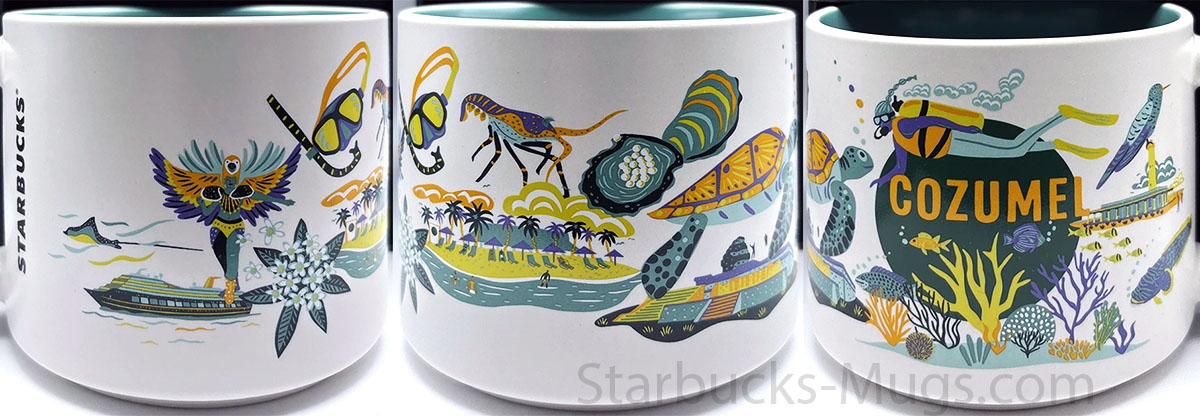
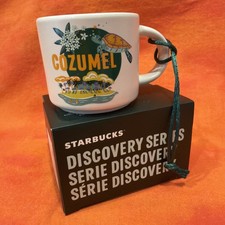
Cozumel’s underwater world is unmistakably the star of the Starbucks Discovery Series Cozumel mug. Long before the island became an international diving destination, it was an important Maya center and pilgrimage site associated with the goddess Ixchel. Spanish expeditions reached Cozumel in the early 16th century, while the modern town of San Miguel later developed on the western coast. During the 20th century, the extraordinary coral reefs surrounding the island helped transform Cozumel into one of Mexico’s best-known destinations for diving and marine tourism.
Here are some of the natural attractions and activities featured in the design:
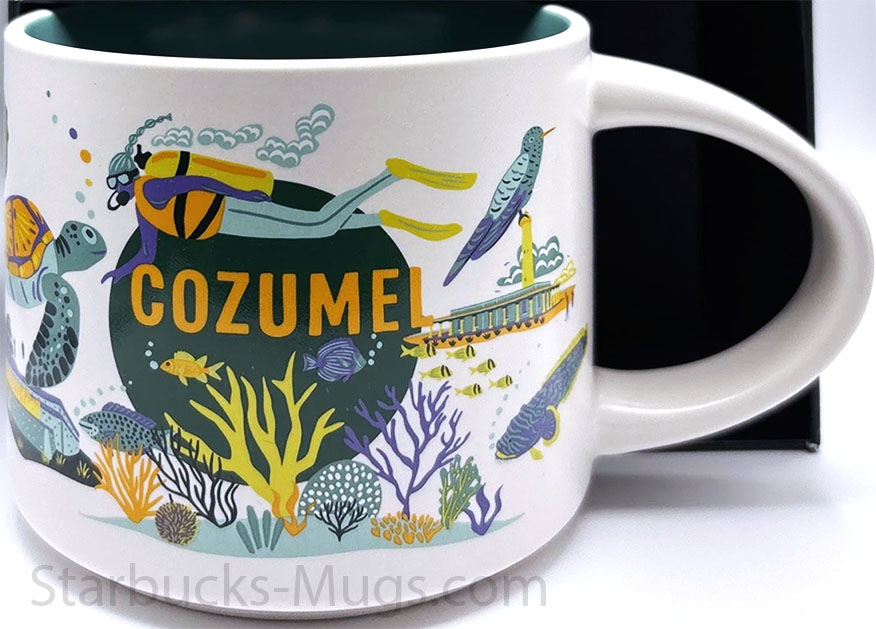
– The coral reefs are central to Cozumel’s identity. Much of the island is surrounded by reef systems belonging to the Mesoamerican Barrier Reef, with famous dive sites such as Palancar, Colombia, Santa Rosa Wall, and Punta Sur. Clear Caribbean water, dramatic coral formations, walls, and colorful marine life have made these reefs the main reason divers from around the world travel to Cozumel.
– Scuba diving is probably the activity most strongly associated with the island. Cozumel is particularly famous for drift diving, where divers allow the Caribbean current to carry them along the reef while exploring coral walls, tunnels, and underwater formations. Excellent visibility and warm water make the island suitable for both experienced divers and people discovering the sport for the first time.
– Snorkelling offers an easier way to experience the same remarkable marine environment. Shallow reefs around areas such as Chankanaab and the southern coast provide opportunities to see tropical fish, coral, rays, and other sea life without needing scuba equipment. Boat excursions also regularly combine snorkelling with stops at beaches and shallow sandbanks.
– The sea turtles are among the most memorable animals found in the waters around Cozumel. Green and hawksbill turtles can be encountered around the reefs, where they feed and rest among coral formations and seagrass. Their presence adds another dimension to the diving and snorkelling experience and reflects the biodiversity of the island’s protected marine environment.
– The Maya ruins likely refer to San Gervasio, the most important archaeological site on Cozumel. The settlement developed into the island’s principal Maya center and was connected with the wider trade and political networks of the Yucatán Peninsula. Its surviving temples, platforms, plazas, altars, and small pyramidal structures offer a glimpse into Cozumel’s history long before the island became famous for beaches and diving.
– The beaches complete the island theme, ranging from calmer stretches on Cozumel’s western side to the wilder, wave-exposed coastline in the east. White sand, turquoise water, palm trees, and easy access to reefs make beach time a natural part of almost any visit, whether the day is spent swimming, snorkelling, diving, or simply enjoying the Caribbean scenery.
– The cruise ship is a very fitting addition to the Cozumel design, as the island is one of the most important cruise destinations in the Caribbean. Large ships regularly dock at terminals such as Punta Langosta, Puerta Maya, and the International Cruise Terminal, bringing thousands of visitors to the island each day. For many travellers, Cozumel is their first introduction to the Mexican Caribbean, with shore excursions commonly centered on beaches, reefs, diving, snorkelling, and the island’s Maya heritage.