Discovery Series – Oita


The Starbucks Discovery Series Oita mug turns to the northeastern side of Kyushu, where volcanic mountains, coastal communities, and centuries-old hot spring culture have shaped the character of the prefecture. Much of present-day Oita was historically part of Bungo Province, an important center of trade and cultural exchange during the medieval period. Today, Oita is especially famous across Japan for its enormous number of hot springs, but the prefecture is equally known for seafood, citrus, traditional crafts, mountain scenery, and sports.
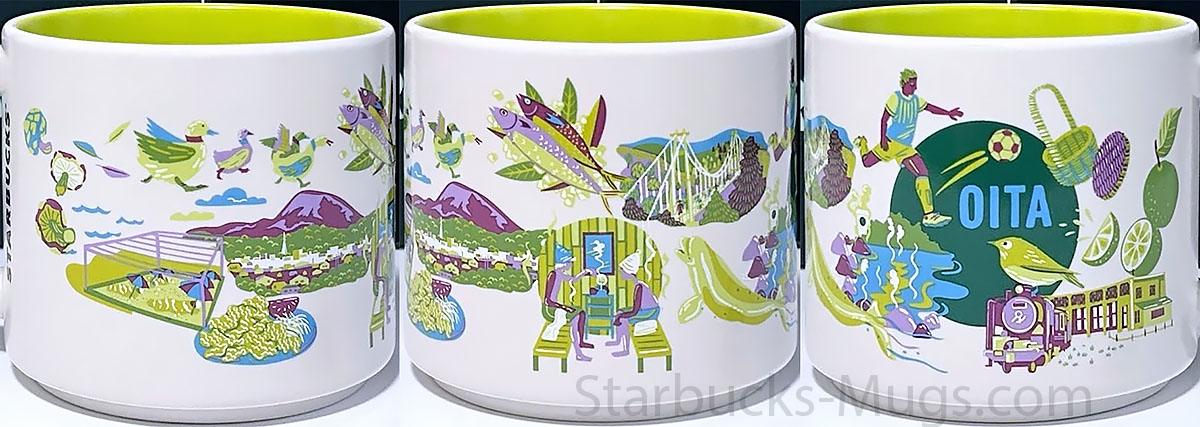
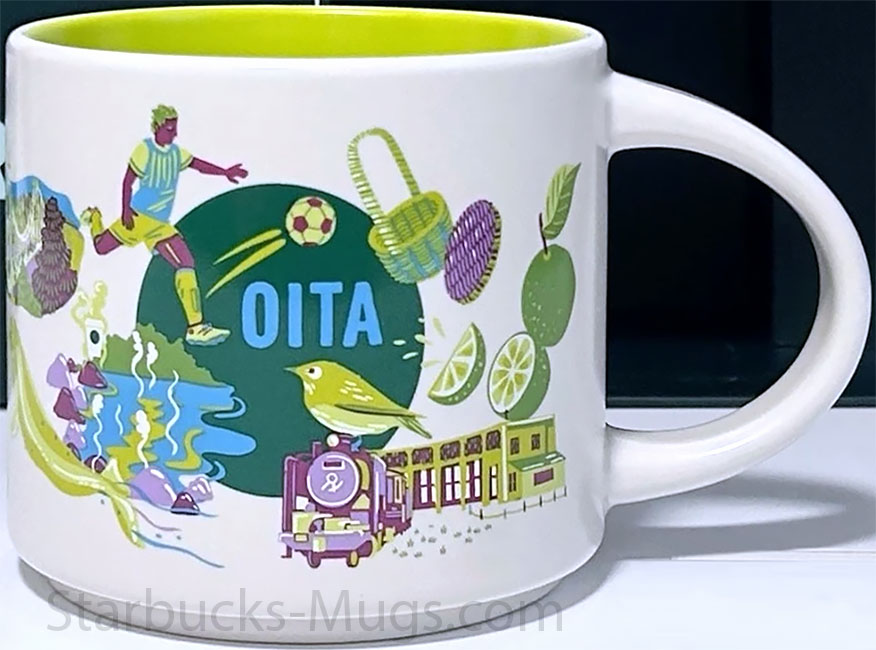
Here are some of the foods, traditions, natural attractions, and symbols featured in the design:
– The steaming pools refer to Oita’s hot springs, probably the strongest association with the prefecture. Beppu alone contains numerous distinct hot spring areas with different mineral compositions, colors, and bathing traditions, while Yufuin offers a quieter mountain-resort atmosphere. Public baths, outdoor pools, steam baths, and geothermal landscapes are so widespread that Oita proudly promotes itself as Japan’s “onsen prefecture.”
– The people buried in warm sand represent the traditional sand baths for which Beppu is particularly famous. Visitors wearing light robes lie down while attendants cover them with naturally heated sand warmed by geothermal water beneath the ground. The weight and warmth of the sand create a very different experience from an ordinary hot spring bath and have made sand bathing one of the region’s more unusual onsen traditions.
– The green citrus fruit is kabosu, one of Oita’s signature agricultural products. Similar in appearance to a lime, kabosu has an aromatic, pleasantly tart juice that is commonly squeezed over grilled fish, sashimi, hot pot, and other dishes. It is grown extensively in the prefecture and has become such a recognizable local ingredient that it appears prominently in the mug’s design.
– The fish likely refer to Seki aji and Seki saba, premium horse mackerel and mackerel caught in the fast-moving waters of the Bungo Channel near Saganoseki. The strong currents produce firm, flavorful fish that are carefully handled to preserve their quality and freshness. Both have become celebrated specialties of Oita and are particularly prized when served as sashimi.
– The woven objects point to Beppu bamboo craft, a traditional industry with a long history in the prefecture. Skilled artisans split bamboo into extremely thin strips and weave them into baskets, trays, containers, decorative pieces, and increasingly elaborate works of art. What began largely as practical household goods developed into one of Oita’s most distinctive traditional crafts.
– The long suspension bridge is the Kokonoe Yume Grand Suspension Bridge, set high above the mountainous landscape of Kokonoe. Stretching across a deep valley, the pedestrian bridge provides sweeping views of surrounding forests, waterfalls, and mountains. Autumn is particularly popular, when the slopes below turn into a broad display of red, orange, and yellow foliage.
– The Japanese white-eye, or mejiro, is Oita’s official prefectural bird. Small and easily recognized by the white ring surrounding each eye, it is commonly seen moving through trees and flowering plants in search of nectar and insects. The bird has a particularly strong association with Oita and adds a quieter natural reference among the mug’s larger tourism attractions.
– The soccer player reflects Oita’s enthusiasm for football and its home club, Oita Trinita. The team has represented the prefecture in Japanese professional football for decades and has developed a loyal regional following. Including soccer among hot springs, food, and traditional crafts gives the design a more contemporary glimpse of everyday life in Oita.