Discovery Series – Okinawa


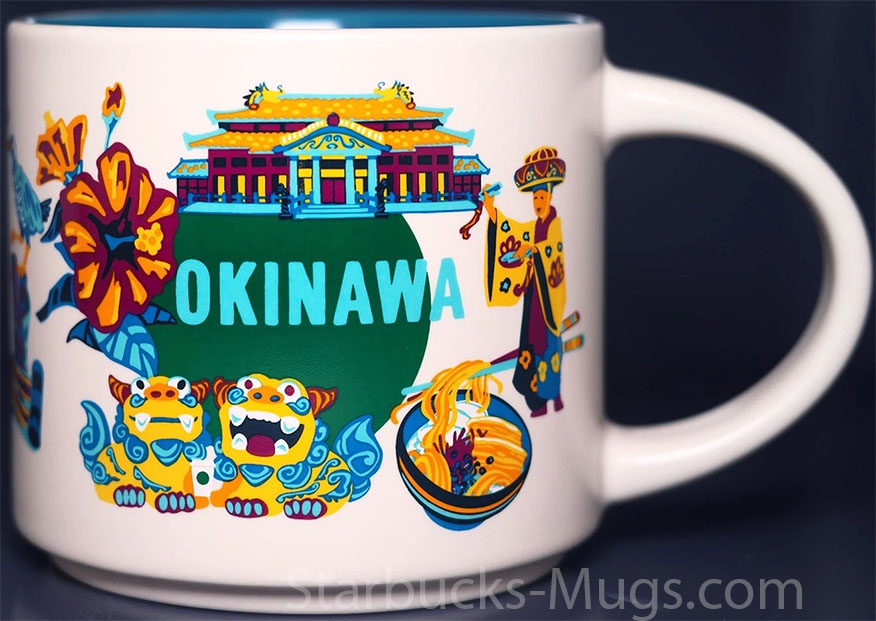
The Starbucks Discovery Series Okinawa mug takes us to Japan’s southernmost prefecture, a region with a culture that feels noticeably different from the rest of the country. For centuries, Okinawa formed the heart of the independent Ryukyu Kingdom, which developed strong cultural ties with China, Japan, and Southeast Asia before being incorporated into Japan in the 19th century. That history is still visible today in the islands’ music, dance, architecture, food, religious traditions, and distinctive crafts.
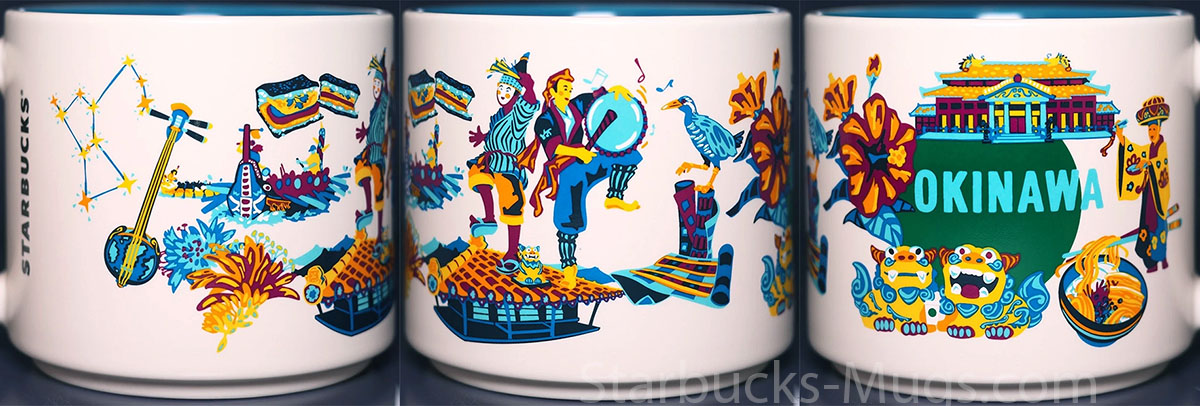
Here are some of the foods, traditions, landmarks, and symbols featured in the design:
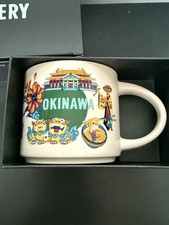
– The pair of shisa on the front are among the most recognizable symbols of Okinawa. These guardian lion-dogs are traditionally placed on rooftops, gates, and entrances to protect homes from misfortune. They are usually shown in pairs and have become one of the most familiar sights throughout the islands.
– The bowl of Okinawa soba is another very local choice. Unlike mainland Japanese soba, these noodles are made from wheat rather than buckwheat and are usually served in a pork-based broth with toppings such as sliced pork, fish cake, and green onions. It is one of the dishes most strongly associated with everyday Okinawan food culture.
– The large red flowers are hibiscus, a familiar part of Okinawa’s subtropical landscape. Their bright colors are especially common in gardens, roadsides, and resort areas, and they fit naturally with the warm climate and tropical character of the islands.
– Shurijo Castle reflects Okinawa’s royal past as the center of the Ryukyu Kingdom. The castle in Naha served as the political and ceremonial heart of the kingdom for centuries, and its architecture combines influences from China, Japan, and the Ryukyus themselves. Although the main hall was destroyed by fire in 2019, reconstruction has continued, and the site remains one of Okinawa’s most important cultural landmarks.
– The musicians and dancers represent eisa, one of Okinawa’s best-known traditional performing arts. Eisa is closely connected with Obon and is performed by groups wearing colorful costumes while dancing to the sound of drums and traditional music. Large events such as the Okinawa Zento Eisa Matsuri and the 10,000 Eisa Dancers Parade continue to keep the tradition very visible.
– The three-stringed instrument is the sanshin, one of the defining sounds of Okinawan music. Its body is traditionally covered with snakeskin, and its ancestor arrived from China during the Ryukyu Kingdom period. The sanshin is used in folk songs, court music, theater, and modern Okinawan music, giving it a role similar to that of a cultural signature for the islands.
– The colorful fabric appears to reference bingata, Okinawa’s traditional resist-dyeing technique. Bingata textiles are known for bold patterns and bright colors inspired by flowers, birds, landscapes, and other natural motifs. The craft developed under the Ryukyu Kingdom and was historically associated with court clothing and ceremonial garments.