Discovery Series Ornament – Guadalajara


The Starbucks Discovery Series Ornament Guadalajara turns to the capital of Jalisco, a city founded in 1542 that grew into one of Mexico’s most important cultural and economic centers. Guadalajara is especially associated with traditions that have become recognizable far beyond the region, including mariachi music, tequila, and a distinctive local cuisine. The ornament keeps the selection compact, using just a few symbols that immediately connect it with the city and the wider state of Jalisco.
Here are some of the foods and traditions featured in the design:
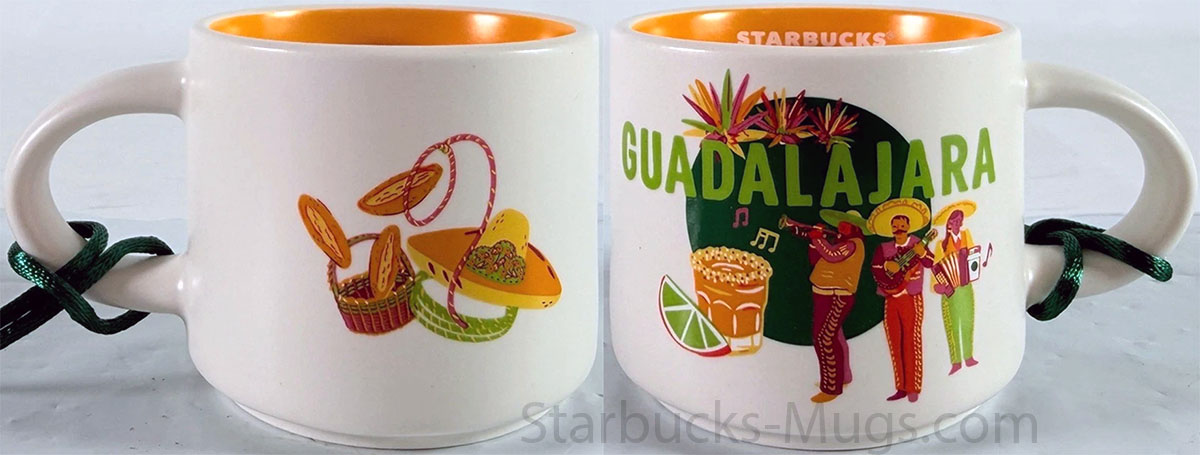
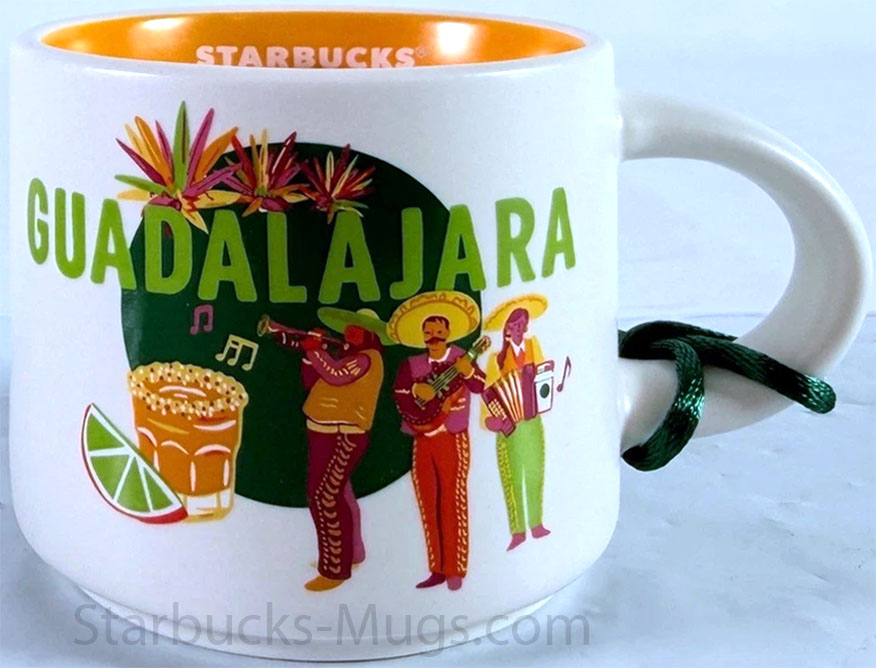
– Mariachi music is perhaps the cultural tradition most closely associated with Guadalajara. Jalisco played a major role in the development of mariachi, with ensembles traditionally combining violins, trumpets, guitars, vihuelas, and guitarrón. The musicians shown on the ornament, dressed in charro-style clothing and sombreros, make this heritage one of the central elements of the design.
– Tequila is another essential reference to Jalisco. The famous spirit is produced from blue agave, with the town of Tequila located less than 40 miles (65 kilometers) northwest of Guadalajara. The drink shown with lime recalls how deeply tequila is tied to the region, from historic distilleries and agave fields to modern bars and restaurants throughout the city.
– The food on the back includes a torta ahogada, one of Guadalajara’s signature dishes. This local sandwich is made with a crusty birote bread filled with meat, usually pork, and then partially or completely covered in a tomato-based sauce and a much hotter chile sauce. The combination of crisp bread, rich filling, and spicy sauce has made it one of the foods visitors most strongly associate with the city.
– The vaquero tradition is represented by the wide-brimmed hat and coiled rope. Ranching and horsemanship have deep roots in Jalisco, where cattle culture helped shape the image of the Mexican cowboy long before it became an internationally recognized symbol. Skills such as riding, roping, and working with livestock remain closely connected with the region’s rural heritage and with traditions such as the charreada.