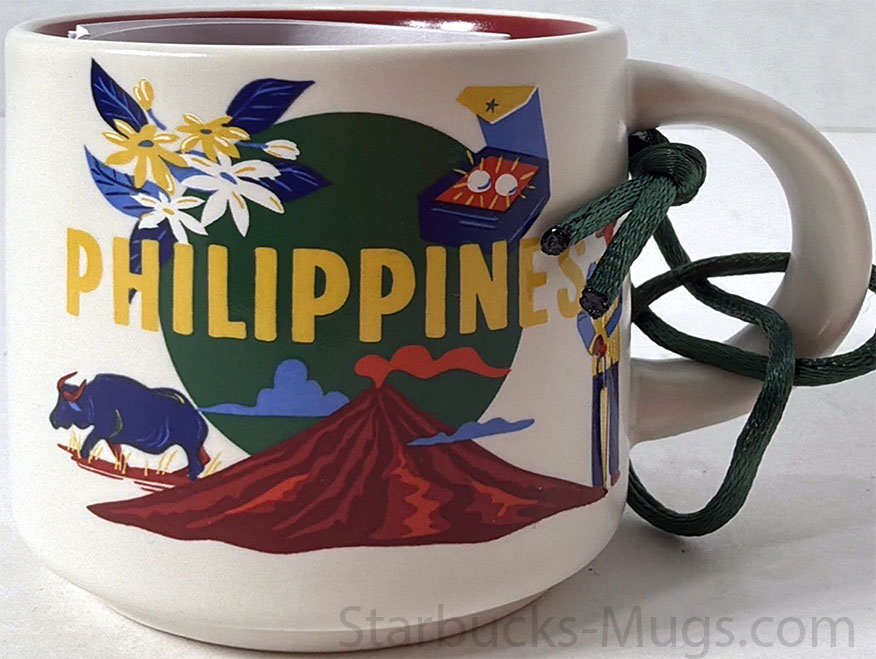
Discovery Series Ornament – Philippines


Starbucks has released a bunch of mugs from the Philippines and only one ornament so far. Something tells me that the mini mugs for the cities of this archipelagic country will follow.
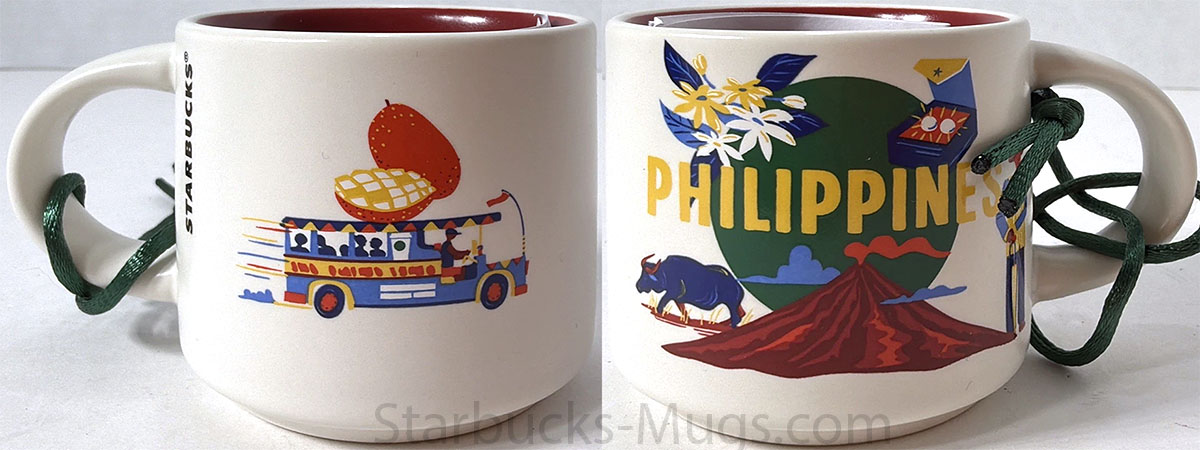
The Discovery Series Ornament Philippines showcases several of the country’s best-known natural and cultural symbols. Although much smaller than the full-sized mug, the ornament captures what makes the Philippines unique, from its volcanic landscapes and tropical fruits to its beloved national icons and everyday life on the islands.
– Mayon Volcano forms the backdrop of the design. Rising more than 8,000 feet above southern Luzon, Mayon is famous for its remarkably symmetrical cone and is considered one of the most beautiful volcanoes in the world. Despite being one of the Philippines’ most active volcanoes, it remains one of the country’s most visited natural attractions.
– Sampaguita (Jasminum sambac), the national flower of the Philippines, appears beside the city name. Known for its small white blossoms and sweet fragrance, the sampaguita symbolizes purity, humility, and strength. The flowers are commonly woven into garlands used during religious ceremonies, celebrations, and to welcome honored guests.
– Pearls represent one of the Philippines’ greatest natural treasures. Thanks to its warm tropical waters, the country is among the world’s leading producers of South Sea pearls, prized for their exceptional size, luster, and quality. Pearl farming has become an important industry, particularly in the southern islands.
– Mangoes, illustrated near the top of the ornament, highlight one of the Philippines’ most famous agricultural products. Philippine mangoes, especially the Carabao variety, are renowned for their exceptional sweetness and are often considered among the finest in the world. They are enjoyed fresh, dried, or incorporated into countless local desserts.
– The carabao, the country’s national animal, stands proudly on the ornament. This hardworking water buffalo has been an essential part of rural life for centuries, helping farmers plow rice fields and transport goods. Even today, the carabao remains a symbol of perseverance, resilience, and the agricultural heritage of the Philippines.
– The jeepney completes the design as perhaps the most recognizable symbol of everyday life in the Philippines. Created from surplus American military jeeps left behind after World War II, jeepneys evolved into brightly decorated public transportation vehicles known for their colorful artwork and unique personalities. Today they remain an enduring icon of Filipino culture and ingenuity, instantly recognizable throughout the country.