Discovery Series – Santiago


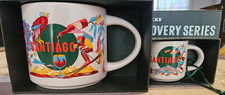
The Starbucks Discovery Series Santiago mug takes us to Chile’s capital, a city set in a broad valley between the Andes and the Chilean Coastal Range. Santiago was founded by Pedro de Valdivia in 1541 and gradually became the country’s political, economic, and cultural center. One of the most distinctive things about the city is how close the mountains feel: on clear days, snow-covered Andean peaks rise dramatically behind the skyline, while parks, hills, cable cars, and nearby ski areas make the outdoors a surprisingly important part of life in a major metropolis.
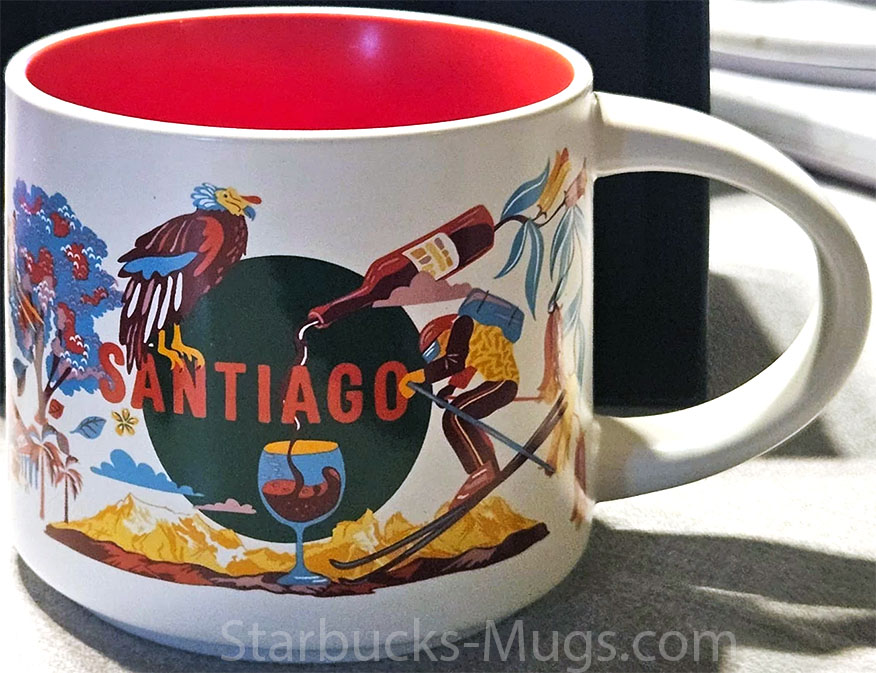
Here are some of the landmarks, foods, wildlife, and activities featured in the design:
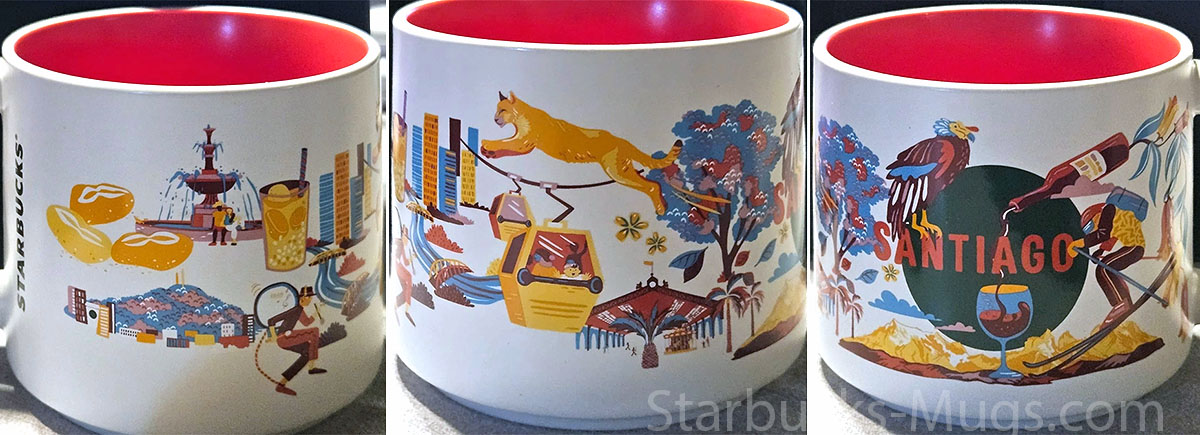
– The Andean condor is one of Chile’s most recognizable animals and also appears on the country’s coat of arms. With a wingspan that can exceed 10 feet (3 meters), it is among the world’s largest flying birds and is especially associated with the Andes. Condors can still be seen in the mountains around central Chile, including areas within reach of Santiago.
– Skiing is a natural choice for a Santiago design because some of Chile’s best-known ski areas are located surprisingly close to the capital. Resorts such as Valle Nevado, La Parva, El Colorado, and Farellones sit high in the Andes east of the city. During winter, it is possible to leave Santiago in the morning and be skiing in the mountains only a few hours later.
– The dramatic Andes Mountains form one of Santiago’s most memorable backdrops. The range rises immediately east of the metropolitan area, with snow-covered peaks visible from many parts of the city during clear weather. This combination of dense urban development and enormous mountains is one of the views that makes Santiago instantly recognizable.
– The glass of Chilean wine points to the important wine regions surrounding Santiago. The Central Valley contains several famous wine-producing areas, including the Maipo Valley just south of the capital. Cabernet Sauvignon is particularly associated with this region, while vineyards and wineries make wine tourism an easy day trip from the city.
– The large puma is Chile’s biggest native wild cat and inhabits environments ranging from the Andes to Patagonia. In central Chile, pumas live in the mountainous areas surrounding Santiago, although sightings close to populated areas remain relatively uncommon. Its powerful build and ability to survive in rugged terrain make it one of the most impressive animals of the Chilean Andes.
– The colorful cabins refer to the Santiago Cable Car in Metropolitan Park. The system crosses the slopes of Cerro San Cristóbal and provides panoramic views over the city and toward the Andes. Together with the historic funicular, it is one of the most enjoyable ways to reach the higher areas of the park.
– Cerro San Cristóbal and Metropolitan Park provide a huge green escape within the city. Walking trails, cycling routes, gardens, viewpoints, and the cable car spread across the hills, while the summit offers some of the best panoramic views of Santiago. The park’s elevated position makes the surrounding Andes especially impressive on clear days.
– The food imagery includes traditional Chilean dishes commonly enjoyed in Santiago. Empanadas, especially the classic empanada de pino filled with seasoned beef, onion, egg, and olive, are among the best-known examples. Santiago’s markets, bakeries, and neighborhood restaurants offer plenty of opportunities to explore this side of Chilean cuisine.
– The urban scenes reflect the Santiago skyline, where modern high-rises stand against the mountains surrounding the city. Districts such as Las Condes contain some of Chile’s tallest buildings, while older neighborhoods closer to the center preserve very different architecture. The contrast between skyscrapers and the enormous Andes behind them is probably one of the most distinctive visual features of Santiago
– The chinchinero is a traditional Chilean street performer, particularly associated with Santiago. The performer carries a large drum on their back and uses sticks attached to their feet or hands to play the drum and cymbals while dancing and moving to the rhythm. Chinchineros often perform together with organilleros, creating a lively combination of music, movement, and acrobatics that remains a distinctive part of Chilean popular culture.
– Mote con huesillo is one of Chile’s classic warm-weather drinks and is especially common in Santiago during the summer. It is made with cooked wheat berries and dried peaches served in a sweet, chilled syrup, often with a spoon so the fruit and wheat can be eaten after drinking. Street vendors selling tall cups of mote con huesillo are a familiar sight throughout the city.
– The copihue, or Lapageria rosea, is Chile’s national flower. This climbing plant is native to the temperate forests of central and southern Chile and produces large bell-shaped flowers, most commonly in deep red or pink. Its distinctive appearance and strong connection with Chilean nature and culture make it a fitting floral element in the design.