Discovery Series – Sendai


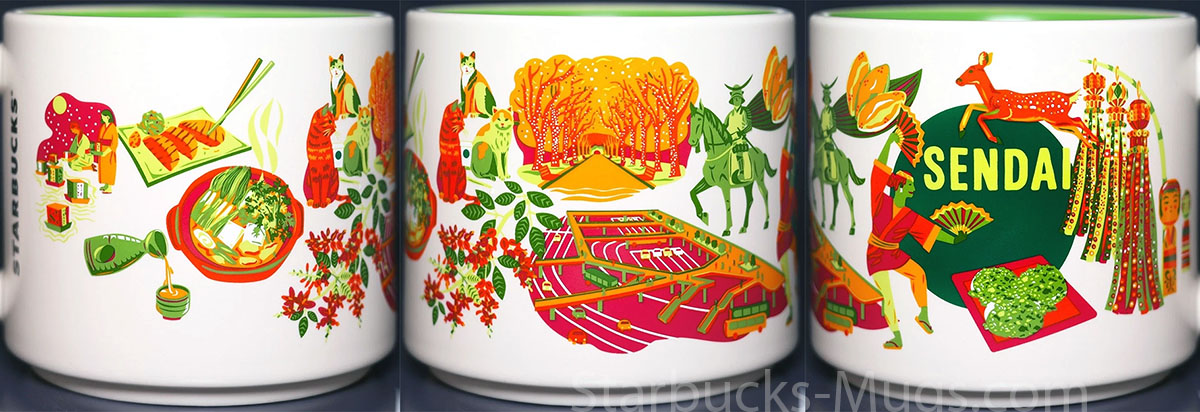
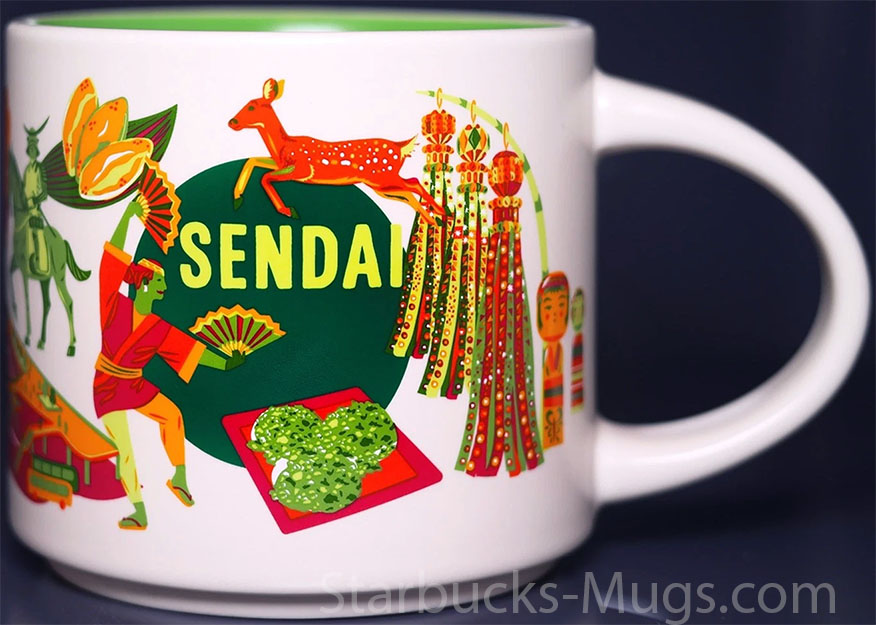
The Starbucks Discovery Series Sendai mug offers a lively mix of traditions, regional foods, festivals, and familiar symbols from the capital of Miyagi Prefecture. Sendai was founded as a castle town by the powerful feudal lord Date Masamune in the early 17th century and later developed into the largest city in the Tohoku region. Known as the “City of Trees,” it combines broad green avenues and historic traditions with a modern urban character.
Here are some of the foods, traditions, and symbols featured in the design:
– The colorful hanging decorations belong to the famous Sendai Tanabata Festival, one of the city’s biggest annual events. Held every August, the streets and shopping arcades are filled with enormous handmade streamers and elaborate paper ornaments suspended overhead. The festival has roots stretching back centuries and remains one of the most recognizable traditions associated with Sendai.
– The mounted warrior is Date Masamune, the feudal lord who founded modern Sendai in 1601. Often called the “One-Eyed Dragon,” he became one of the best-known figures of Japan’s late Sengoku and early Edo periods. His equestrian statue overlooking the city from the former Sendai Castle site is one of the classic images of Sendai.
– The energetic dancer refers to Suzume Odori, or Sparrow Dance, a traditional Sendai performance known for lively movements and colorful fans. According to local tradition, the dance originated among stonemasons who celebrated the construction of Sendai Castle. Today, it is performed during festivals and public events throughout the city.
– Zunda mochi is one of Sendai’s signature sweets. Soft rice cakes are covered with a bright green paste made from crushed young soybeans mixed with sugar and a little salt. The combination of chewy mochi and slightly grainy, sweet zunda has become one of the foods most strongly associated with the city.
– The grilled slices are sasakamaboko, a local fish cake shaped like a bamboo leaf. Made from seasoned white fish paste and lightly grilled, it is commonly eaten as a snack or given as a regional souvenir. The distinctive leaf-like form makes it easy to recognize among Sendai’s many specialties.
– The bowl of seri nabe represents another popular local dish. This hot pot uses Japanese parsley, or seri, along with meat and vegetables simmered in a flavorful broth. The roots of the seri are often left attached and eaten as well, giving the dish its particularly distinctive Sendai character during the colder months.
– The cats refer to Tashirojima, a small island off the coast of Miyagi Prefecture that has become famous for its large feline population. Often nicknamed “Cat Island,” Tashirojima has more cats than human residents and has become an unusual attraction for visitors traveling through the region.
– Jozenji-dori Avenue is one of Sendai’s most recognizable streets and a strong reason the city is often called the “City of Trees.” The broad avenue is lined with rows of mature zelkova trees that form a green canopy through the center of the city. It is especially beautiful during the winter Pageant of Starlight, when the trees are covered with thousands of lights.
– Sendai Station is the main transportation hub for the city and one of the busiest gateways to the Tohoku region. Shinkansen trains connect Sendai with Tokyo and other major cities, while local rail and subway lines spread out across the metropolitan area. The station is also surrounded by shops, restaurants, and department stores, making it an important part of everyday life in central Sendai.