You Are Here Ornament – Dubai


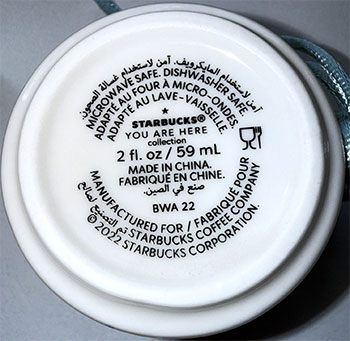
The You Are Here Ornament Dubai is another never-released prototype, and an especially interesting one because Starbucks never produced You Are Here ornaments for the individual emirates. The released ornaments covered the UAE as a country instead, so a Dubai-specific version would have been something quite different within the series. This prototype was made in China, which also explains the glossy hanging string seen with many of these samples.
Dubai’s modern history is closely tied to the Creek and to trade. In 1833, members of the Bani Yas tribe led by the Al Maktoum family settled there, establishing the emirate under Al Maktoum rule. Fishing, pearling, and maritime trade were central to the city’s early economy, while later development transformed Dubai into a major international center for commerce, tourism, aviation, and finance.
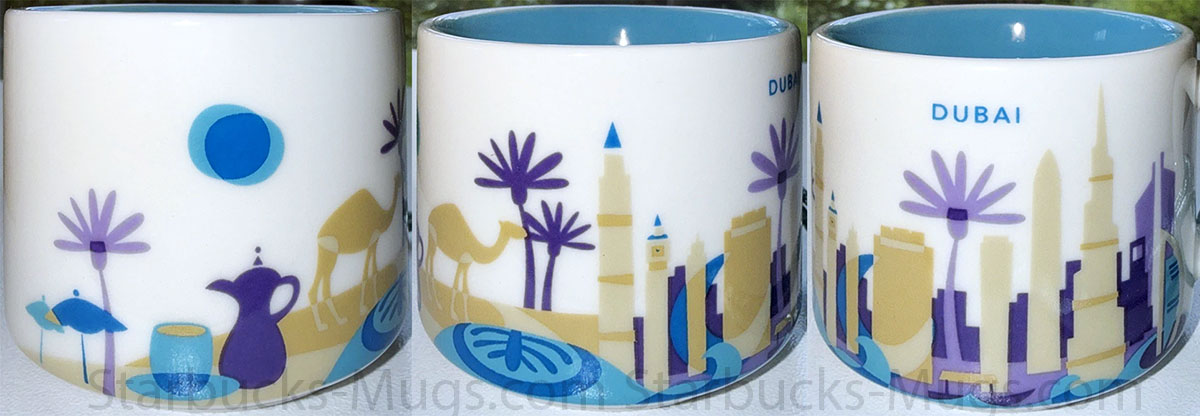
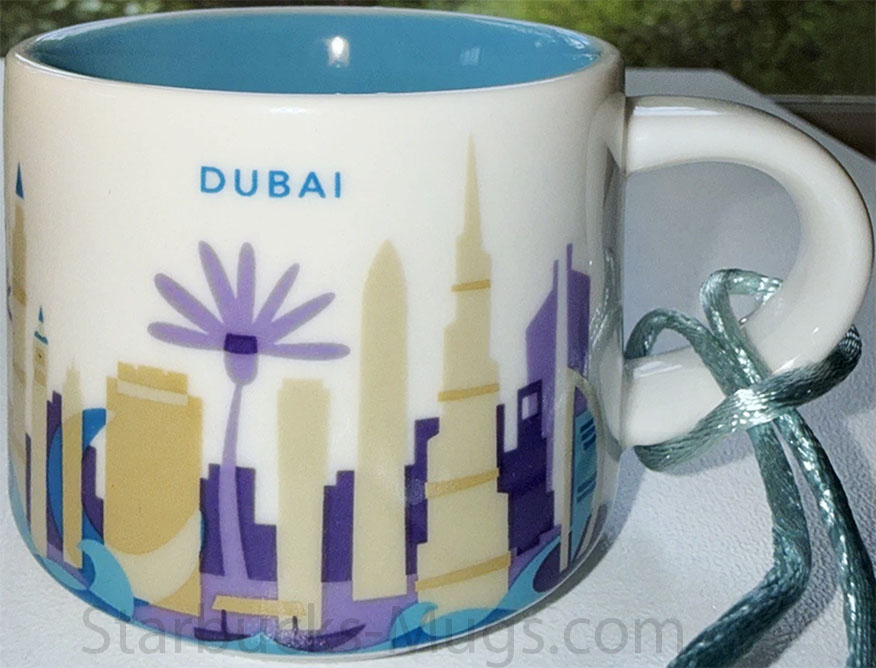
Here are some of the landmarks and symbols featured in the design:
– The Burj Khalifa dominates the modern skyline and is the easiest landmark to recognize on the ornament. At 2,717 feet (828 meters), it remains the tallest building in the world and has become the defining symbol of modern Dubai. Its slender, tapering profile makes it unmistakable even in the simplified artwork.
– The Burj Al Arab appears among the waterfront buildings with its familiar sail-shaped silhouette. Opened in 1999 on its own artificial island, the hotel quickly became one of Dubai’s most recognizable architectural icons and a symbol of the city’s rapid transformation into a luxury tourism destination.
– The camel recalls Dubai’s desert heritage and the traditional importance of these animals across the Arabian Peninsula. Camels were essential for transportation and trade in the desert and remain closely connected with Emirati culture today through racing, festivals, and desert tourism.
– The traditional dallah coffee pot reflects Emirati hospitality. Arabic coffee is commonly served from a long-spouted dallah into small cups, especially when welcoming guests. The ritual of preparing and sharing coffee remains an important part of social and cultural traditions across the UAE.
– The palm trees and desert scenery provide a contrast to the skyscrapers, reminding us that Dubai developed from a settlement surrounded by an arid landscape. Even as the city expanded dramatically, desert areas remain an important part of the emirate and are still central to activities such as desert safaris, camping, and traditional cultural experiences.
– The Dubai skyline itself shows how dramatically the city changed within only a few decades. High-rise towers now stretch along major districts and the coast, while older areas around Dubai Creek preserve a very different side of the city’s history. That contrast between traditional imagery and futuristic architecture is probably the strongest theme running through this prototype.