You Are Here Ornament – Moscow


Another interesting find is the You Are Here Ornament – Moscow, an unreleased prototype dedicated to the Russian capital. Even though it was never officially released, a certain number of copies were produced, which gives collectors a rare opportunity to acquire a genuinely unusual Starbucks piece. The city itself was first mentioned in 1147 and gradually grew into the political and cultural center of Russia. Over the centuries, Moscow became known for its Kremlin walls, grand squares, historic churches, and impressive public architecture.
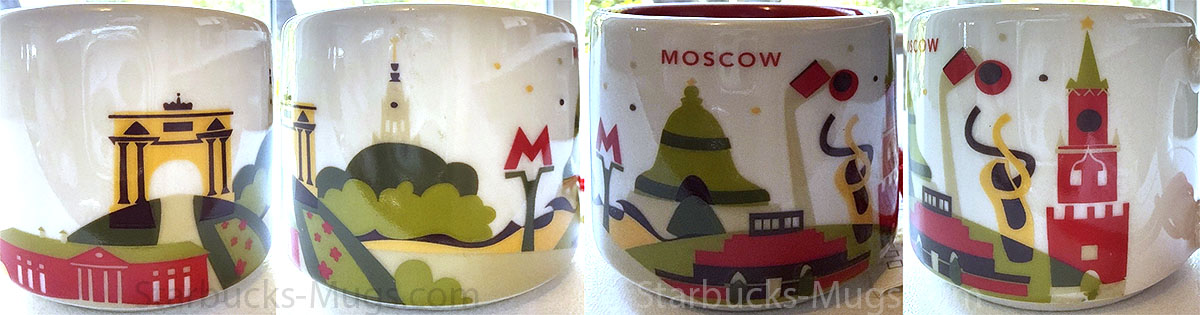
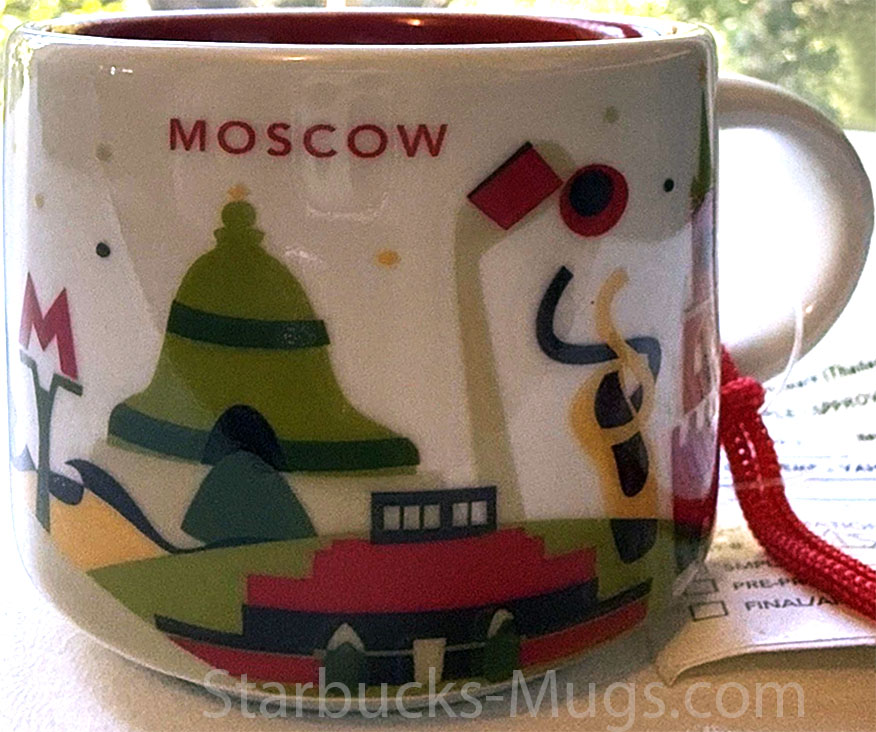
Here are some of the symbols and landmarks that can be spotted in the design of the ornament.
– Moscow Triumphal Arch appears on one side of the mug. This monument was originally built to commemorate Russia’s victory over Napoleon and remains one of the better-known historic arches connected with the city. Its strong, symmetrical shape makes it an easy landmark to recognize in a simplified design.
– The red Moscow Metro sign is another detail that clearly points to the city. Opened in 1935, the Moscow Metro is one of the most famous subway systems in the world, known not only for its size but also for the architecture of many of its stations. The simple red “M” has become one of the city’s most familiar visual symbols.
– The large bell seems to be a reference to the Tsar Bell. Located in the Kremlin, it is one of the largest bells ever made, weighing around 216 tons (about 196 metric tonnes). Despite its enormous size, it was never actually rung after being damaged during a fire in the 18th century.
– One of the clearest landmarks on the mug is the Spasskaya Tower of the Moscow Kremlin. With its tall red structure and pointed top, it is one of the most recognizable parts of the Kremlin complex. It faces Red Square and is closely associated with official ceremonies and the image of central Moscow.
– The slender white-and-gold tower in the design looks like a nod to Moscow’s historic church and bell towers. It may be an artistic interpretation rather than a strictly exact landmark, but it fits well with the city’s skyline of domes, spires, and religious architecture. Details like this give the prototype a slightly broader and more atmospheric view of Moscow.