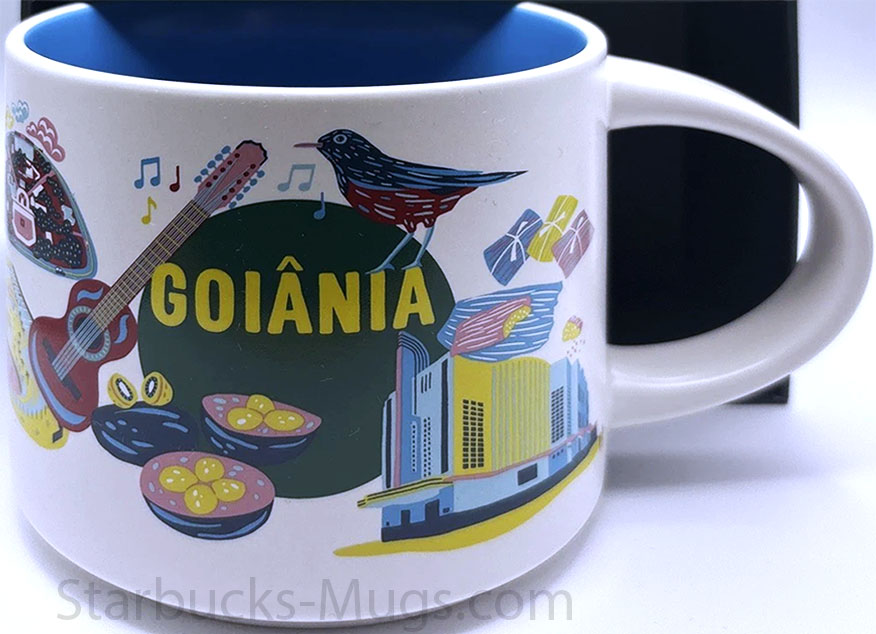
Discovery Series – Goiânia


The Starbucks Discovery Series Goiânia mug takes us to the capital of Goiás, a comparatively young city created in the 1930s to replace the historic city of Goiás as the state capital. Goiânia was carefully planned from the beginning, and its early development left behind an important collection of Art Deco architecture. At the same time, the city has become strongly associated with sertanejo music, Cerrado cuisine, public squares, and a very active outdoor culture. The result is a design that mixes the city’s planned urban history with traditions that are unmistakably Goiano.
Here are some of the landmarks, foods, traditions, and symbols featured in the design:
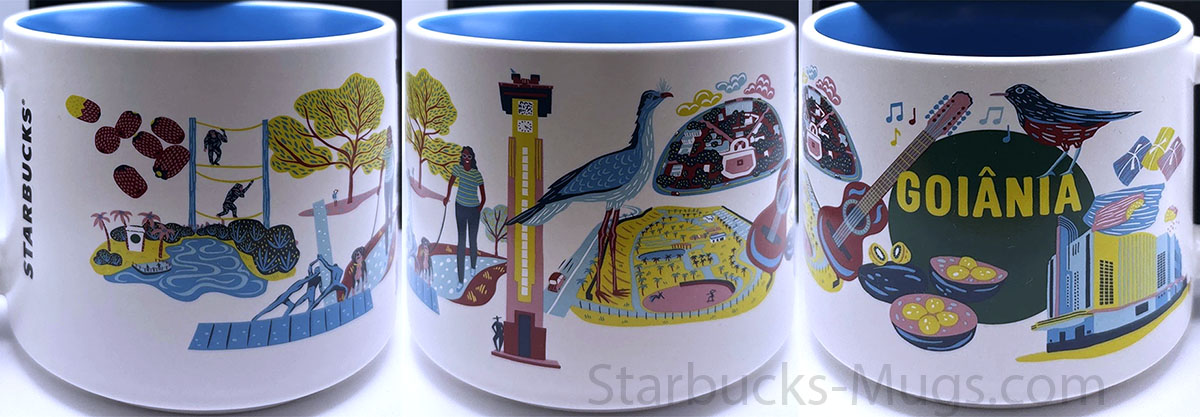
– The Monument to the Three Races is one of the best-known sculptures in central Goiânia. Created by artist Neusa Moraes, it depicts three figures representing the Indigenous, European, and African peoples whose histories contributed to the formation of Goiás. The monument stands in Praça Cívica and has become one of the city’s most recognizable public artworks.
– The Art Deco Clock Tower is another reminder of Goiânia’s beginnings as a carefully planned modern capital. Inaugurated in 1942 on Avenida Goiás, the tower uses the clean geometric forms and vertical lines typical of Art Deco. It belongs to the group of early architectural landmarks that gives central Goiânia such a distinctive character.
– Praça Pedro Ludovico, better known as Praça Cívica, sits at the heart of the original city plan. Named after Pedro Ludovico Teixeira, the political leader behind the creation of Goiânia, the square is surrounded by several important government buildings and Art Deco landmarks. It remains one of the clearest places to see the architecture and layout envisioned for the new capital during the 1930s.
– The guitar fits Goiânia’s unusually strong relationship with sertanejo music. The city has become one of Brazil’s principal centers for the genre, producing singers, composers, recording studios, and major live shows. Sertanejo is so closely connected with local nightlife and popular culture that music is an especially fitting element for the design.
– The yellow fruits are pequi, one of the ingredients most strongly associated with Goiás and the Cerrado. Its intensely aromatic pulp is commonly cooked with rice, chicken, and other regional dishes. Arroz com pequi remains one of the classic foods of Goiás, although the fruit’s hard, spiny inner pit means it has to be eaten carefully.
– The brown seeds appear to be baru, a native Cerrado fruit valued especially for the nutritious nut found inside its hard shell. Baru nuts are commonly roasted and eaten as a snack or incorporated into sweets, sauces, and other dishes. Together with pequi, they reflect the importance of native Cerrado ingredients in the cuisine of Goiás.
– The tall seriema is a characteristic bird of the open landscapes of central Brazil. Its long legs allow it to spend much of its time walking and running across grasslands and savanna, while its loud, far-carrying call makes it difficult to miss. The species is well suited to the Cerrado environment that surrounds Goiânia.
– The people practicing capoeira add another lively element to the mug. This Brazilian tradition combines martial arts, music, rhythm, and acrobatic movement and is often practiced in public spaces around the country. In Goiânia, parks such as Parque Flamboyant provide popular settings for exercise, group activities, and informal cultural gatherings, which may be what the designers intended to capture here.