Discovery Series – Hokkaido


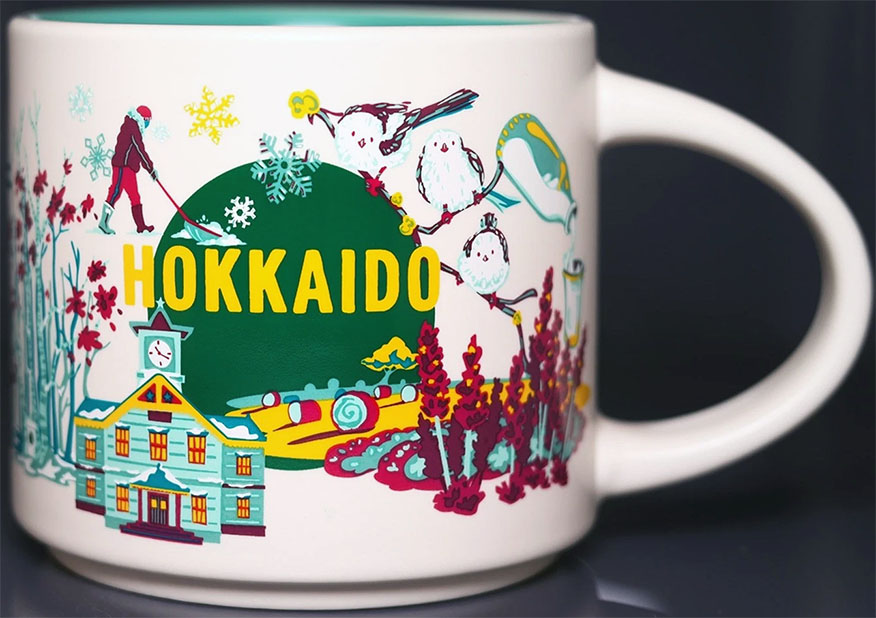
The Starbucks Discovery Series Hokkaido mug explores Japan’s northernmost main island, a region known for long snowy winters, mountains, wildlife, agriculture, and distinctive local traditions. Hokkaido was historically inhabited by the indigenous Ainu people and was known as Ezo before receiving its present name in 1869, during a period of rapid Japanese settlement and development. Today, its relatively cool climate and wide-open landscapes distinguish it from much of the rest of Japan, while winter sports, seafood, and spectacular natural scenery attract visitors throughout the year.
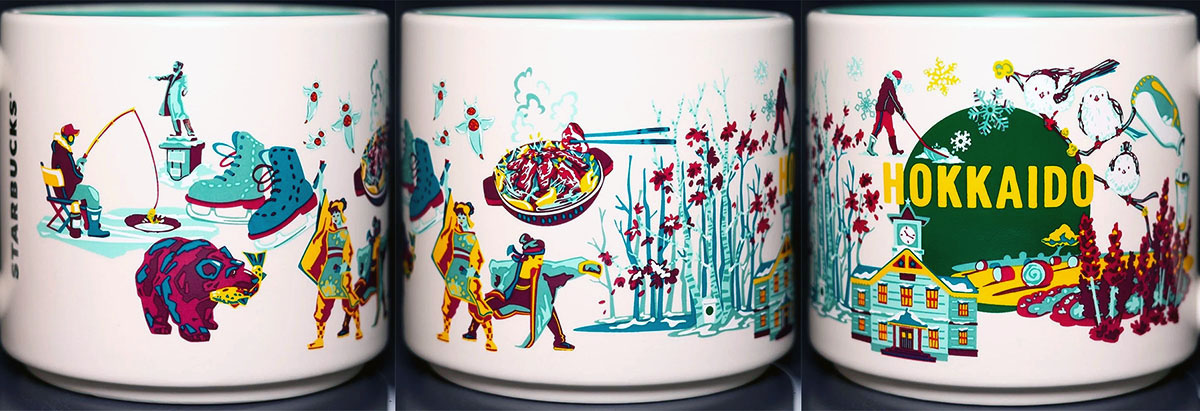
– The Sapporo Clock Tower is one of the most recognizable historic landmarks in Hokkaido’s capital. Originally built in 1878 as a drill hall for Sapporo Agricultural College, the wooden building received its American-made clock in 1881. More than 140 years later, the clock still operates and continues to sound its bell every hour.
– The small white birds are long-tailed tits, known in Hokkaido as shima-enaga. This Hokkaido subspecies is especially recognizable by its almost completely white face and tiny, round appearance, which becomes particularly fluffy during the cold winter months. Shima-enaga have become extremely popular in Japan and are often photographed among Hokkaido’s snowy forests.
– The colorful dancers represent the Yosakoi Soran Festival, one of Sapporo’s largest annual events. First held in 1992, the festival combines the energetic Yosakoi dance style with elements of Hokkaido’s traditional Soran Bushi folk song. Teams wearing colorful costumes perform choreographed routines throughout central Sapporo, traditionally carrying small wooden clappers called naruko.
– Skiing and snowboarding are natural additions to a Hokkaido design, thanks to the island’s long winters and abundant snowfall. Resorts such as Niseko, Furano, and Rusutsu have become internationally known for their deep, light powder snow. The snowy mountains also offer everything from cross-country skiing to snowshoeing and other winter activities.
– The steaming bowl is ishikari nabe, a traditional Hokkaido hot pot originating in the Ishikari area. Salmon and vegetables such as cabbage and onions are simmered together in a broth flavored with miso and kombu, producing a warming dish particularly suited to Hokkaido’s cold climate.
– The forest of slender white trees represents Hokkaido’s birch forests. White birch is a familiar feature of the island’s cooler landscapes, its pale trunks creating especially striking scenery among Hokkaido’s mountains and forests. The trees also reinforce the strong seasonal character of the design, surrounded here by autumn leaves and winter imagery.
– The large Hokkaido brown bear, or higuma, is one of the island’s most impressive wild animals. It is a subspecies of brown bear found only in Hokkaido within Japan and inhabits forests and mountainous areas across the island. Bears are particularly associated with places such as the Shiretoko Peninsula, where the rich ecosystem links forests, rivers, salmon, and the surrounding sea.
– Ice skating is another reminder of Hokkaido’s strong connection with winter sports. The island’s cold climate has produced a long skating tradition, and Hokkaido has been home to numerous prominent Japanese speed skaters. Outdoor skating and frozen lakes also form part of winter recreation in different areas of the island.
– Finally, ice fishing takes advantage of Hokkaido’s frozen lakes during the coldest months of the year. One particularly popular form is fishing for wakasagi, or Japanese smelt, through small holes cut into the ice. Shelters and tents are often set up over the holes, turning fishing into a distinctive Hokkaido winter experience.