Discovery Series – Nagano


The Starbucks Discovery Series Nagano mug highlights one of Japan’s most mountainous prefectures, known for alpine scenery, historic towns, winter sports, hot springs, and local foods. Nagano hosted the 1998 Winter Olympics and remains a major destination for skiing and snowboarding, while places such as Matsumoto, Hakuba, Kamikochi, and the Japanese Alps give the prefecture a strong outdoor identity. Historic castles, orchards, mountain wildlife, and traditional cuisine add a very different side to the region beyond the ski resorts.
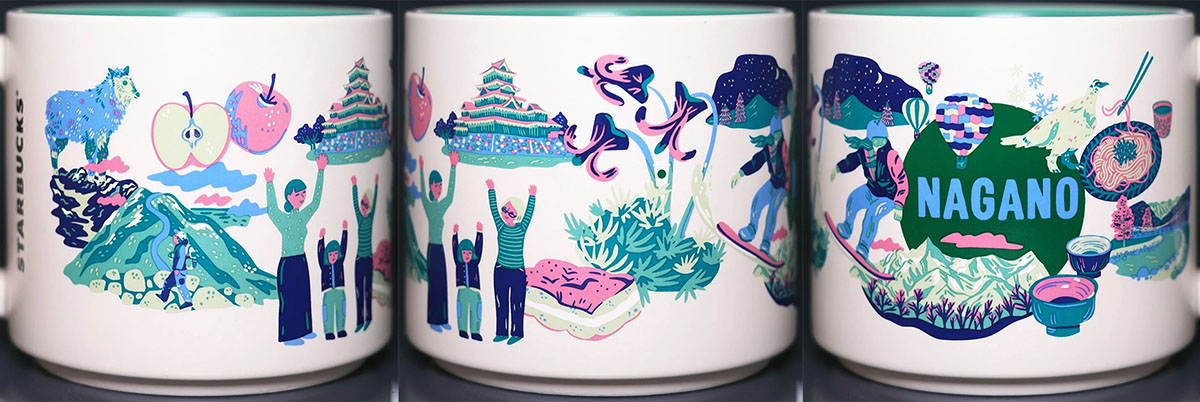
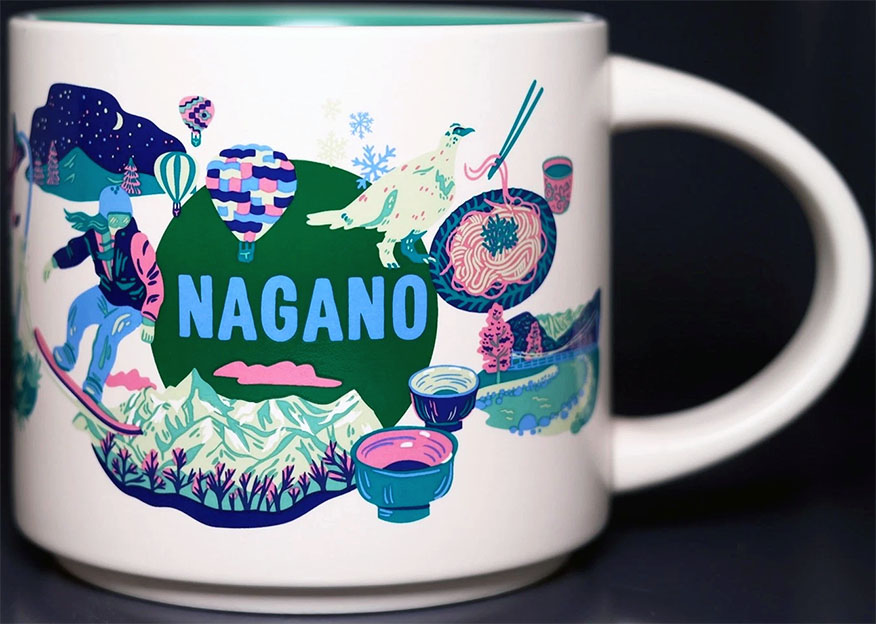
Here are some of the landmarks, foods, activities, and symbols featured in the design:
– The bowl of soba noodles is a natural choice for Nagano, where buckwheat noodles are one of the best-known regional foods. Shinshu soba has a long history in the prefecture and is commonly served either chilled with dipping sauce or hot in broth. Nagano’s cool mountain climate has traditionally provided good conditions for growing buckwheat.
– Skiing and snowboarding are among the activities most strongly associated with Nagano. The prefecture hosted the 1998 Winter Olympics and is home to internationally known ski areas such as Hakuba, where deep winter snow and extensive mountain terrain attract visitors from around the world.
– The Saku Balloon Festival is one of Nagano Prefecture’s most colorful annual events. Held in Saku, the festival brings together hot-air balloons from Japan and abroad, filling the sky with brightly colored balloons during competition flights and public events. The balloon on the mug is therefore likely a direct reference to this festival rather than to ballooning in Nagano more generally.
– The dramatic Japanese Alps form much of Nagano’s landscape. Peaks exceeding 9,800 feet (3,000 meters) rise across the prefecture, providing opportunities for hiking, climbing, skiing, and other outdoor activities throughout the year.
– The Raicho, or Japanese rock ptarmigan, is one of the most distinctive birds of Japan’s high mountains. It lives above the tree line in alpine areas, including the Japanese Alps of Nagano, and is specially adapted to harsh mountain weather. Its plumage changes with the seasons, becoming mostly white in winter, and the bird is considered an important symbol of Japan’s alpine environment.
– Matsumoto Castle is one of Nagano’s most important historic landmarks. Built in the late 16th century, its five-tiered, six-story main keep is the oldest surviving castle tower of its type in Japan. The dark exterior has earned it the nickname “Crow Castle,” while the Northern Alps provide a dramatic backdrop.
– The large apples refer to one of Nagano’s best-known agricultural products. Orchards are common throughout the prefecture, where the combination of sunny days, cool nights, and mountainous terrain helps produce crisp, sweet fruit. Apples and apple blossoms have become familiar symbols of Nagano and were also used on the earlier Been There design.
– Hiking is another major part of Nagano’s outdoor culture. Trails cross areas such as Kamikochi and the Northern Alps, passing rivers, forests, mountain valleys, and high peaks. The prefecture offers everything from easy scenic walks to demanding multi-day mountain routes.
– The shaggy animal appears to be the Japanese serow, a goat-antelope native to Japan’s mountainous forests. These sturdy animals are well adapted to steep terrain and can be found in mountain regions across central Honshu, including Nagano.