Discovery Series – Salvador


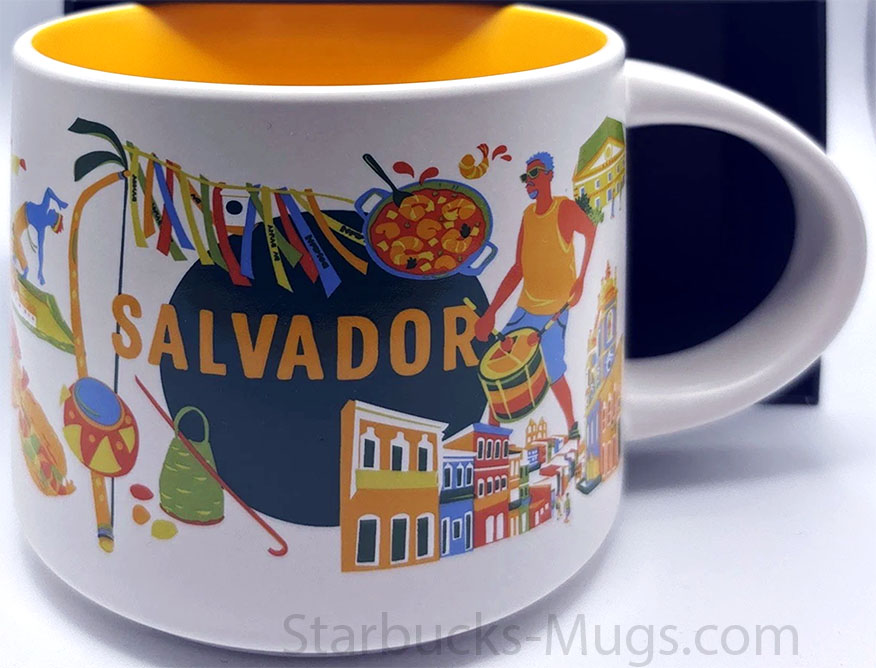
The Starbucks Discovery Series Salvador mug highlights one of Brazil’s most historically important and culturally distinctive cities. Founded in 1549, Salvador became the first capital of colonial Brazil and remained the country’s political center until 1763. Its location on the Bay of All Saints helped turn it into a major Atlantic port, while centuries of African, Indigenous, and Portuguese influence shaped a culture that remains especially visible in the city’s music, religion, food, architecture, and festivals. Today, Salvador’s historic center, coastline, and Afro-Brazilian traditions make it one of the most recognizable cities in the country.
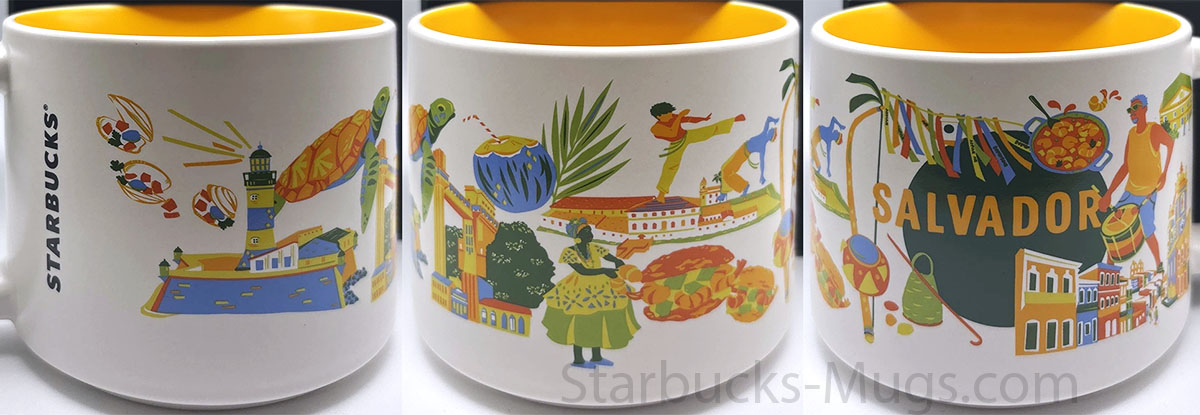
Here are some of the landmarks, foods, traditions, and symbols featured in the design:
– The Farol da Barra is one of Salvador’s best-known landmarks. Located inside the Forte de Santo Antônio da Barra, the lighthouse stands at the entrance to the Bay of All Saints and has long been an important reference point for ships approaching the city. Today, it is also one of Salvador’s classic places to watch the sunset.
– The colorful ribbons are the famous fitinhas do Bonfim. These narrow ribbons are associated with the Senhor do Bonfim and are traditionally tied around the wrist or to gates and railings while making wishes. They are sold throughout Salvador and have become one of the city’s most recognizable souvenirs.
– Moqueca baiana is one of Bahia’s signature dishes. The stew is typically prepared with fish or seafood, tomatoes, onions, peppers, coconut milk, coriander, and dendê oil, producing the rich color and flavor strongly associated with Bahian cooking. Alongside acarajé, it is one of the dishes most closely connected with Salvador’s food culture.
– The woman in traditional dress recalls the baianas who are such a familiar part of Salvador’s cultural landscape. Their elaborate white or colorful dresses, headwraps, jewelry, and layered skirts reflect strong Afro-Brazilian traditions and can frequently be seen around the historic center and during festivals.
– Capoeira is deeply connected with Salvador and Bahia. Combining martial arts, dance, music, and acrobatics, it developed among Afro-Brazilian communities and eventually became one of Brazil’s most internationally recognized cultural traditions. In Salvador, performances are especially common around Pelourinho and other parts of the historic center.
– The row of colorful colonial buildings recalls Pelourinho, the heart of Salvador’s historic center. Its steep streets and squares are lined with brightly painted houses, churches, museums, restaurants, and cultural spaces dating mainly from the 17th through 19th centuries. The area is one of the clearest places to see the city’s colonial architecture and Afro-Brazilian cultural life together.
– The large elevator structure is the Elevador Lacerda, one of Salvador’s defining urban landmarks. Opened in 1873, it was the world’s first urban elevator and still links the Cidade Baixa with the Cidade Alta in only a few seconds. From the upper level, visitors get broad views over the Bay of All Saints and Mercado Modelo.
– The percussion instruments point to Salvador’s famous Afro-Brazilian music. Drums play a major role in samba-reggae, blocos afro, carnival groups, and religious traditions throughout the city. Groups such as Olodum helped bring this distinctive Salvador sound to an international audience.
– Finally, the acarajé reflects one of Salvador’s strongest culinary traditions. The fritter is made from black-eyed peas, fried in dendê oil, and commonly filled with vatapá, shrimp, and other accompaniments. It is especially associated with the baianas de acarajé, whose food stalls are found throughout the city, including around Pelourinho, Barra, and Rio Vermelho.