Discovery Series – São Paulo


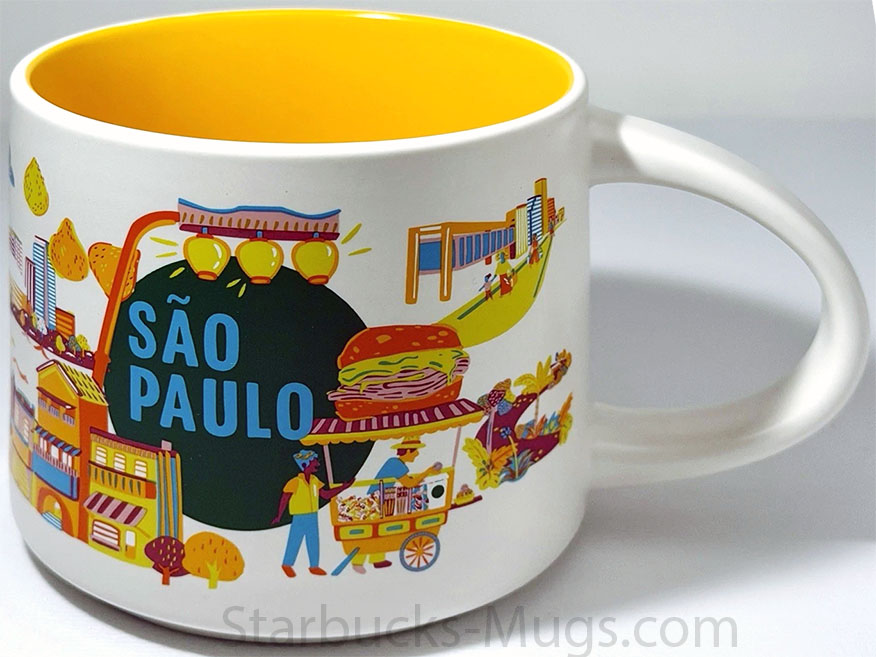
The Starbucks Discovery Series São Paulo mug is dedicated to Brazil’s largest city and one of the country’s most important economic and cultural centres. São Paulo was founded on January 25, 1554, when Jesuit priests established a college on the Piratininga plateau. For much of its early history, it remained a relatively small settlement, but the coffee boom of the 19th century transformed the city. The wealth generated by coffee helped bring railways, immigrants and rapid urban development, turning São Paulo into a major industrial and commercial centre. By the 20th century, the city had grown into the huge metropolis we know today.
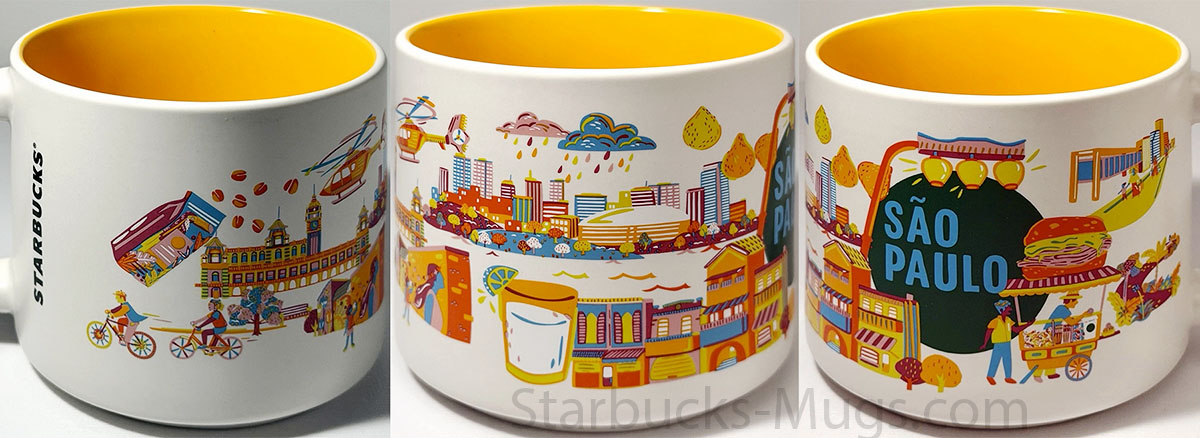
– The São Paulo skyline is one of the most recognizable elements of the mug. The city is famous for its seemingly endless sea of high-rises, reflecting the extraordinary growth of the 20th century. Above the skyline, the two rain clouds are a fitting addition, as São Paulo receives substantial rainfall, particularly during the warmer months. The combination of the dense urban landscape and summer rain is a familiar part of life in this huge metropolis.
– The bicycles are a nod to São Paulo’s increasingly visible cycling culture. Despite its enormous size and famous traffic, the city has developed an extensive network of cycling infrastructure and dedicated bike routes. Cycling is now an important part of urban life, both as transportation and recreation.
– The street food shown on the mug reflects one of São Paulo’s greatest strengths: its incredibly diverse culinary scene. The city’s population has been shaped by waves of immigration, including large Italian, Japanese, Portuguese, Lebanese and other communities, all of which have left their mark on local food. São Paulo is particularly famous for its enormous variety of restaurants, bakeries, markets and food stalls.
– The distinctive three-bulb street lamps above the title represent the Liberdade street market. The Feira da Liberdade has been held in Praça da Liberdade since 1975 and is closely associated with the neighbourhood’s Japanese and broader Asian heritage. Held on weekends, the market brings together food stalls, crafts and other goods, making it one of the best-known attractions in Liberdade.
– The mortadella sandwich is one of the foods most closely associated with São Paulo. The classic version is made with generous slices of mortadella piled into a bread roll, sometimes accompanied by cheese or other fillings. It became particularly famous through the Mercado Municipal de São Paulo, where the oversized sandwiches became a favourite among visitors and locals.
– The coxinha is another beloved São Paulo snack. This teardrop-shaped savoury pastry is traditionally filled with shredded chicken, surrounded by dough, breaded and deep-fried until crisp. It is found everywhere from bakeries and bars to street-food stalls, and has become one of the city’s quintessential quick bites.
– The Batman Alley (Beco do Batman) represents one of São Paulo’s most famous artistic spaces. Located in the bohemian Vila Madalena neighbourhood, this open-air gallery began to take shape in the 1980s after a graffiti drawing of Batman appeared on one of the walls, giving the area its name. Over time, local artists transformed the narrow streets into a constantly changing canvas filled with colourful murals, making Beco do Batman one of the city’s most photographed attractions and an international symbol of São Paulo’s vibrant street art scene.
– Paulista Avenue is another landmark that perfectly represents modern São Paulo. Opened in 1891, the avenue was originally lined with mansions belonging to wealthy coffee barons, but during the 20th century it evolved into Brazil’s principal financial and cultural corridor. Today, its skyscrapers stand alongside museums, cultural centers and historic buildings, including the iconic MASP museum. On Sundays, the avenue is closed to traffic and becomes a lively public space filled with cyclists, street performers and visitors, reflecting the dynamic spirit of São Paulo itself
– Finally, the historic downtown buildings represent the older São Paulo that still exists among the modern skyscrapers. The city’s centre contains churches, railway stations, theatres, office buildings and other landmarks dating from the period when coffee wealth was transforming the city. Places such as the Pátio do Colégio, where São Paulo was founded, remain reminders of how dramatically the city has changed from its beginnings in 1554