Discovery Series – Curitiba


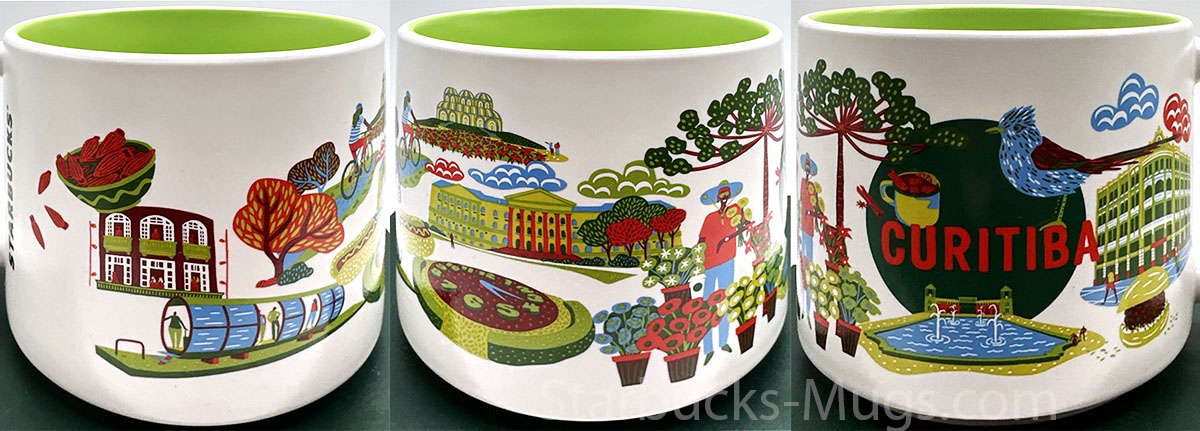
The Starbucks Discovery Series Curitiba mug highlights a city known for its parks, distinctive architecture, urban planning, and strong connection to nature. Curitiba became the capital of Paraná in the 19th century and later grew rapidly with waves of European immigration, especially from Poland, Germany, Italy, and Ukraine. Over time, the city became internationally known for its public transportation system and environmental planning, while landmarks such as the Botanical Garden, Ópera de Arame, and Oscar Niemeyer Museum gave it a very recognizable visual identity.
– The Jardim Botânico, or Botanical Garden, is one of Curitiba’s most famous landmarks. Its large glass-and-metal greenhouse, inspired by 19th-century European architecture, stands above formal gardens filled with geometric flower beds. Since opening in 1991, it has become one of the city’s most photographed sights and one of the main symbols of Curitiba.
– The Ópera de Arame is another unmistakable Curitiba landmark. Opened in 1992, the theater is built from tubular steel and transparent panels and sits in a former quarry surrounded by water, vegetation, and rock walls. Its unusual setting makes it one of the city’s most distinctive cultural venues.
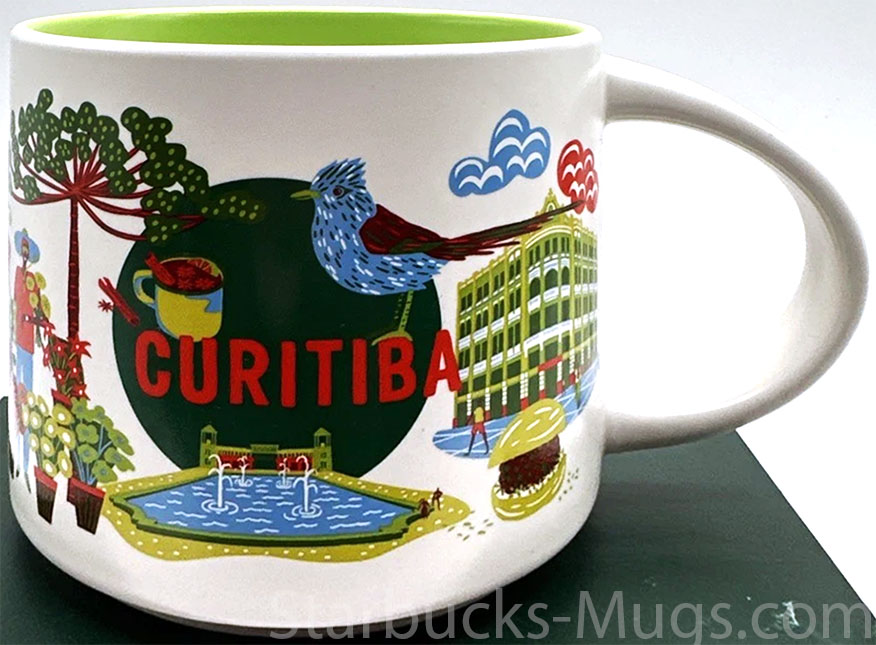
– Parque Tanguá is one of Curitiba’s most scenic parks and makes particularly good use of the city’s former quarry landscape. Its gardens, lakes, waterfall, walking paths, and elevated viewpoints make it one of the city’s best-known green spaces. The pool shown on the front of the mug likely references the park’s formal water features and reflecting pools near the Jardim Poty Lazzarotto, among the park’s most recognizable areas.
– Parque Barigui is one of Curitiba’s largest and most popular parks. Created in 1972, it includes lakes, trails, sports areas, picnic spaces, and native wildlife. It has become one of the city’s favorite places for walking, cycling, and spending time outdoors.
– The historic center recalls Curitiba’s older streets and buildings, especially around Largo da Ordem. This area preserves some of the city’s oldest architecture, including churches and houses dating from the 18th and 19th centuries, and remains a lively part of the city with cafés, bars, cultural spaces, and the traditional Sunday craft fair.
– The tall araucaria trees are closely associated with Paraná and the landscapes around Curitiba. Also known as Paraná pines, these distinctive trees once covered large areas of southern Brazil and remain one of the most recognizable natural symbols of the state. Curitiba still preserves araucaria forest in several parks and wooded areas.
– The Grimpeiro is a small bird strongly associated with the araucaria forests of southern Brazil. Its name comes from its habit of climbing and moving through the branches of Paraná pines while searching for insects. Because Curitiba and the surrounding region preserve important areas of araucaria forest, the bird fits very naturally into the design.
– The colorful flower markets and gardens fit naturally with Curitiba’s strong reputation for parks and public landscaping. Flower beds, tree-lined avenues, and carefully maintained green spaces are found throughout the city, while places such as the Botanical Garden have made flowers an especially familiar part of Curitiba’s image.
– The Estação Tubo is one of Curitiba’s most recognizable public-transport features. These cylindrical glass-and-metal bus stations were created for the city’s Bus Rapid Transit system and allow passengers to pay before boarding, helping speed up stops along busy routes. They became an important part of Curitiba’s reputation for innovative urban planning and remain a distinctive part of the streetscape throughout the city.
– The bowl of food may refer to barreado, one of Paraná’s best-known traditional dishes. It is a slow-cooked beef stew traditionally prepared for many hours in a sealed clay pot and served with cassava flour, rice, and banana. Although the dish is more strongly associated with the coast of Paraná, it remains an important part of the state’s culinary identity.